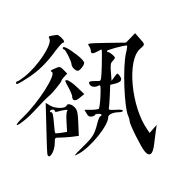
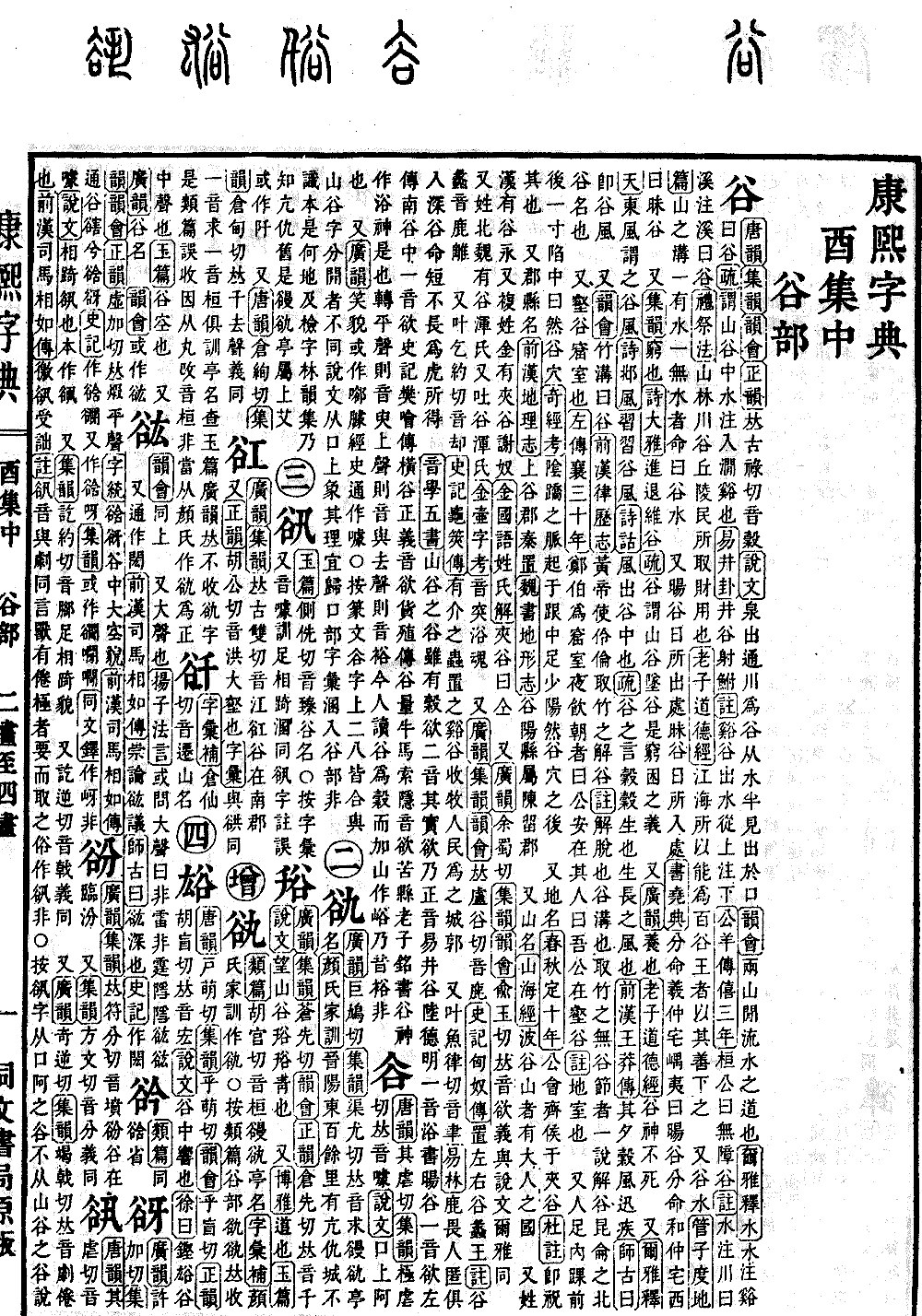
You Collection, Middle Volume. Radical: Grain (gǔ). Kangxi Strokes: 11. Page 1189, Entry 14.
Pronounced xue. According to the Explaining Graphs and Analyzing Characters (Shuowen Jiezi), the appearance of leaning against and supporting one another. This is the original form of the character. Also, according to the Collected Rhymes (Jiyun), pronounced jiao. The appearance of legs leaning against one another. Also, pronounced ji. The meaning is the same. Also, according to the Extended Rhymes (Guangyun) and Collected Rhymes (Jiyun), pronounced ju. Weary or exhausted. In the Biography of Sima Xiangru from the History of the Former Han Dynasty (Qian Hanshu), it describes intercepting beasts that are weary and exhausted. The commentary notes that the pronunciation of this character is the same as ju, meaning that when beasts are exhausted to the extreme, one intercepts and captures them. The common form is written with a different component, which is incorrect. Note: This character is formed with the mouth radical, not the grain radical. The Explaining Graphs and Analyzing Characters (Shuowen Jiezi) and the Classified Compilation (Leipian) record it under the grain radical, but the Corrected Dictionary (Zhengzitong) mistakenly added it to the grain radical, which is incorrect. Furthermore, the Jade Compendium (Yupian) already recorded this character under the grasp radical, and the you radical also records the same character, with pronunciations and definitions mixed together with the main entry. Splitting this into two separate characters is also incorrect.