You Collection, Upper Volume
Radical: Speech (yán)
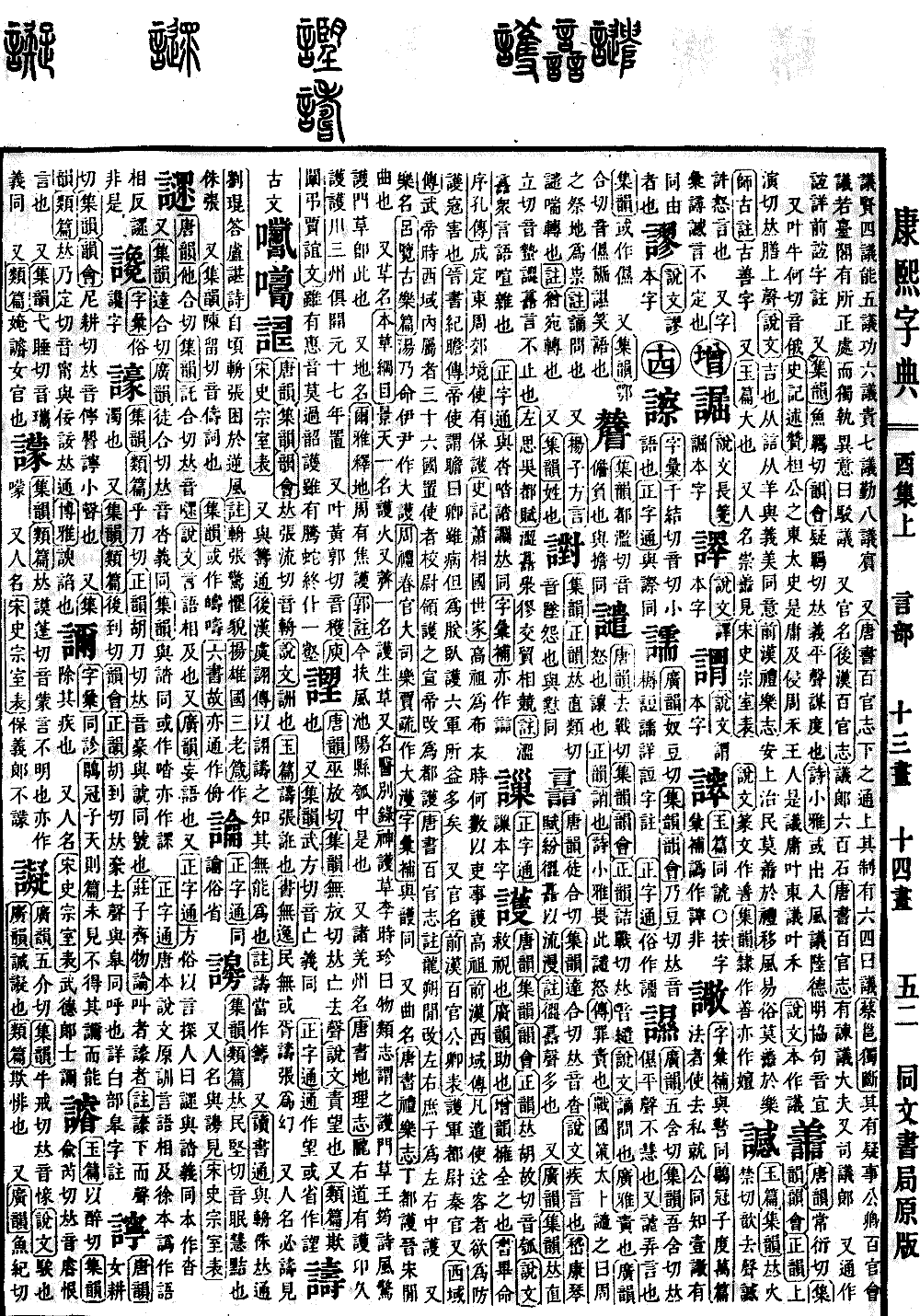
護
Kangxi stroke count: 21
Page 1184, Entry 06
Tang Rhyme (Tangyun), Collection Rhymes (Jiyun), Rhyme Meetings (Yunhui), Correct Rhymes (Zhengyun): Pronounced hu (falling tone), same pronunciation as hu.
Explaining Graphs and Analyzing Characters (Shuowen): The meaning is to save, assist, and watch over.
Broad Rhymes (Guangyun): The meaning is to help.
Augmented Rhymes (Zengyun): The meaning is to support and preserve.
Book of Documents (Shujing), Preface to the Bi Ming, Commentary by Kong: To pacify the borders of the eastern Zhou suburbs so that they may receive protection.
Records of the Grand Historian (Shiji), Biography of Chancellor Xiao: When the Gaozu Emperor was still a commoner, Xiao He often used his authority as an official to shelter him.
History of the Former Han (Qian Hanshu), Account of the Western Regions: Whenever envoys were sent to escort guests, it was to guard and protect them from harm.
History of the Jin (Jinshu), Biography of Ji Zhan: The Emperor sent someone to say to Ji Zhan: Although you are ill, you only need to lie down for me and supervise the six armies, and the benefits will be great.
Also an official title.
History of the Former Han (Qian Hanshu), Table of Officials: The Protector of the Army (Hujun Duwei) was an office established in the Qin dynasty.
Also in the Account of the Western Regions: During the reign of Emperor Wu of the Han, there were thirty-six Western Region states that submitted to the Han, and an envoy colonel was established to govern and supervise them; this was changed to Protector General (Duhu) during the reign of Emperor Xuan of the Han.
History of the Tang (Tangshu), Notes on the Treatise on Officials: During the Longshuo era of Emperor Gaozong of the Tang, the Left and Right Shuzi were renamed Left and Right Zhonghu.
Also the name of a music and dance.
Lushi Chunqiu (Lülan), Chapter on Ancient Music: King Tang of Shang then ordered Yi Yin to compose the Great Hu.
Rites of Zhou (Zhouli), Spring Offices, Great Master of Music, Commentary by Jia: Written as Great Huo.
Supplement to the Collection of Characters (Zihuibu): The same as the character hu.
Also a name of a musical piece.
History of the Tang (Tangshu), Treatise on Rites and Music: Ding Duhu is a musical piece from between the Jin and Song dynasties.
Also the name of a plant.
Compendium of Materia Medica (Bencao Gangmu): Stonecrop is also called fire-protector. Shepherd's purse is also called life-protector herb.
Also in the Record of Famous Physicians (Mingyi Bielu): There is the divine protector herb. Li Shizhen says: The Classification of Things calls it the door-protector herb; Wang Yun's poem line, "The wind startles the door-protector herb," refers to this.
Also a place name.
Erya, Interpretation of Geography: In the Zhou dynasty, there was Jiao Hu.
Commentary by Guo: This is the current Hu-zhong in Chiyang County, Fufeng Commandery.
Also the names of various Qiang ethnic prefectures.
History of the Tang (Tangshu), Treatise on Geography: In the Longyou Circuit, there were the three prefectures of Hu-ang, Jiu Hu, and Hu-chuan, all established in the seventeenth year of the Kaiyuan era.
Also rhymes with huo (entering tone), same pronunciation as huo.
Yu Chan, Eulogy for Jia Yi: Even with beautiful music, it cannot compare to the Shao music and the Hu music. Even with a snake that can soar, it will eventually fall into a pit or valley.