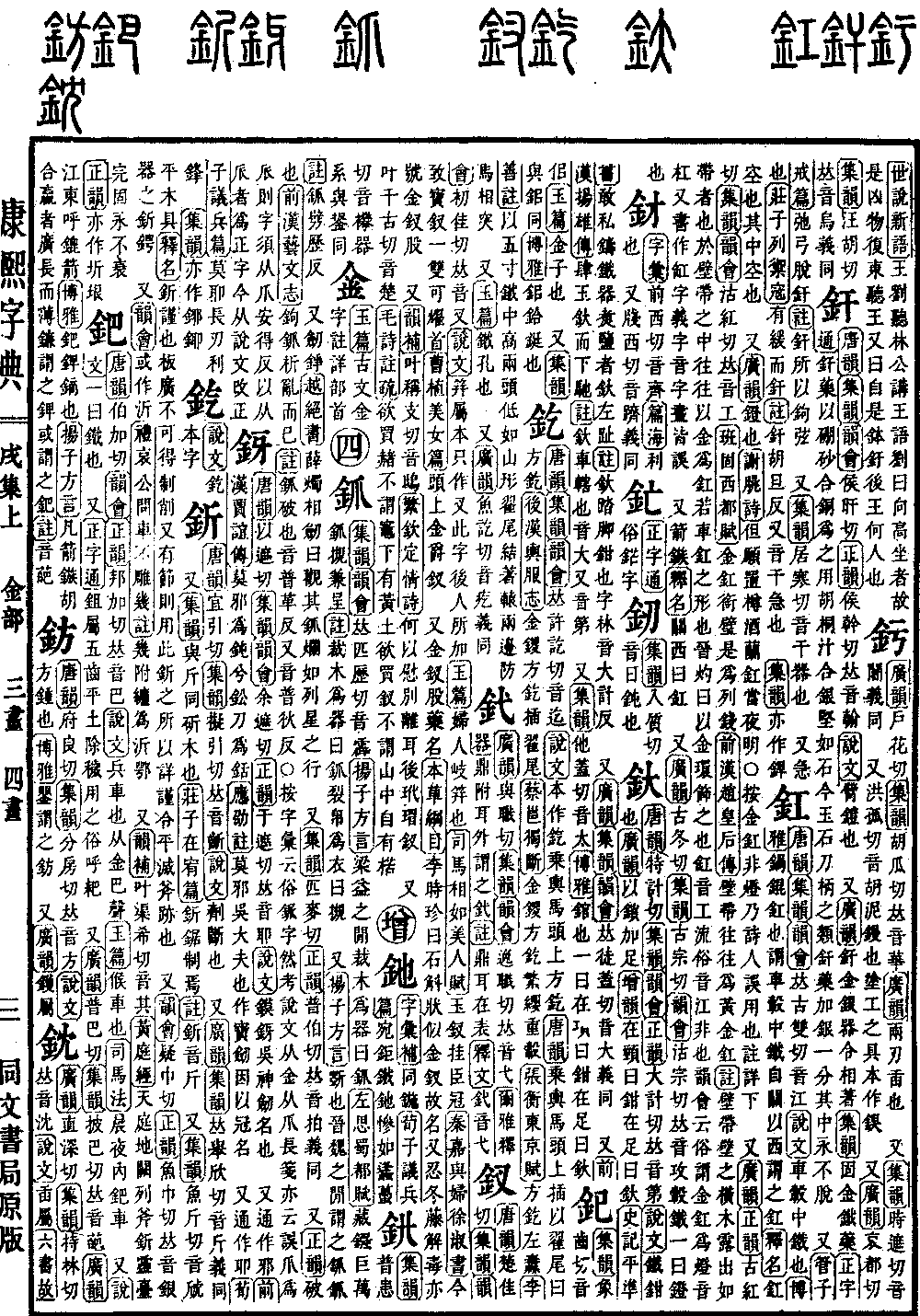
Xu Collection, Upper Volume
Radical: Metal (jīn)
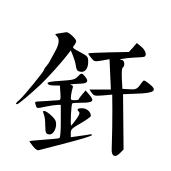
Character: 釬
Kangxi Strokes: 11
Page 1297, Entry 02
Pronounced han (falling tone) according to Tang Rhymes (Tangyun), Collected Rhymes (Jiyun), and Rhyme Compendium (Yunhui); pronounced han (falling tone) according to Correct Rhymes (Zhengyun).
According to Explaining Graphs and Analyzing Characters (Shuowen), it refers to arm armor.
Also, in Broad Rhymes (Guangyun), it refers to an agent that causes gold and silver vessels to adhere to one another.
According to Collected Rhymes (Jiyun), it refers to a chemical agent used to fuse metal and iron.
According to Correct Meaning Compendium (Zhengtong), soldering agent is made by combining borax with copper, or by using wood oil (hutongzhi) to combine with silver, making it as hard as stone. Nowadays, for items such as jade or stone knife handles, if one part of silver is added to the soldering agent, the bond will never come loose.
Also, in Guanzi, Precepts Chapter (Jie Pian), it is written: loosen the bow and remove the hook. The commentary states that this refers to a device for hooking the bowstring.
Also, according to Collected Rhymes (Jiyun), it is pronounced gan (level tone), meaning a vessel or utensil. It also means urgent or impatient.
In Zhuangzi, Lie Yukou Chapter, it is written: some are relaxed and some are urgent. The commentary states it is pronounced han (rising tone).
Also pronounced gan (level tone). It means urgent. According to Collected Rhymes (Jiyun), it is also written in a variant form (hàn).