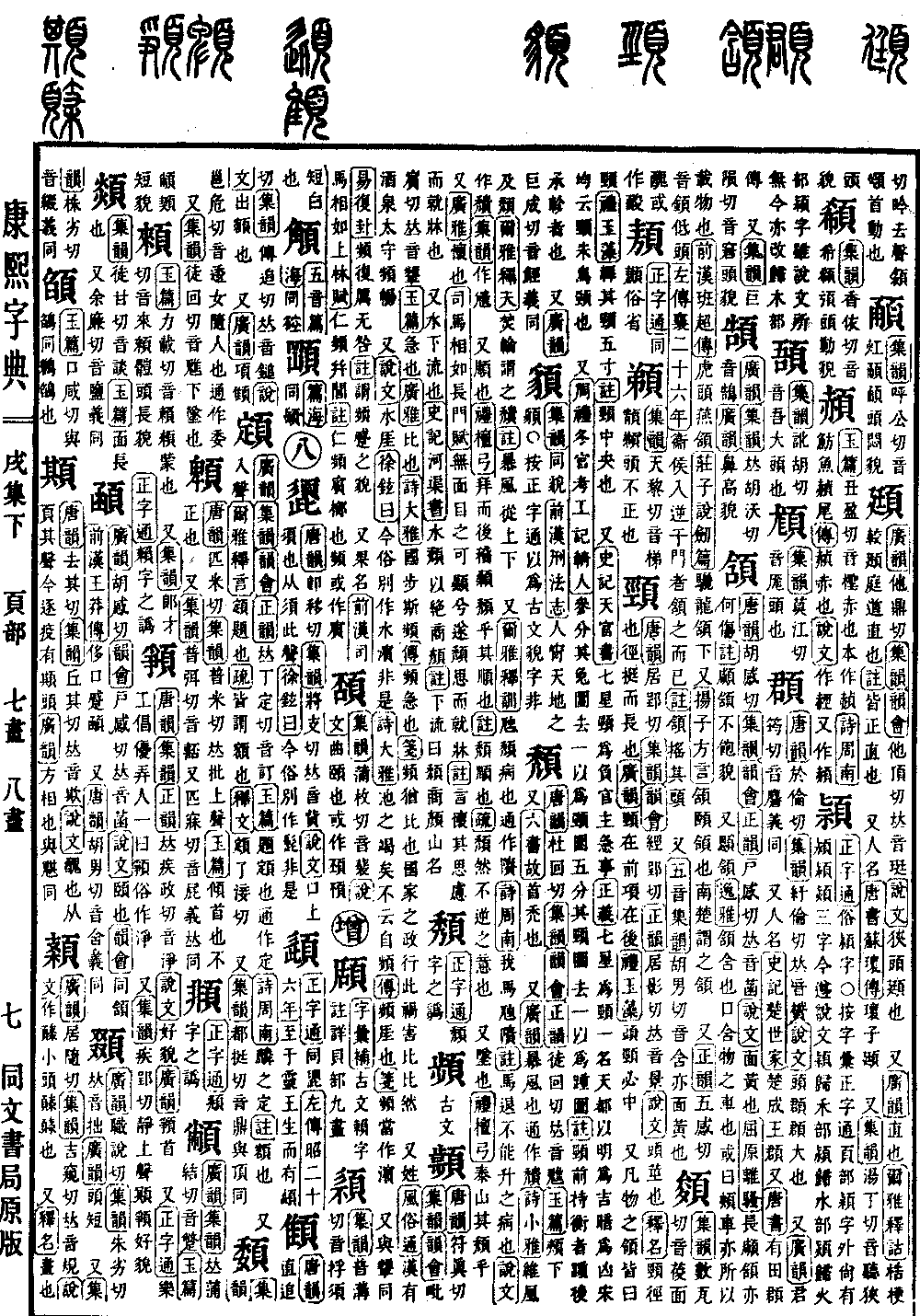
Xu Collection, Lower Volume
Radical: Page (yè)
Page 1405, Entry 16
Pronounced han (falling tone).
In the Explanation of Characters (Shuowen), it means a yellow face.
In the Encountering Sorrow (Lisao) by Qu Yuan: Longing and thin, what is the harm? The commentary notes that this refers to the appearance of not being satiated.
It also refers to the lower jaw.
In the Explanations of Names (Shiming): The jaw is for holding. It is the part of the mouth that holds things. Some say it is the cheekbone, which is also used to carry things.
In the History of the Former Han (Qianhan), Biography of Ban Chao: With a tiger head and a swallow-like jaw.
In the Zhuangzi, Discourse on Swords: Under the jaw of a black dragon.
According to the Regional Languages (Fangyan) by Yang Xiong: The jaw is the chin. In southern Chu, it is called the jaw.
Also pronounced zhen (falling tone).
To lower the head.
In the Zuo Tradition (Zuozhuan), 26th year of Duke Xiang: When the Duke of Wei entered, those who went to meet him at the gate simply nodded their heads. The commentary notes that this means shaking the head.
Also pronounced han (level tone).
It also refers to a yellow face.
Textual verification: The text cites the Yi Ya, but it originates from the Explanations of Names (Shiming); I have corrected the citation from Yi Ya to Explanations of Names (Shiming).