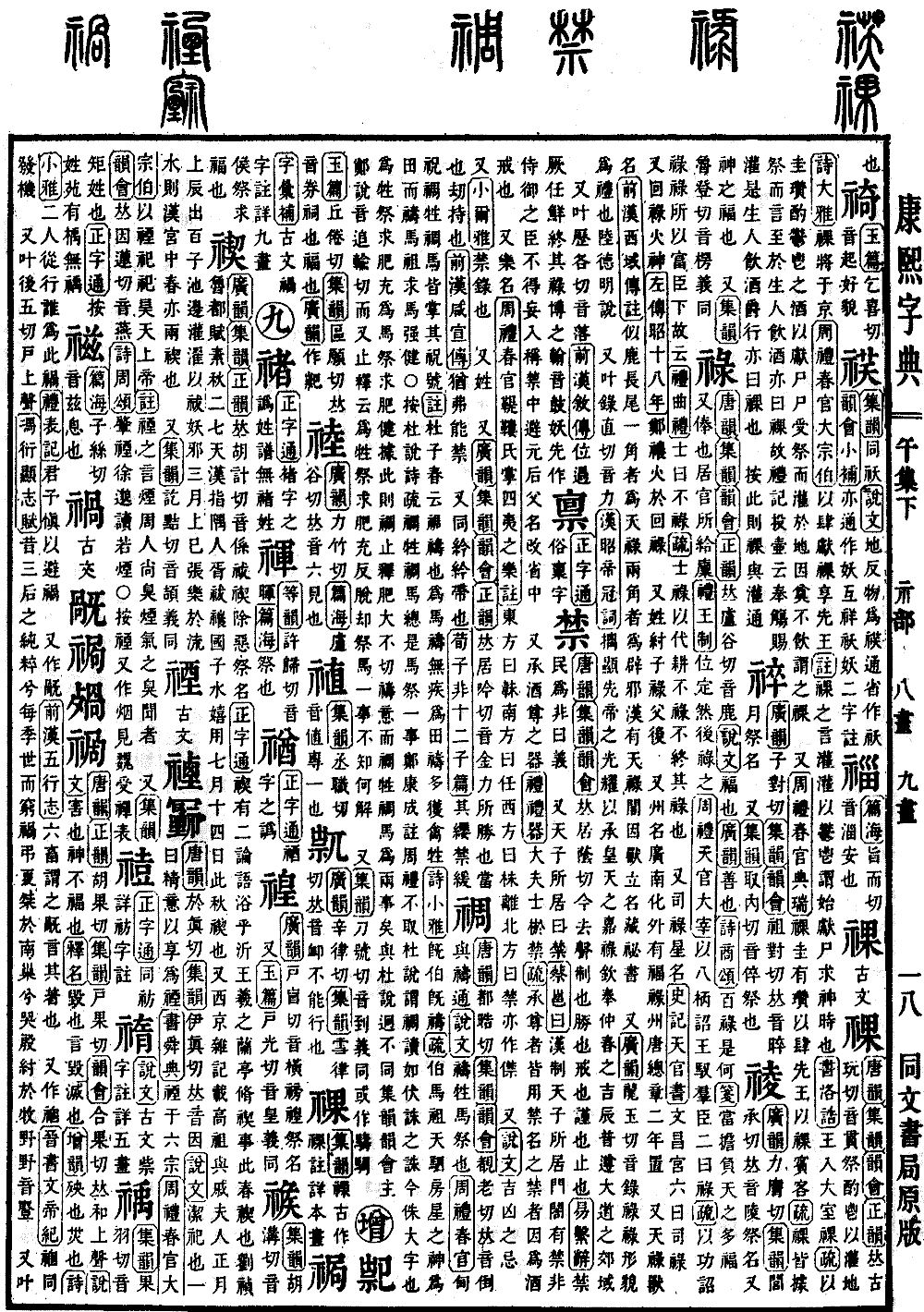
Wu Collection, Lower Volume
Radical: Revelation (shì)
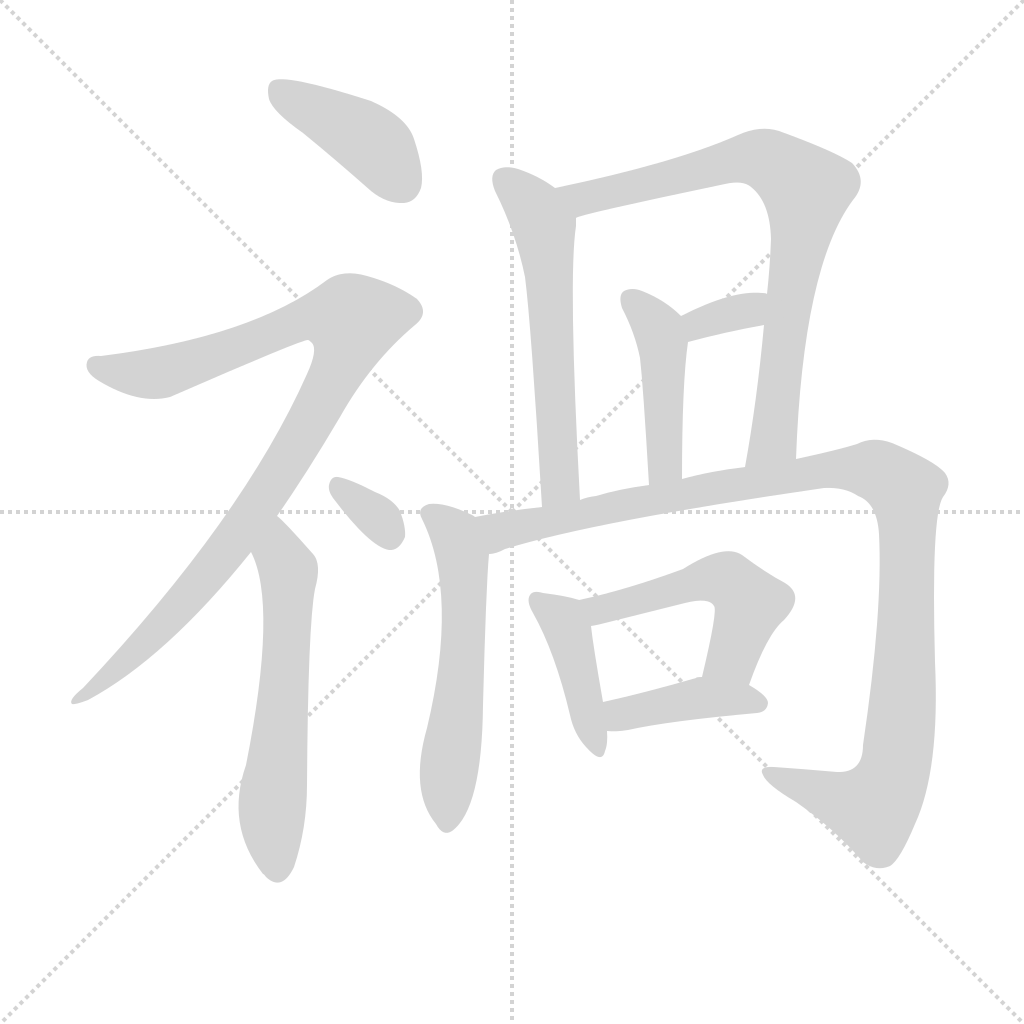
Character: huo
Kangxi stroke count: 14
Page 844, Entry 31
Ancient form: huo
Pronounced huo (rising tone)
Explanation: Harm; the absence of divine blessing.
Interpretation: Destruction; meaning to ruin or perish.
Amplified Dictionary: Misfortune; disaster.
Book of Odes (Shijing): When two people walk together, who causes this disaster?
Book of Rites (Liji): The superior man is cautious to avoid disaster.
Also written in the variant form huo.
History of the Former Han (Qian Hanshu): The six domestic animals are called huo, meaning they are manifest.
Also written in the variant form gu.
Book of Jin (Jinshu): They operated the mechanism together.
Rhyming with the pronunciation hou (falling tone):
Feng Yan, Fu on Displaying Ambition: In the past, the three kings were pure and perfect, yet every declining age reached its limit of disaster. Mourning Xia Jie at Nanchao, weeping for Yin Zhou at Muye. Muye is pronounced shu.
Rhyming with the zhi rhyme group, pronounced wei (rising tone):
Xunzi, Chengxiang Chapter: The disaster of the age is to hate the virtuous and wise; Zixu was killed, and Baili was exiled.
Rhyming with the zhi rhyme group, pronounced gui:
Xunzi, Chengxiang Chapter: Discuss the faults of ministers, reverse their application, honor the ruler, pacify the state, and value the righteous; reject remonstrance and embellish errors, being foolish yet seeking uniformity from above, the state will surely suffer disaster. Righteousness rhymes with yi.