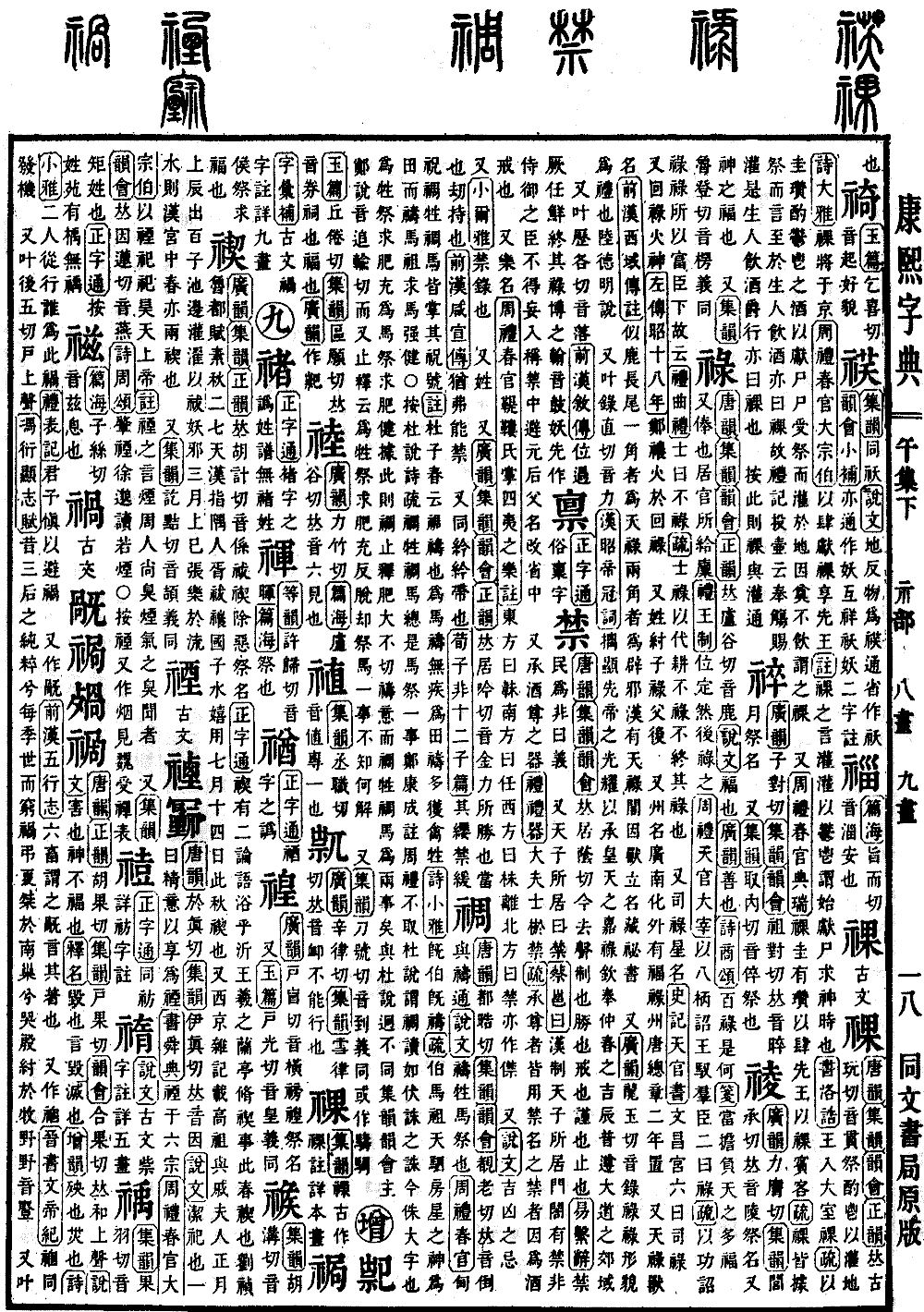
Wu Collection, Lower Volume
Radical: Spirit (shì)
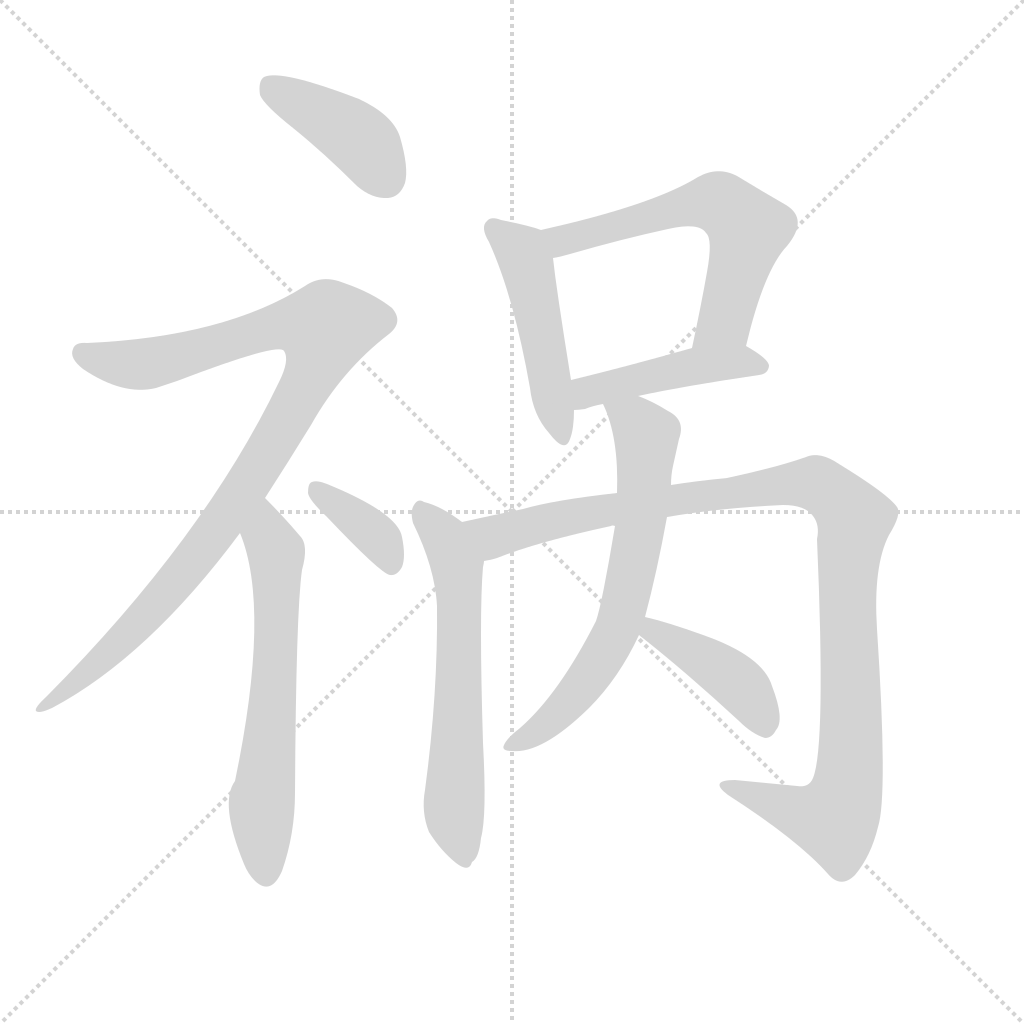
Character: 禍
Kangxi strokes: 14
Page 844, Entry 03
Ancient form: 旤
Pronounced huo (rising tone)
Explanation from the Shuowen Jiezi (Shuowen): Harm; also, lack of divine blessing.
According to the Shi Ming (Shiming): Destruction; meaning to ruin and annihilate.
According to the Zeng Yun (Zengyun): Calamity; disaster.
Book of Odes (Shijing), Lesser Odes of the Kingdom: If two men go on a journey, who is responsible for this calamity?
Book of Rites (Liji), Exposition of Clothing: The superior man is cautious in order to avoid calamity.
Also written as 旤.
History of the Former Han (Qianhan Shu), Treatise on the Five Phases: Domestic animals are called 旤, indicating their manifest nature.
Also written as 祻.
Book of Jin (Jin Shu), Annals of Emperor Wen: Acting together to trigger the mechanism.
Also rhymes with hou (rising tone).
Feng Yan, Xianzhi Fu: The purity of the three august ones of old, yet in every declining age there is extreme calamity. I mourn Xia Jie at Nanchao, and weep for Yin Zhou at Muye. (Note: Ye is pronounced shu.)
Also rhymes with the zhi rhyme group, pronounced wei (rising tone).
Xunzi, Chengxiang Chapter: The calamity of the age is to hate the virtuous; Zixu was killed and Baili was exiled.
Also rhymes with the zhi rhyme group, pronounced gui.
Xunzi, Chengxiang Chapter: Discuss the faults of ministers, reverse their application, honor the ruler and pacify the state, esteem the virtuous and righteous, reject remonstrance and adorn errors, be foolish yet comply with superiors; the state will surely meet with calamity. (Note: Yi rhymes with yi.)