Wu Collection, Lower Volume
Radical: Grain (hé)
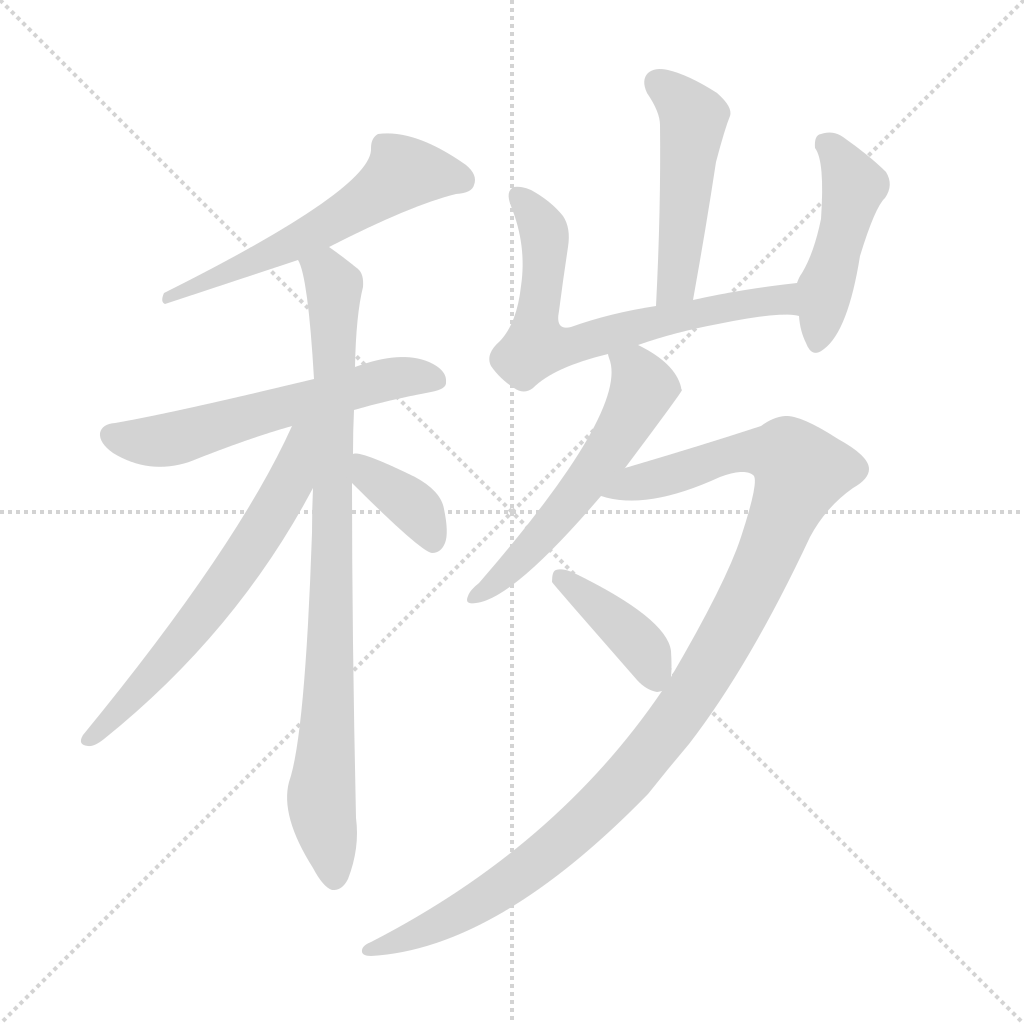
秽
Kangxi strokes: 18
Page 861, Entry 01
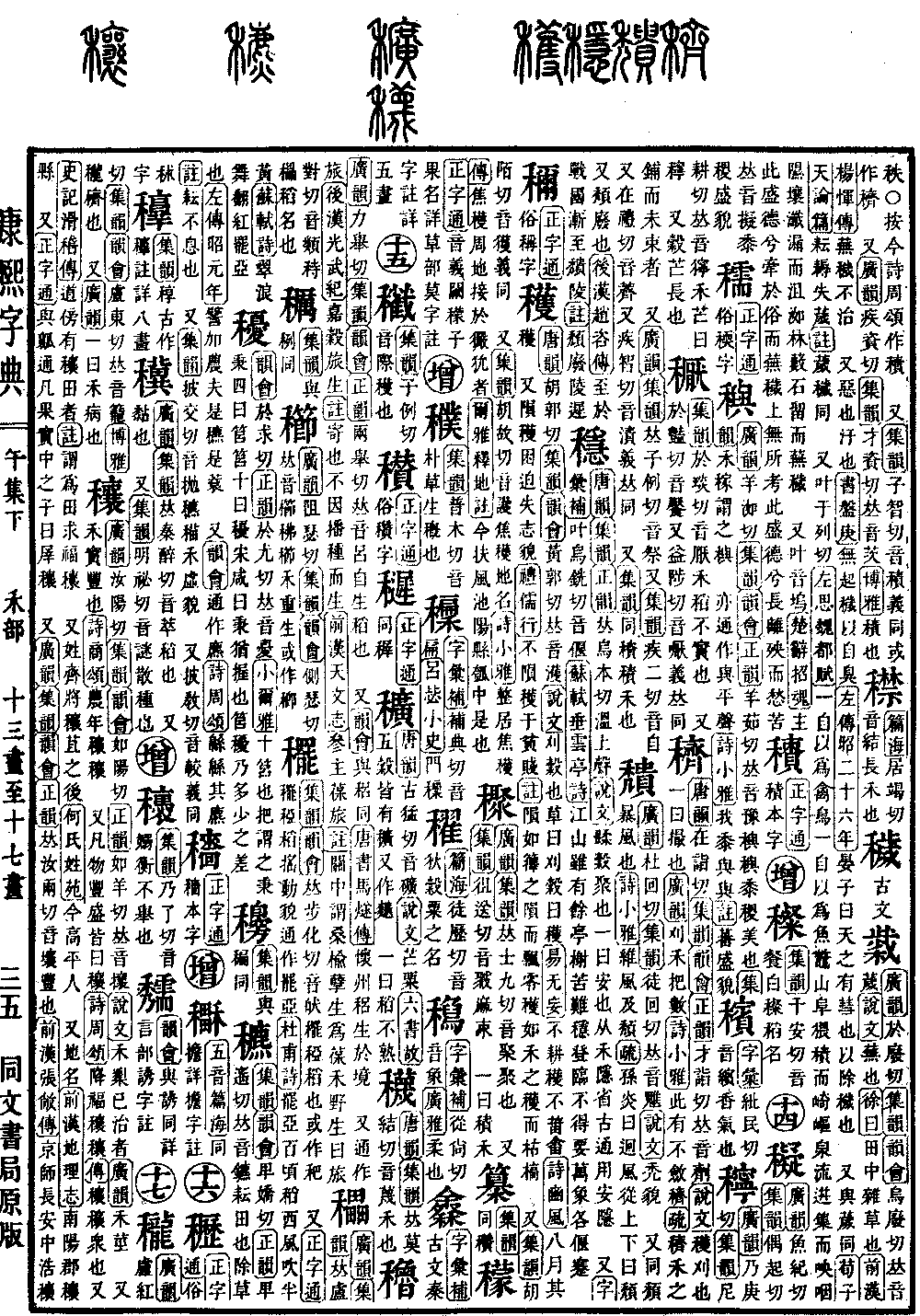
Ancient character. According to Guangyun (Guangyun), pronounced hui (falling tone). According to Jiyun (Jiyun) and Yunhui (Yunhui), pronounced hui (falling tone). As stated in Shuowen (Shuowen), it means weeds. Xu says: weeds mixed in a field. In the Biography of Yang Yun, Book of Han (Hanshu), it refers to being overgrown with weeds and not maintained. It also means evil or dirty. In the Pan Geng chapter of the Book of Documents (Shangshu), it says: do not stir up filth to bring odor upon yourself. In the twenty-sixth year of Duke Zhao of the Zuo Commentary (Zuozhuan), Yanzi said: the appearance of a comet in the sky is to clear away filth. It is also the same as the variant form hui (falling tone). In the Heaven and Earth chapter of the Xunzi (Xunzi), it mentions weeding and hoeing to remove weeds; the commentary notes that both forms are identical. It also shares a rhyme with lie (falling tone). In the Ode to the Capital of Wei (Weidu fu) by Zuo Si, it appears in a passage describing birds and fish, hills and mounds piling up, springs gushing and obstructed, marshes leaking and damp, and forests and thickets left unmanaged and overgrown. It also shares a rhyme with the sound of wu (falling tone). In the Summoning of the Soul (Zhaohun) from the Songs of Chu (Chuci), it reads: holding onto this noble virtue, yet tethered to common customs and left overgrown, unable to examine this noble virtue, forever separated and suffering from calamity.