Mao Collection, Upper Volume
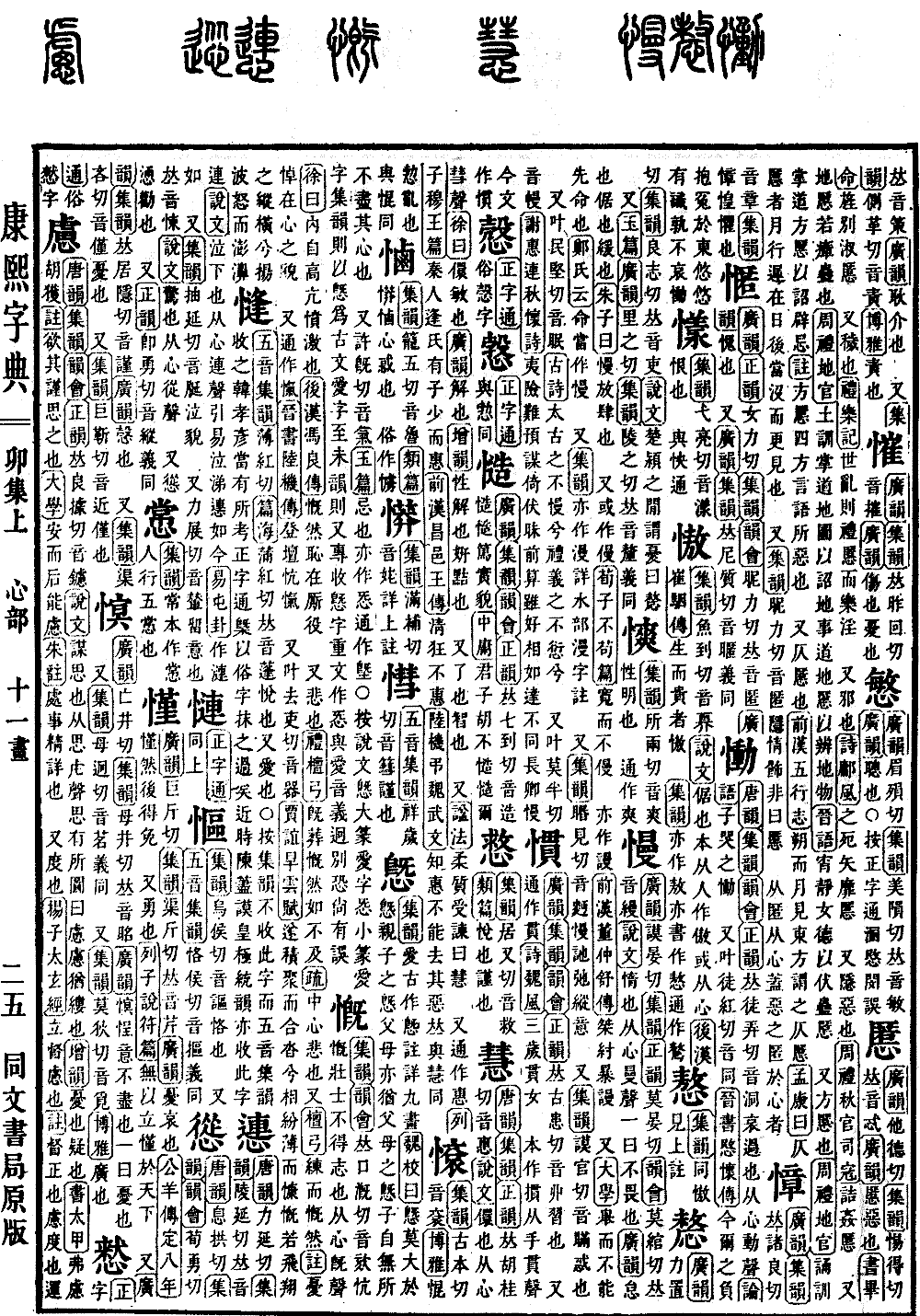
Radical: Heart (xīn)
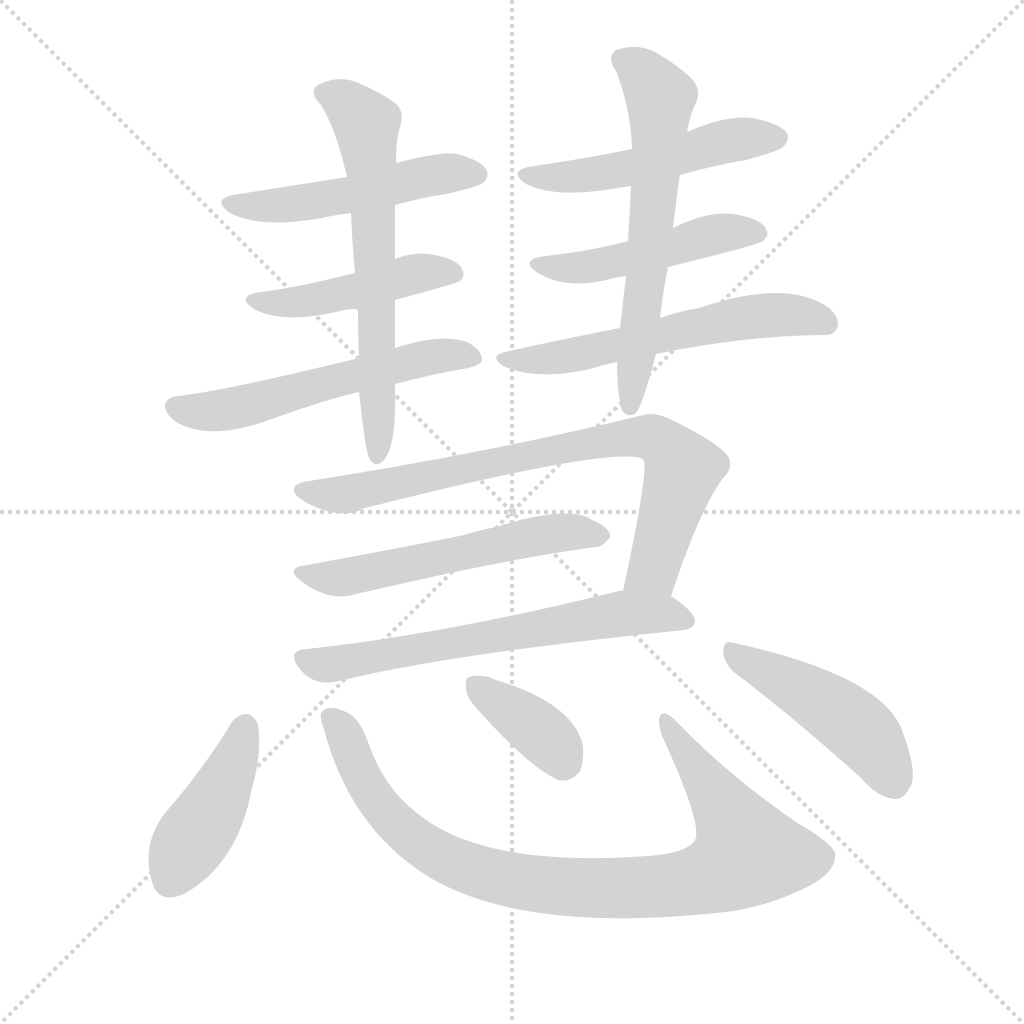
Hui
Kangxi strokes: 15
Page 399, Entry 18
Pronounced hui (falling tone). The pronunciation is the same as hui.
The Analytical Dictionary of Characters (Shuowen Jiezi) defines this as xuan, meaning clever or sharp. The character is composed of the radical for heart and the component hui, which provides the phonetic value. Xu Xuan notes that xuan means agile. The Broad Rhymes (Guangyun) defines this as jie, meaning to understand or to be enlightened. The Expanded Rhymes (Zengyun) defines this as having a natural intelligence and being quick-witted. It also denotes understanding and wisdom.
According to the Law of Posthumous Titles (Shifa), one who has a gentle nature and is capable of accepting remonstrance may be given the posthumous title of Hui.
It is also frequently used interchangeably with the character hui (meaning kind). The Book of Liezi (Liezi), in the chapter on King Mu, records that a man named Feng from the State of Qin had a son who was exceptionally intelligent (hui) from a young age. The History of the Former Han (Qian Hanshu), in the biography of the Prince of Changyi, records: behaving in a crazed and unclear manner, lacking intelligence (hui). Lu Ji, in his Lament for Emperor Wu of Wei, writes: knowing (hui) but unable to remove his evil deeds. In these instances, hui has the same meaning as hui (wisdom).