Wu Collection, Lower Volume
Radical: Grain (hé)
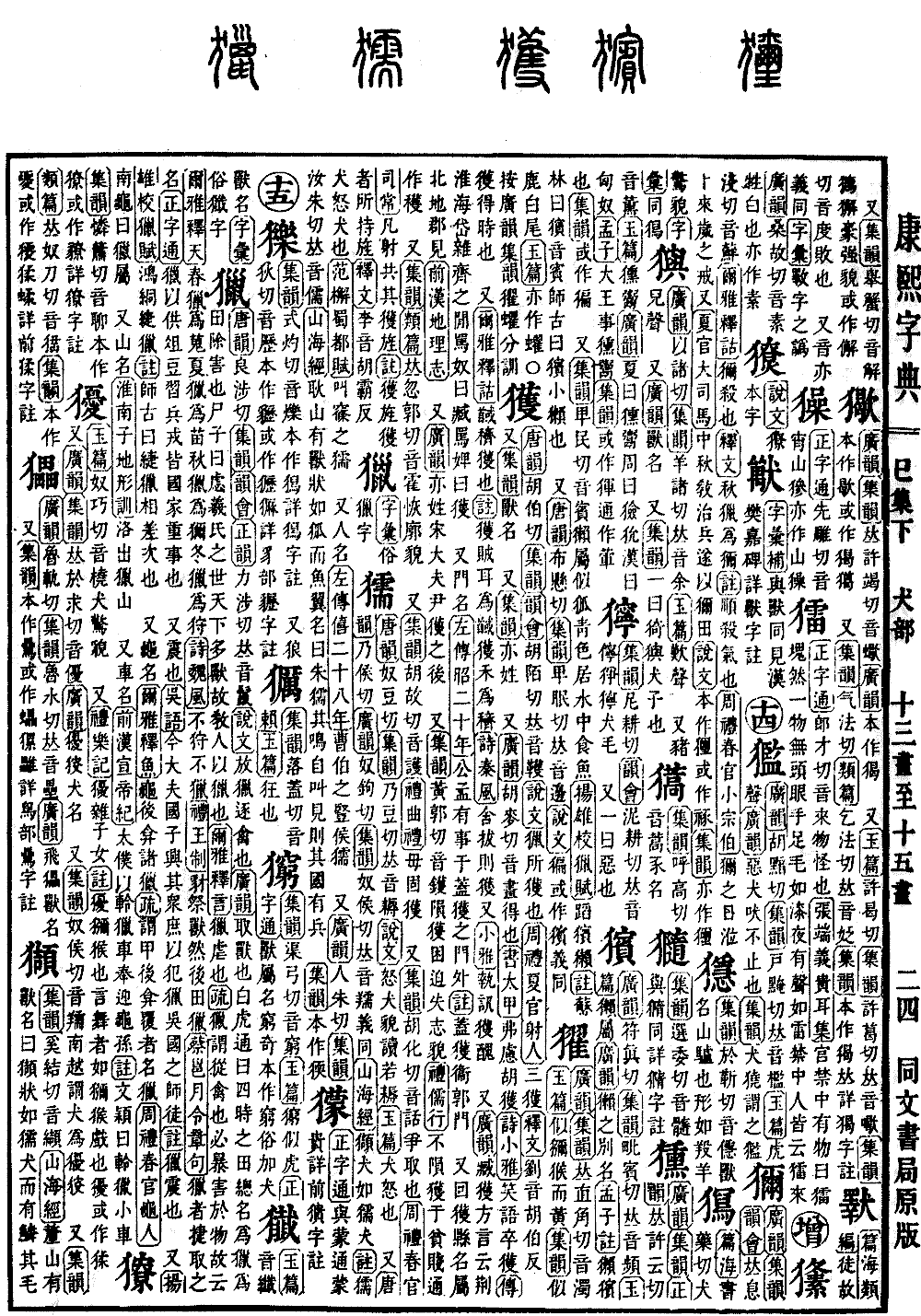
Page 720, Entry 19
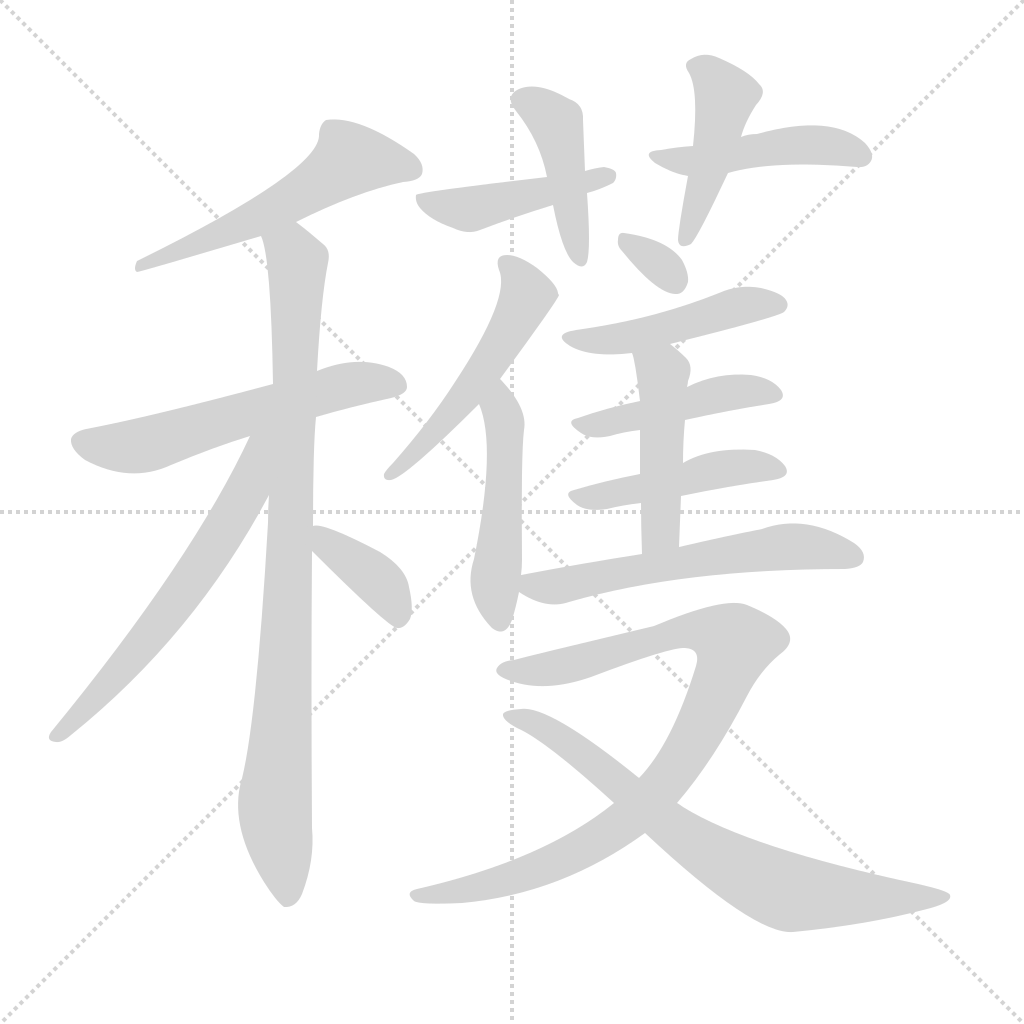
According to the Tang Rhyme (Tangyun), pronounced huo. According to the Collected Rhymes (Jiyun) and the Rhyme Compilation (Yunhui), pronounced huo. According to the Explanation of Characters (Shuowen), to cut and gather grain. Cutting grass is termed yi, while gathering grain is termed huo. As stated in the Book of Changes (Yijing), one does not plow or sow yet reaps the harvest; one does not clear fields yet possesses ripe land. As stated in the Book of Odes (Shijing), in the eighth month, there is a harvest. It also refers to the state of being distressed or dejected. As stated in the Book of Rites (Liji), to be not distressed or dejected on account of poverty or low status. The commentary states that the character yun implies the falling and scattering of withered leaves, while the character huo implies the withered state of grain after being harvested. According to the Collected Rhymes (Jiyun), pronounced huo. The meaning is the same. According to the Collected Rhymes (Jiyun), pronounced hu. Jiaohuo is a place name. As stated in the Book of Odes (Shijing), to organize the ranks and station them at Jiaohuo. The commentary states that Jiaohuo is the location where the Zhou dynasty bordered the Xianyun people. According to the annotations in the Er Ya, the place is currently located in Huzhong, within Fufeng Chiyang County.
Textual verification: The citation from the Book of Rites (Liji) regarding not being distressed or dejected due to poverty or low status, where the commentary states yun is like the falling of husk shells; this has been corrected according to the original text, changing husk shells to dry leaves.