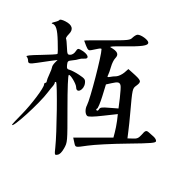
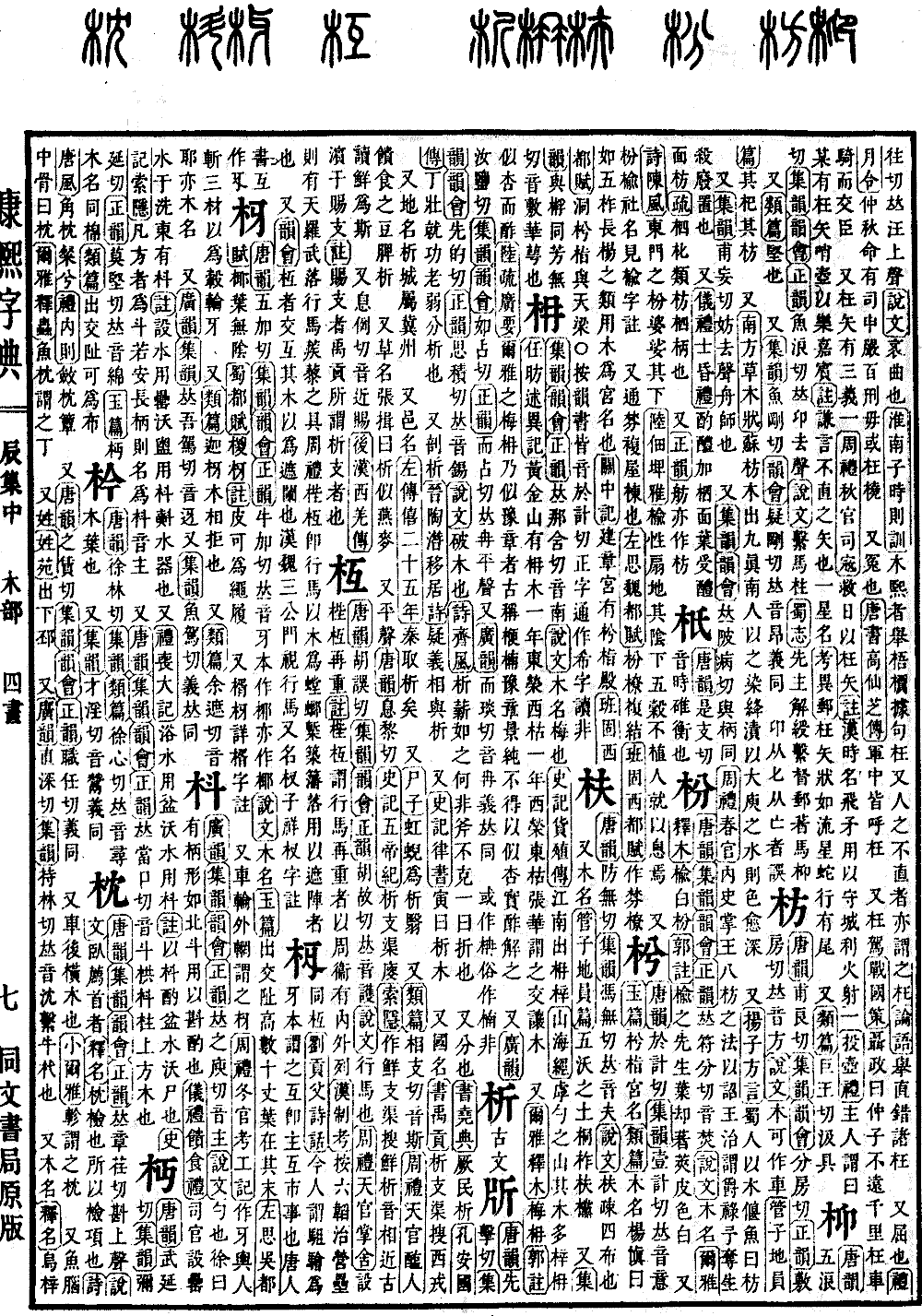
Chen Collection, Middle Volume
Radical: Tree (mù)
Kangxi strokes: 8
Page 515, Entry 10
Pronounced hu (falling tone).
According to the Explaining Graphs and Analyzing Characters (Shuowen Jiezi), it is defined as a movable wooden barrier used to block paths.
The Rites of Zhou (Zhouli), Section on the Offices of Heaven, Supervisor of Lodgings, records: Establish a double-layered barrier. The commentary explains that this barrier refers to the aforementioned wooden structure. The term double-layered indicates that it was used for defensive shielding, arranged in inner and outer rows.
The Investigation of Han Institutions (Hanzhi Kao) notes that, according to the Six Secret Teachings (Liutao), when organizing military encampments, implements such as sky nets, martial traps, movable barriers, and caltrops were utilized. The barrier mentioned in the Rites of Zhou is this movable wooden structure, constructed from timber shaped like a mantis to form a fence or screen, serving to obstruct enemy forces.
The Collection of Rhymes (Yunhui) further explains: This term refers to timber arranged in a crossing pattern to serve as a defensive fence or gate. During the Han and Wei dynasties, these barriers were placed in front of the gates of the offices of the Three Excellencies, where they were also known as pronged frames. For a detailed explanation, see the note under the entry for the character prong.
Textual research: Note regarding the entry for the character prong. According to the meaning of the text, the character auspicious should be corrected to detailed.