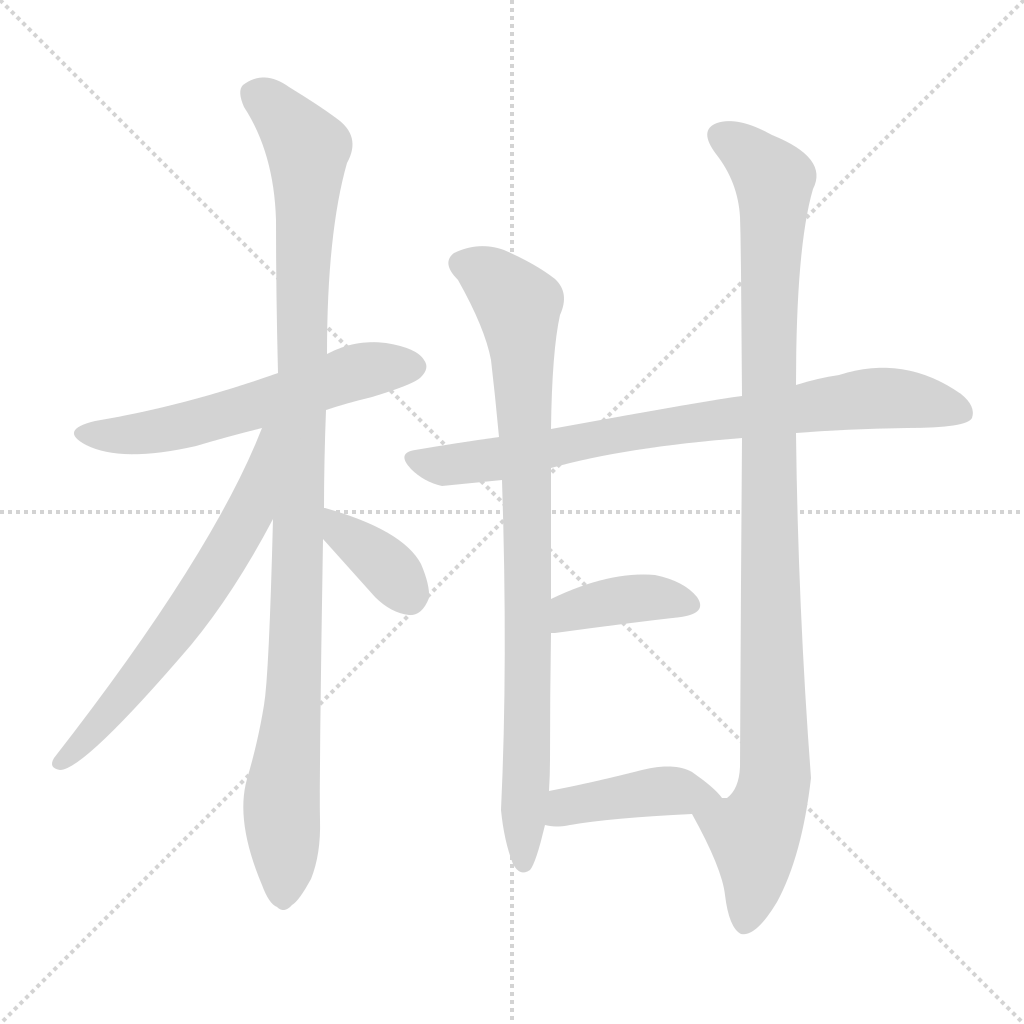
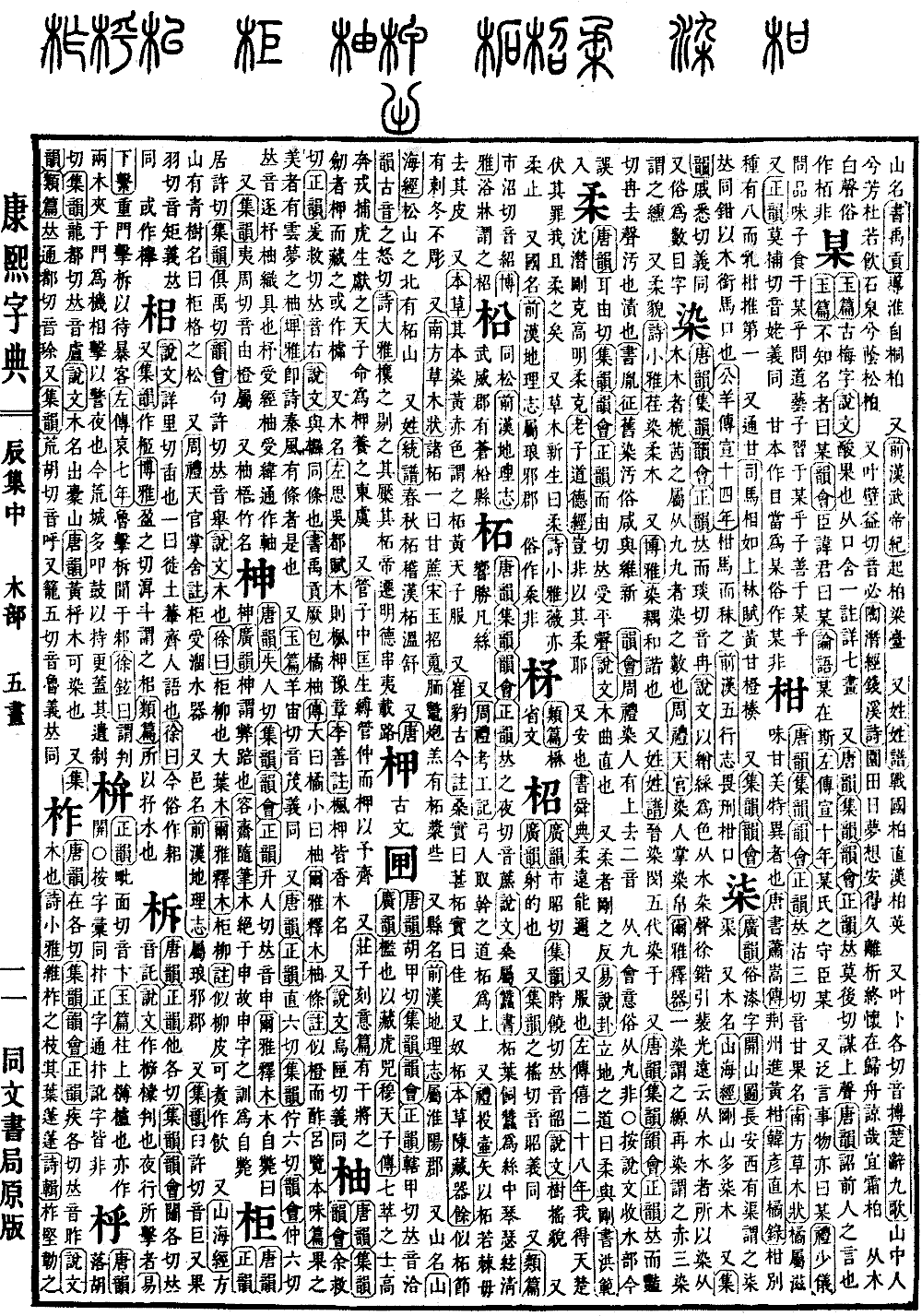
Chen Collection, Middle Volume. Radical: Wood (mù). Kangxi stroke count: 9. Page 519, Entry 02.
Pronounced gan. It is the name of a type of fruit. The Book of Plants and Trees of the Southern Regions (Nanfang Caomu Zhuang) records that it belongs to the tangerine family and has a particularly sweet taste. The History of the Tang Dynasty (Tangshu), Biography of Xiao Song, records that Jingzhou presented yellow tangerines as tribute. The Record of Tangerines (Ju Lu) by Han Yanzhi records that there are eight varieties of this fruit, with the milk tangerine ranked first.
It is also used interchangeably with the character for sweet (gan). The Shanglin Rhapsody (Shanglin Fu) by Sima Xiangru mentions yellow sweet oranges and jujubes.
Furthermore, according to the Collected Rimes (Jiyun) and the Compendium of Rimes (Yunhui), it is the same as the character for pincer (qian). It refers to using wood to clamp a horse's mouth. The Commentary of Gongyang (Gongyang Zhuan), 14th year of Duke Xuan, records clamping a horse's mouth before feeding it. The History of the Former Han Dynasty (Qianhan Shu), Treatise on the Five Elements, mentions the fear of having one's mouth clamped.