Si Collection, Upper Volume
Radical: Water (shuǐ)
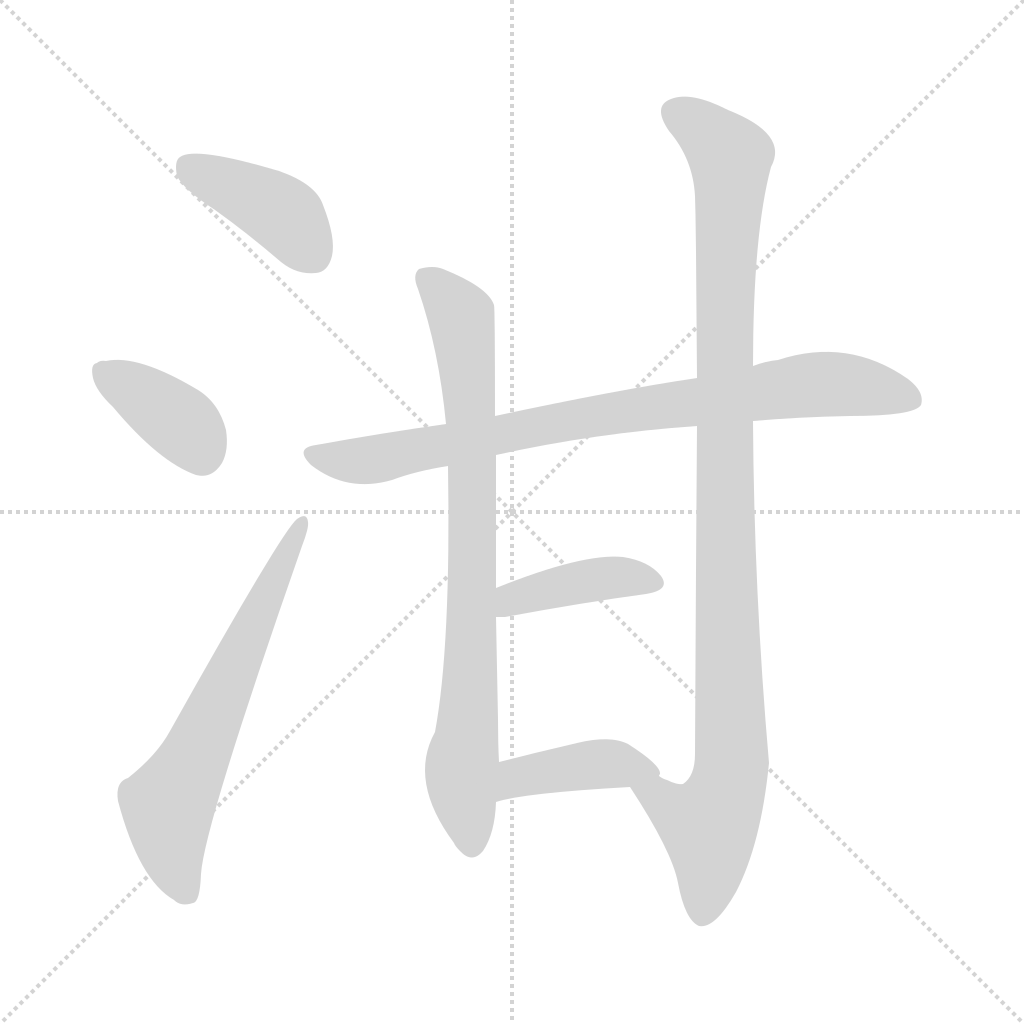
Entry: gān
Kangxi strokes: 9
Page 616, Entry 10
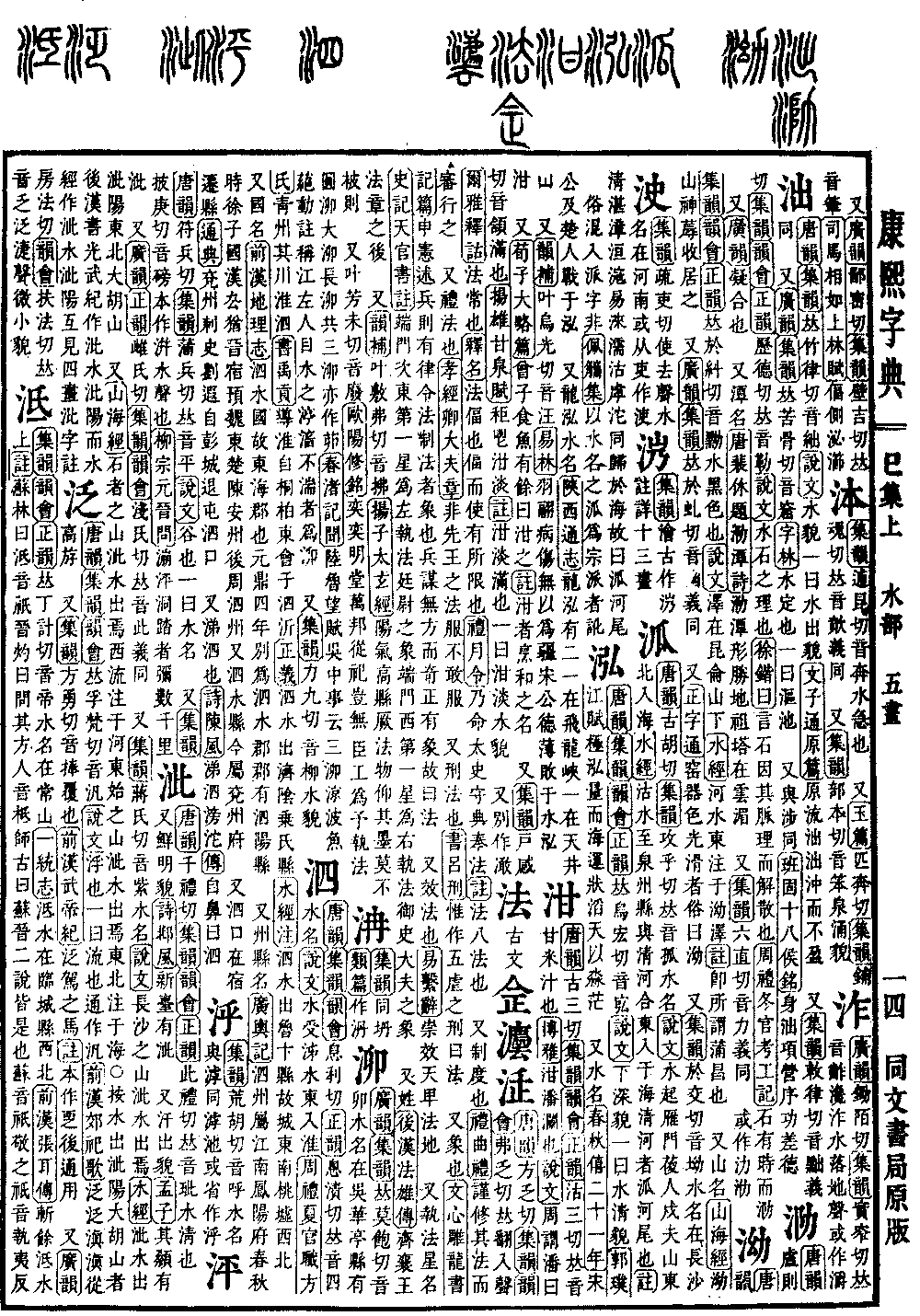
Pronounced gān. The water left over from washing rice. In the book Broad Elegance (Boyà), gān is defined as dishwater. According to the book Explaining Graphs and Analyzing Characters (Shuōwén), the people of the Zhou dynasty called dishwater gān. Also, in the book Xunzi (Xúnzǐ), Great Summary chapter, it is written that when Zengzi had leftover fish, he said to gān it. The commentary notes that gān refers to the act of seasoning food while cooking. Also, pronounced hàn. It means to be full. In the poem Sweet Spring Rhapsody (Gānquán fù) by Yang Xiong, there is the phrase gāndàn. The commentary notes that gāndàn means full. Another interpretation is that gāndàn describes the appearance of water. It is also written in a variant form (gǎn).