Si Collection, Lower Volume
Radical: Fire (huǒ)
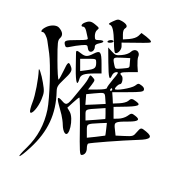
Guan, 22 strokes
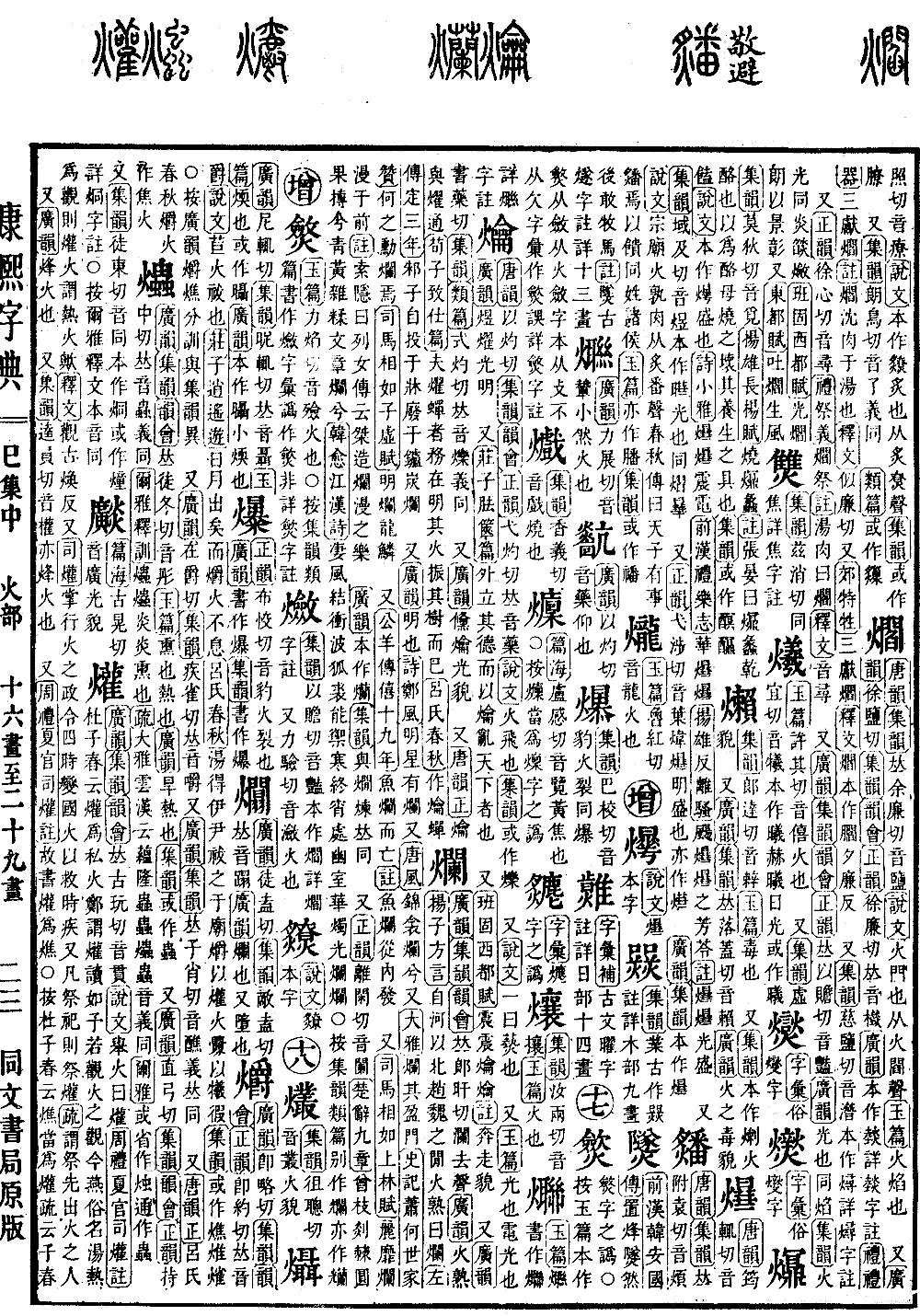
Page 687, Entry 36
According to the Expanded Rhymes (Guangyun), Collected Rhymes (Jiyun), and Rhyme Compendium (Yunhui), the pronunciation is guan. According to the Explaining Graphs and Analyzing Characters (Shuowen), to light a fire is called guan. In the Rites of Zhou (Zhouli), Summer Offices, Supervisor of Fire, it is noted that Du Zichun stated that guan refers to a private fire. Zheng Xuan stated that guan is read like the word for watch in the phrase like watching a fire. Nowadays, in the customs of Yan, the term for heating soup is called guan. Thus, could guan fire mean hot fire? In the Explanation of Texts (Shiwen), it is noted that guan is pronounced huan. Furthermore, the Supervisor of Fire is in charge of carrying out the laws of fire, changing the national fire according to the four seasons to prevent seasonal diseases. Also, regarding all sacrificial rites, one must sacrifice to the spirit of guan. The commentary explains this means sacrificing to the person who first discovered fire. According to the Expanded Rhymes (Guangyun), it also refers to a beacon fire. According to the Collected Rhymes (Jiyun), it is pronounced quan, and also refers to a beacon fire. In the Rites of Zhou (Zhouli), Summer Offices, Supervisor of Fire, the ancient text writes guan as scorched. Note that Du Zichun stated that scorched should be guan. The commentary states that Zichun did not follow the ancient text with scorched, but instead used guan. However, since the commentary includes this phonetic reading, it is preserved here.