Si Collection, Upper Volume
Radical: Water (shuǐ)
Kangxi Strokes: 13
Page 637, Entry 16
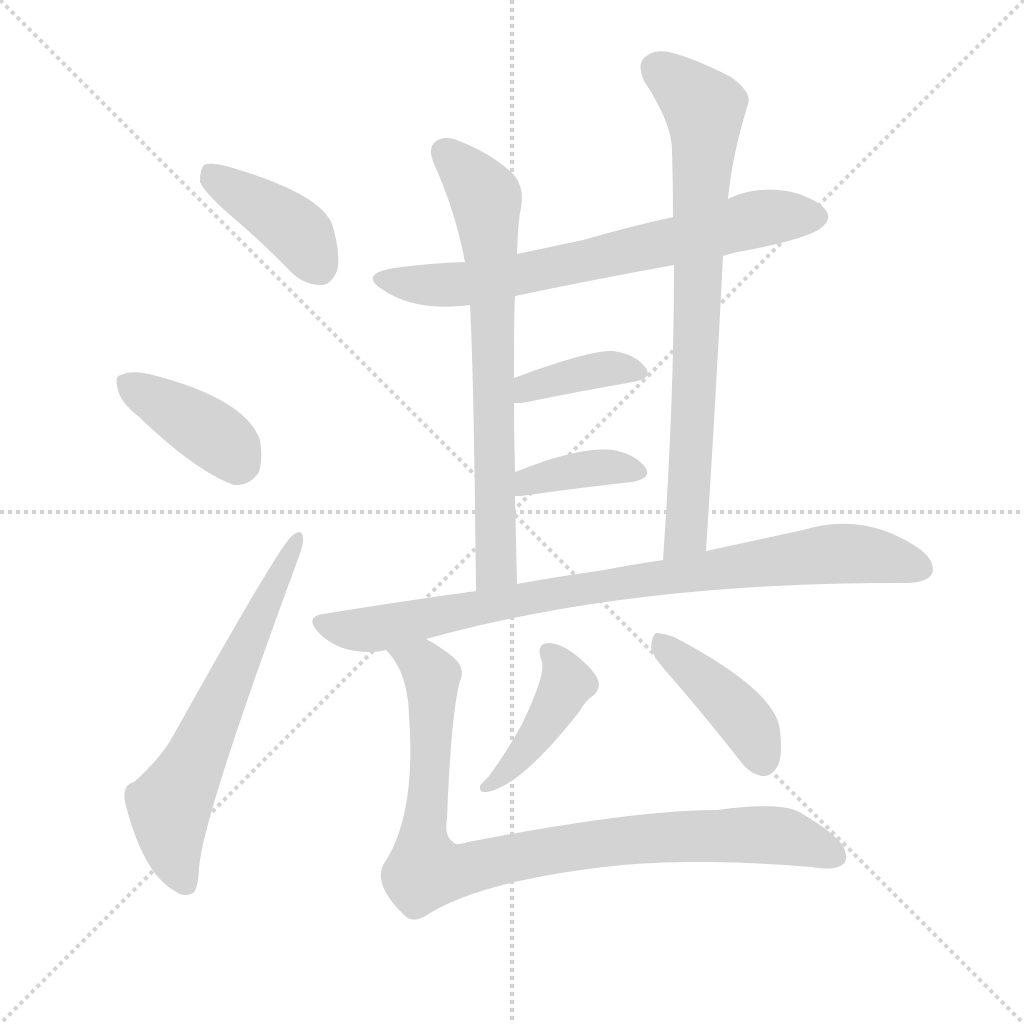
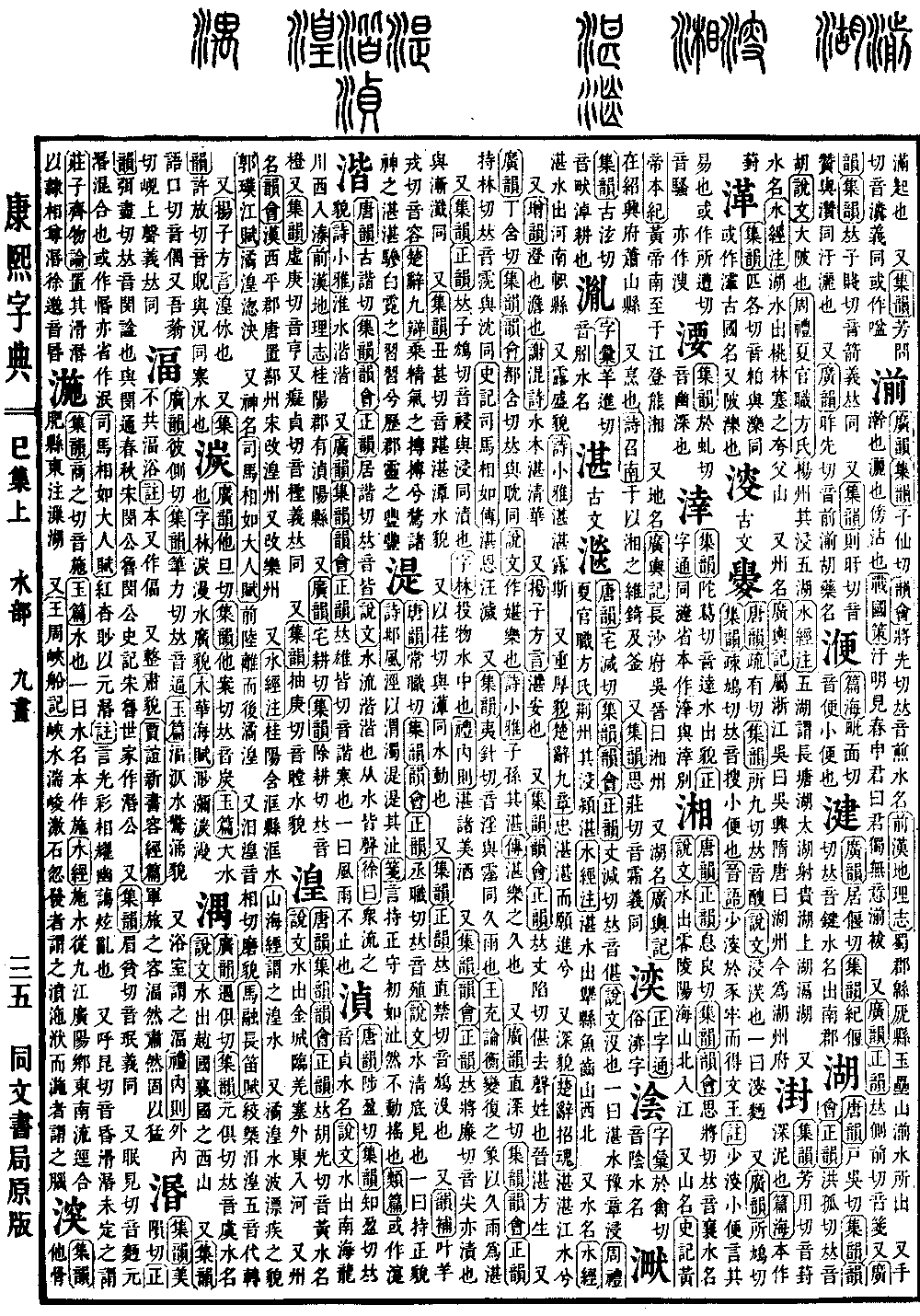
According to the Tang Rhymes (Tang Yun), the Collected Rhymes (Jiyun), the Rhyme Dictionary (Yunhui), and the Correct Rhymes (Zhengyun), it is pronounced zhan (falling tone), identical to the character zhan. According to the Discussion of Writing and Explanation of Characters (Shuowen Jiezi), it means to sink. Another interpretation refers to the Zhan River, a lake or marsh in the Yuzhang region. The Rites of Zhou (Zhouli), Summer Official, Office of the Regional Commissioner states: In Jingzhou, the lakes include the Ying River and the Zhan River. The Commentary on the Water Classic (Shuijing Zhu) states: The Zhan River originates northwest of Yuchi Mountain in Chou County. It also refers to a river name. The Water Classic (Shuijing) states: The Zhan River originates in Zhi County, Henan. It is also used to describe the density of dew. The Book of Odes (Shijing), Lesser Odes, contains the phrase: The dew is dense. It also describes a sincere and stable demeanor. The Songs of Chu (Chuci), Nine Chapters, contains the phrase: Sincere and steady, I wish to advance. It also describes a deep and profound appearance. The Songs of Chu (Chuci), Summoning of the Soul, contains the phrase: The river water is deep. According to the Supplemented Rhymes (Zengyun), it means clear and tranquil. Xie Hun's poetry contains the phrase: The water and trees are clear and elegant. According to Yangzi's Regional Dialects (Fangyan), it means stable. According to the Collected Rhymes (Jiyun), the Rhyme Dictionary (Yunhui), and the Correct Rhymes (Zhengyun), it is pronounced zhan (departing tone), identical to the departing tone of the character zhan. It is used as a surname, for example, Zhan Fangsheng of the Jin Dynasty. According to the Broad Rhymes (Guangyun), the Collected Rhymes (Jiyun), and the Rhyme Dictionary (Yunhui), it is pronounced dan, equivalent to the character dan. The Discussion of Writing and Explanation of Characters (Shuowen Jiezi) writes it as a variant form (yan), meaning joy. The Book of Odes (Shijing), Lesser Odes, contains the phrase: May your descendants rejoice. The Commentary interprets this as lasting enjoyment. According to the Broad Rhymes (Guangyun), the Collected Rhymes (Jiyun), the Rhyme Dictionary (Yunhui), and the Correct Rhymes (Zhengyun), it is pronounced shen, identical to the character chen. It is equivalent to the character shen. Records of the Grand Historian (Shiji), Biography of Sima Xiangru, contains the phrase: Profound grace and vast benevolence. According to the Collected Rhymes (Jiyun), it is pronounced yin, identical to the character yin. It is equivalent to the character yin, referring to continuous, incessant rain. Wang Chong's Balanced Discourses (Lunheng) states: Among portents of disaster or blessings, long-lasting rain is called zhan. According to the Collected Rhymes (Jiyun) and the Correct Rhymes (Zhengyun), it is pronounced jin, identical to the character jin. It is equivalent to the character jin, meaning to soak. The Dictionary of Characters (Zilin) interprets it as throwing an object into water. The Book of Rites (Liji), Inner Rules, mentions: Soaking them in fine wine. According to the Collected Rhymes (Jiyun), the Rhyme Dictionary (Yunhui), and the Correct Rhymes (Zhengyun), it is pronounced jian, also meaning to soak. It is equivalent to the characters jian and jian. According to the Collected Rhymes (Jiyun), it is pronounced chen, meaning the appearance of water as in the term zhantan. It is also pronounced ren, equivalent to a variant character, referring to the movement of water ripples. According to the Collected Rhymes (Jiyun) and the Correct Rhymes (Zhengyun), it is pronounced zhen, meaning to sink. According to the Rhyme Supplement (Yunbu), the rhyming pronunciation is yang, equivalent to the sound rong. The Songs of Chu (Chuci), Nine Arguments, contains the phrase: Riding the concentrated energy, I gallop toward the deep gods; driving white rainbows, I pass the abundant gathering of spirits.