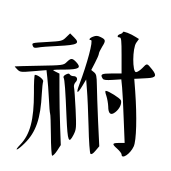
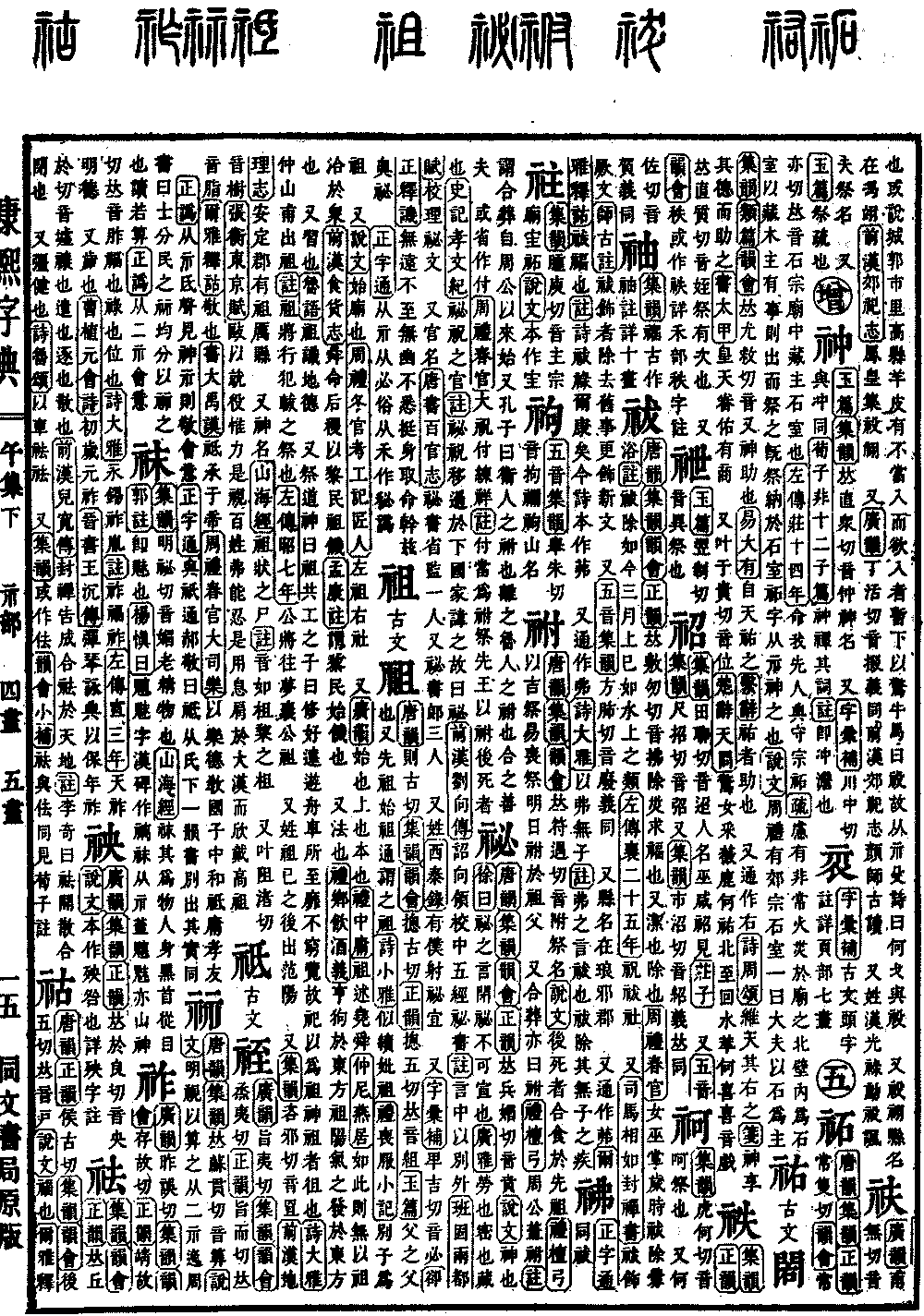
Wu Collection, Lower Volume
Radical: Spirit (shì)
Kangxi stroke count: 10
Page 841, Entry 16
Tang Dynasty Rhymes (Tangyun), Collected Rhymes (Jiyun), and Dictionary of Rhymes (Yunhui) cite the pronunciation as fu (falling tone). It is a name for a ritual. Explaining Script and Elucidating Characters (Shuowen) defines it as the ceremony of joining the recently deceased to the ancestral feast. Book of Rites (Liji), specifically the Tan Gong section, states: By replacing the mourning sacrifice with a celebratory sacrifice, the next day one performs the fu ritual with the grandfather. It also refers to joint burial, which is also called fu. The Book of Rites (Liji), Tan Gong section, notes: The Duke of Zhou probably practiced fu. The commentary adds: This means that joint burial began with the Duke of Zhou. Confucius also said: The people of Wei, when performing the fu, keep them separate; the people of Lu, when performing the fu, join them together. How excellent this is. Sometimes it is written in a simplified form (fu). Rites of Zhou (Zhouli), section on the Ministry of Spring, mentions the Great Invoker performing the fu after the lian and xiang ceremonies. The commentary states: The character fu should be read as fu, as it refers to performing a sacrifice to former kings to join the recently deceased to them.