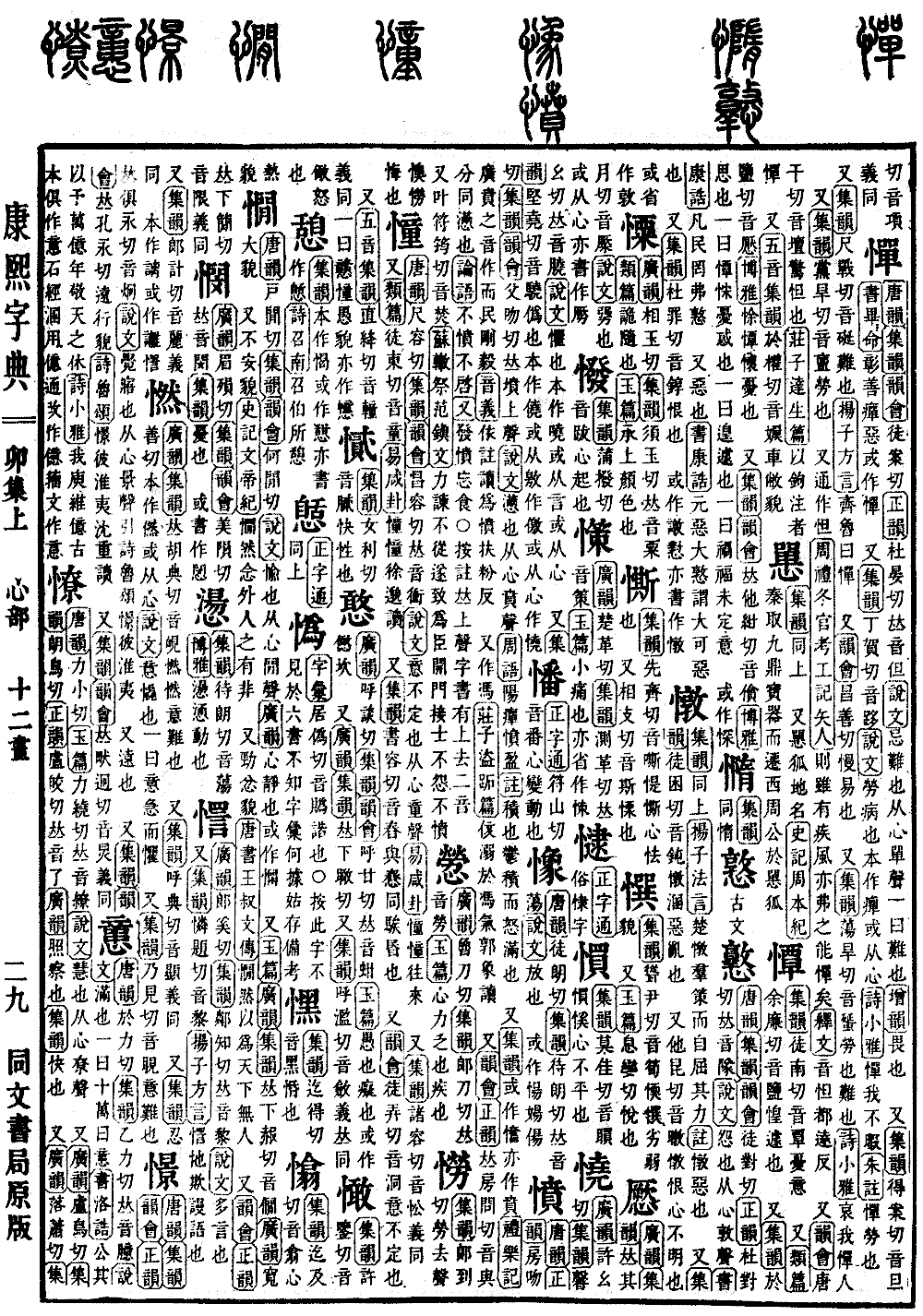
Mao Collection, Upper Volume
Radical: Heart (xīn)
愤
Kangxi strokes: 16
Page 403, Entry 01
Pronounced fen (rising tone).
Explaining Writing (Shuowen): Distressed or pent-up. Formed from the heart radical and the phonetic component ben.
Discourses of the States (Zhouyu): Accumulated energy distresses and fills the body.
Commentary: This refers to being congested or suppressed and full of anger.
Also found in Collected Rhymes (Jiyun): Written as a variant form. Also written as ben.
Record of Music (Yueji) in the Book of Rites (Liji): The sound of grand exuberance rises, and the people become strong and resolute.
Sound and Meaning (Yinyi): Following the commentary, it is read as fen, pronounced fen (rising tone).
Also written as feng.
Zhuangzi, Robber Zhi chapter: Indulging in a surge of energy. Guo Xiang reads this as fen.
Also in Collected Rhymes (Jiyun) and Orthography Rhymes (Zhengyun): Pronounced fen, with a sound identical to fen (flat tone). Meaning full.
Analects (Lunyu): If he is not in a state of indignant searching, I will not open up the subject for him.
Also: Forgetting to eat when inspired by a sense of determination.
Note: The commentary gives the rising tone. Dictionary records provide both the rising and departing tones.
Also rhyming as fen:
Su Zhe, Eulogy for Fan Zhen: His earnest remonstrances were not followed, leading him to resign as a minister. He opened his doors to scholars, harboring neither resentment nor indignation.
Explaining Writing (Shuowen): Fen is the original character. The character is written with the grass radical in some forms.