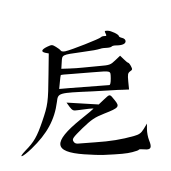
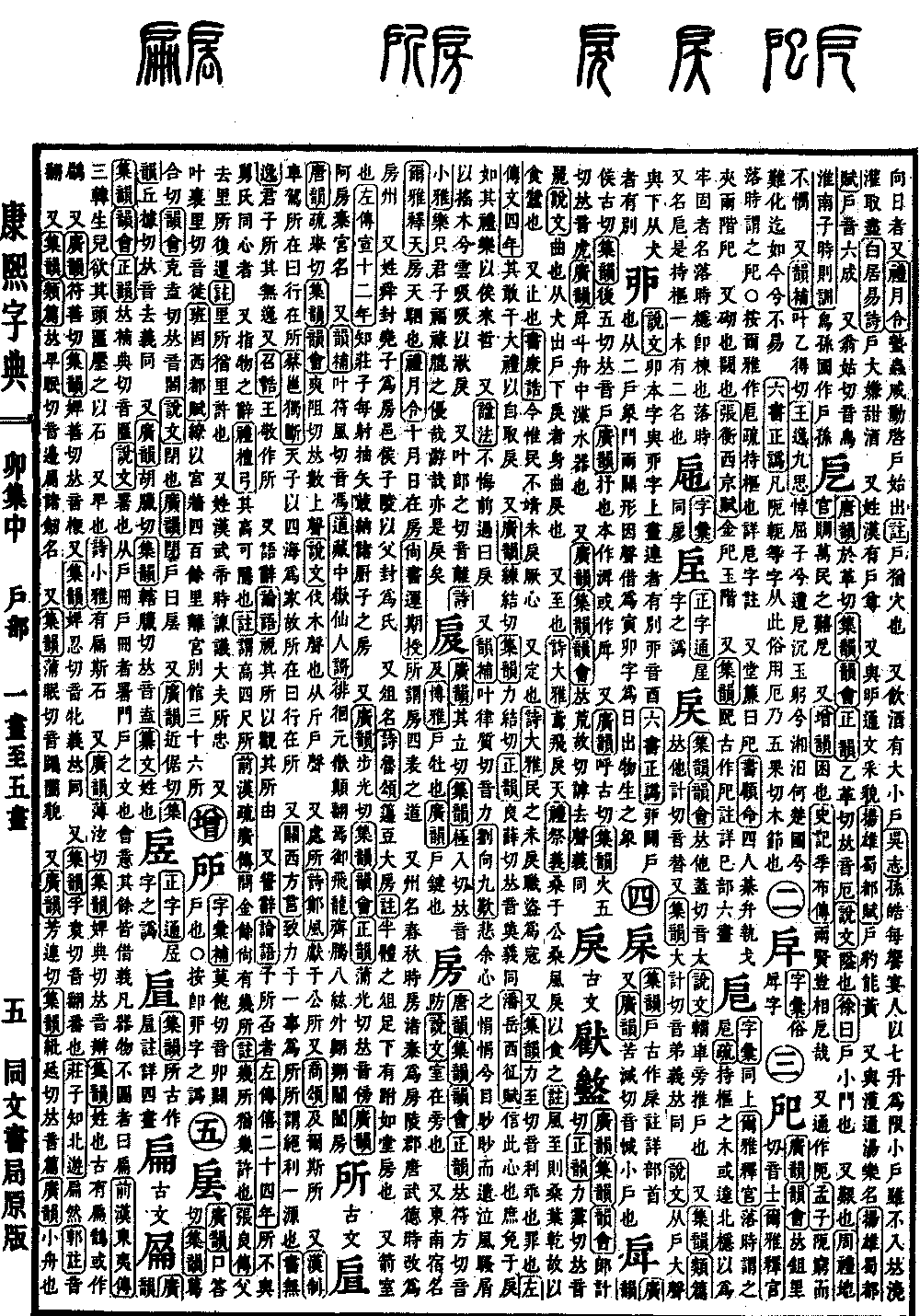
Mao Collection, Middle Volume. Radical: Door (hù). Kangxi strokes: 5. Page 415, Entry 01.
Pronounced e.
According to the Explaining Graphs and Analyzing Characters (Shuowen Jiezi), it means narrow. Xu states it refers to a small door. It also means hardship. In the Rites of Zhou (Zhouli), it says to provide for the impoverished and those in hardship. According to the Expanded Rhymes (Zengyun), it means to be in distress. In the Records of the Grand Historian (Shiji), it is written: How could two worthy men be in distress because of one another? It is also interchangeably written as the variant form (e). In the Mencius (Mengzi), it says to be in distress and poverty yet not be sorrowful. According to the Rhyme Supplement (Yunbu), it rhymes with the sound de. In Wang Yi's Nine Sighs (Jiusi), it says: Mourning the Qu son for encountering distress, submerging his precious body in the Xiang River. Why is the State of Chu so difficult to transform, until this day it does not change? According to the Six Writings Corrected (Liushu Zheng'e), all characters such as e and e derive from this. The common usage of the character e is phonetically pronounced wu, which refers to a knot in wood.
Textual Research: In Wang Yi's Nine Sighs (Jiusi), the text has been corrected to read until this day.