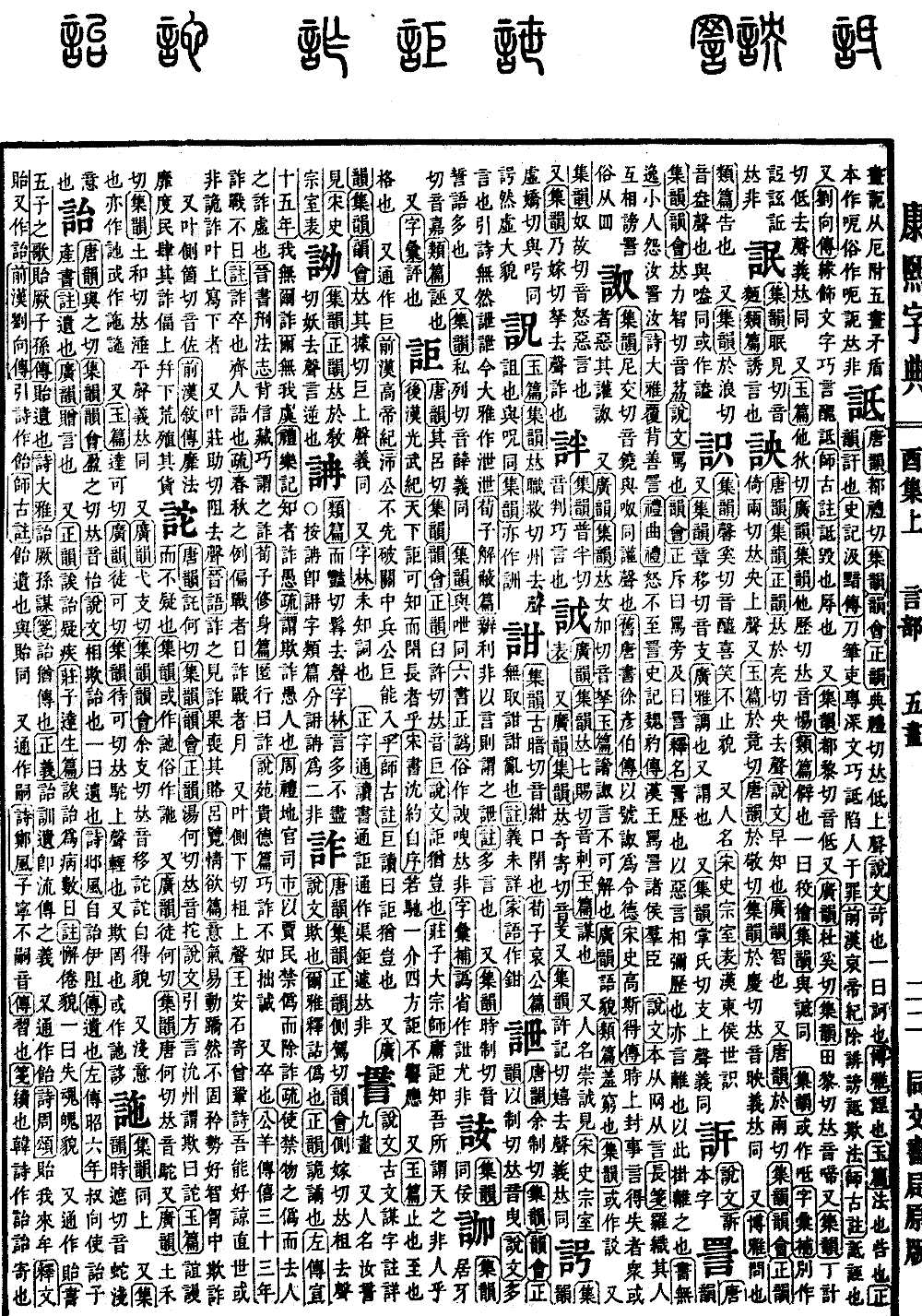
You Collection, Upper Volume
Radical: Speech (yán)
Kangxi stroke count: 12
Page 1154, Entry 01
Pronounced di (rising tone).
Shuowen Jiezi (Explanation of Graphs and Analysis of Characters): Harsh criticism. Another interpretation is to scold or reprimand.
Guangya (Broad Refinements): To slander or defame.
Yupian (Jade Chapters): To prosecute according to law; to slander or defame.
Zhengyun (Correct Rhymes): To expose and attack.
Records of the Grand Historian (Shiji), Biography of Ji An: Officials skilled in law and writing specialize in using harsh statutes to craftily slander and frame others into committing crimes.
Book of Han (Hanshu), Annals of Emperor Ai: To abolish laws concerning libel, slander, and fraud.
Yan Shigu Commentary: Di means to slander or smear.
Also, Biography of Liu Xiang: To polish one's writing, using clever words and malicious language to slander.
Yan Shigu Commentary: Di means to defame or insult.
Also, pronounced di (level tone).
Also, pronounced ti (level tone).
Also, pronounced di (falling tone). The meanings are the same.
Also, pronounced ti (entering tone).
Leipian (Classified Chapters): Wicked or depraved. Another interpretation is cunning or deceitful.
Jiyun (Collection of Rhymes): Same as the character appearing as a variant form.
Jiyun (Collection of Rhymes): Sometimes written as the character appearing as a variant form.
Zihuibu (Supplement to the Collection of Characters): Also written as the character appearing as a variant form, which is incorrect.