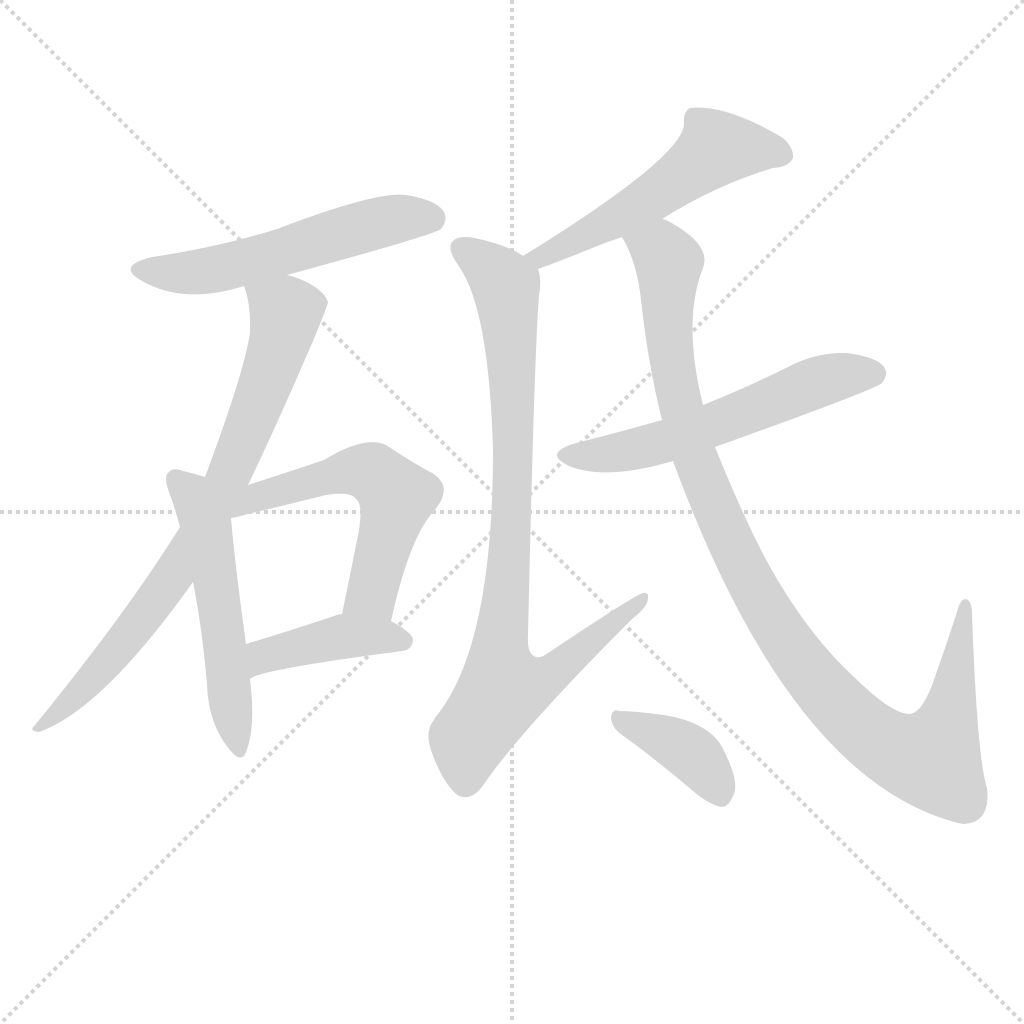
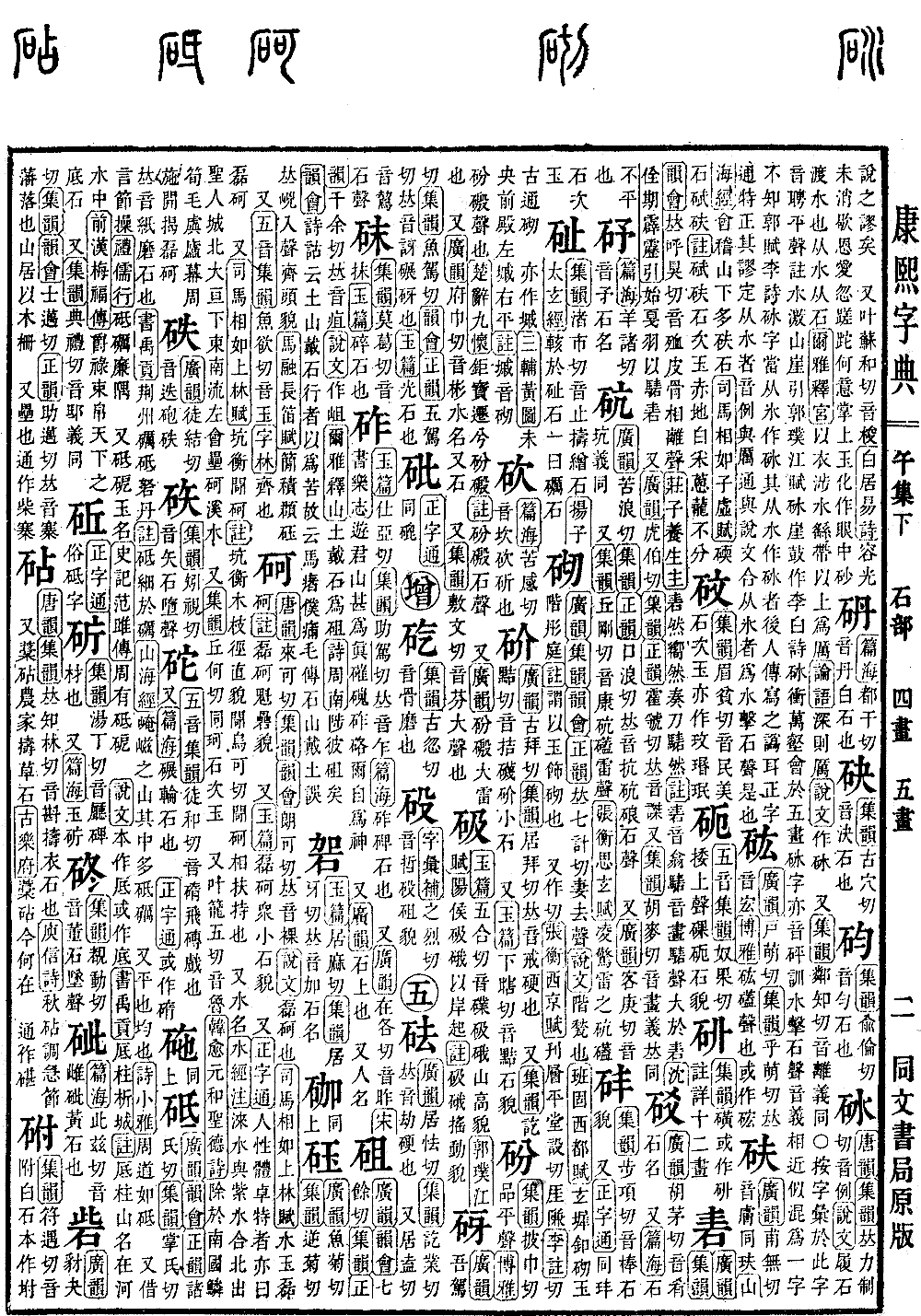
Wu Collection, Lower Volume
Radical: Stone (shí)
Kangxi strokes: 10
Page 828, Entry 37
Pronounced zhi (rising tone).
Refers to a whetstone.
Book of Documents (Shangshu), Tribute of Yu (Yugong): Jingzhou produces whetstones, fine-grained whetstones, arrowhead stones, and cinnabar.
Commentary: A fine-grained whetstone is smoother than a standard whetstone.
Classic of Mountains and Seas (Shanhaijing): Mount Yanzhi produces many whetstones.
Also refers to being level and uniform.
Book of Odes (Shijing), Lesser Odes (Xiaoya): The main road is as level as a whetstone.
Also used to describe moral integrity.
Book of Rites (Liji), Conduct of Scholars (Ruxing): To hone away rough edges and maintain uprightness.
Also refers to diwo, a type of jade.
Records of the Grand Historian (Shiji), Biography of Fan Ju: The region of Zhou produces diwo jade.
Shuowen Jiezi: The original character is written as di. Sometimes also written as a variant form (di).
Book of Documents (Shangshu), Tribute of Yu (Yugong): Mount Dizhu and Mount Xicheng.
Commentary: Dizhu is the name of a mountain. It is located in the Yellow River.
History of the Former Han (Qianhan shu), Biography of Mei Fu: Titles, salaries, and silk fabrics are the foundations pursued by all under heaven.
Also, pronounced di (rising tone). The meaning is the same.