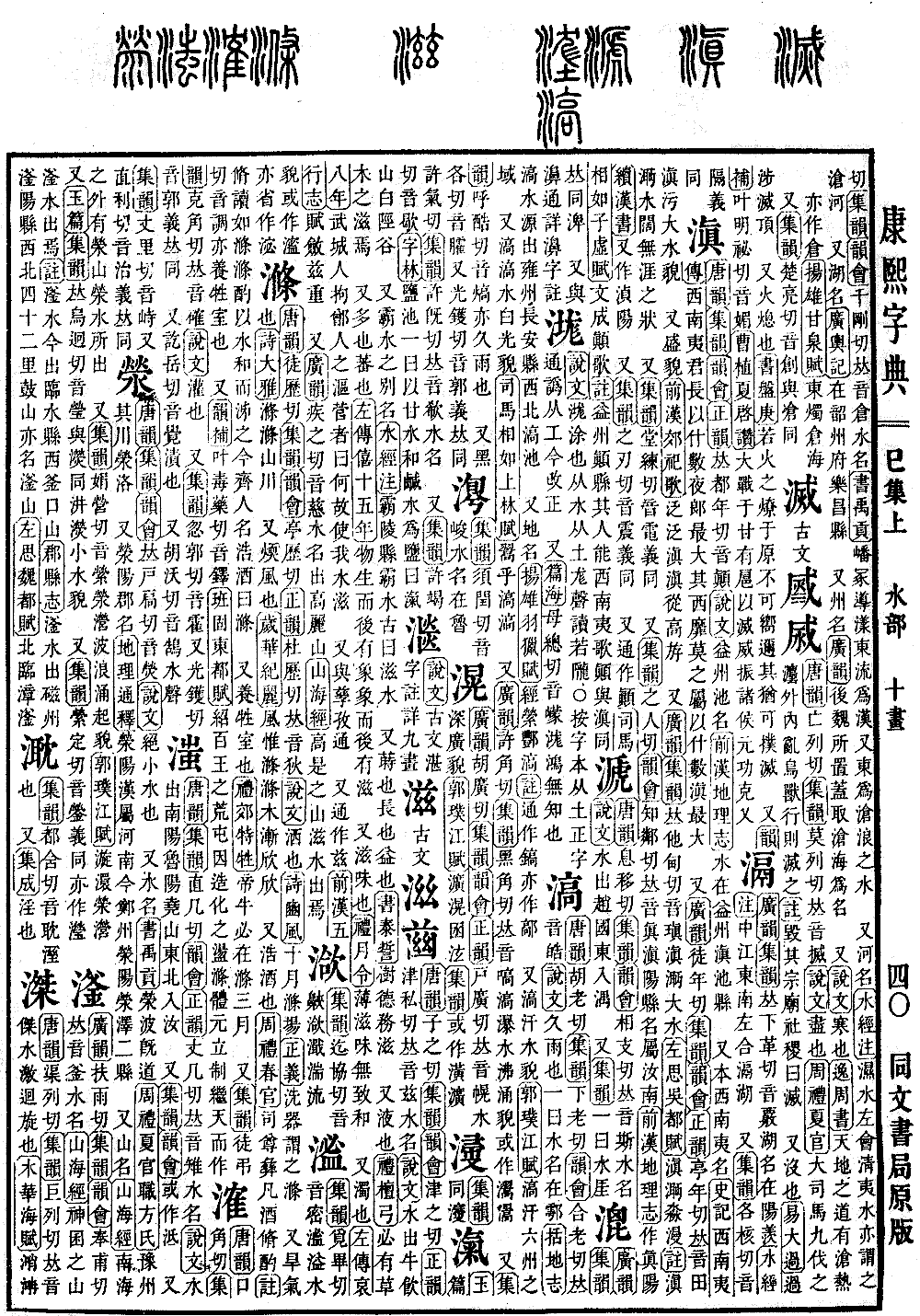
Si Collection, Upper Volume
Radical: Water (shuǐ)
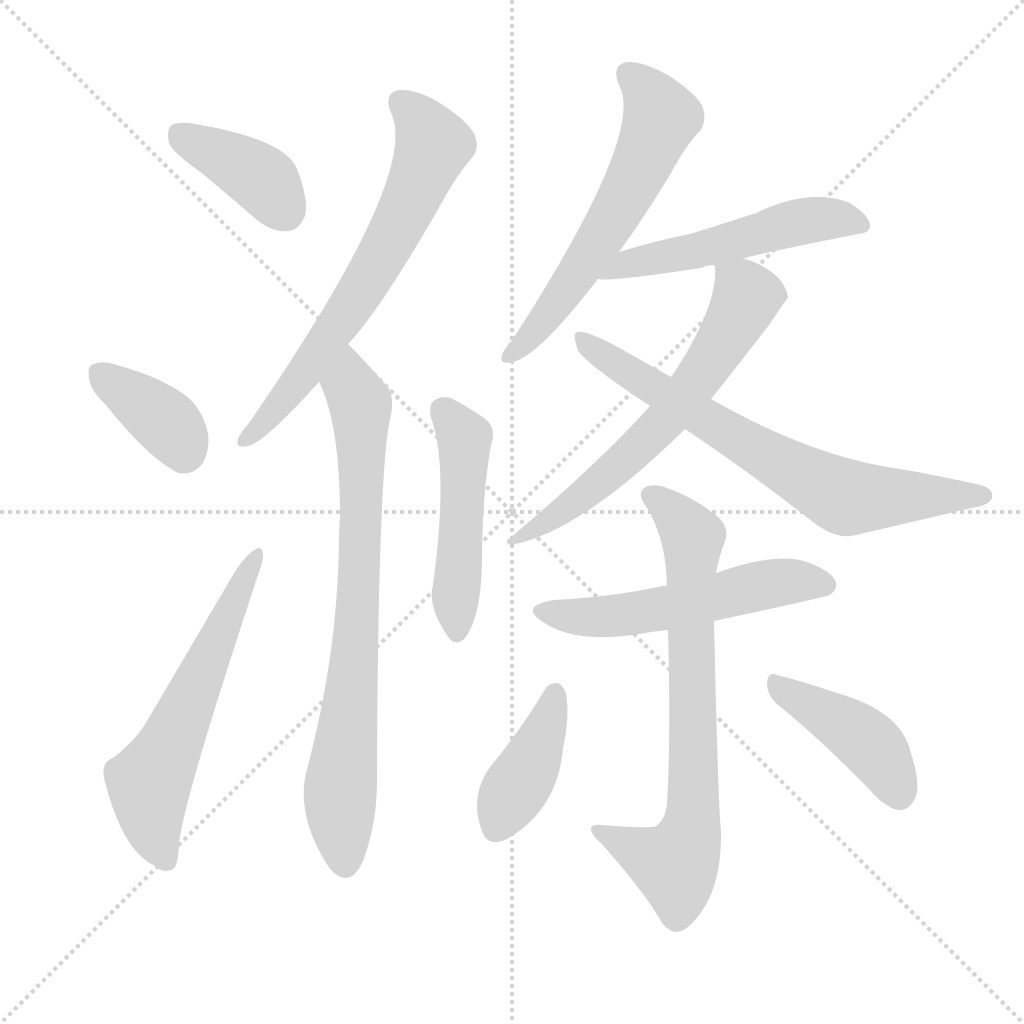
滌
Kangxi strokes: 14
Page 642, Entry 20
Pronounced dí.
According to the Explaining Graphs and Analyzing Characters (Shuowen Jiezi), it means to wash or sprinkle.
In the Book of Odes (Shijing), in the Bin Wind section: In the tenth month, the threshing floor is cleared (washed).
According to the Correct Meaning (Zhengyi), washing vessels is called di.
It also refers to the heat of a drought.
In the Book of Odes (Shijing), in the Greater Odes section: The mountains and rivers are scorched (di di).
It also refers to a warm breeze.
In the Glorious Records of the Four Seasons (Suihua Jili): The wind is warm, and the trees gradually begin to thrive.
It also refers to diluted or thin wine.
In the Rites of Zhou (Zhouli), in the Ministry of Spring: The official in charge of ritual vessels manages the wine and the ladling.
The commentary notes: Xiu is read like di. Di-zhuo refers to diluting and straining wine with water. Currently, the people of Qi call thin wine di.
It also refers to a stall for raising sacrificial animals.
In the Book of Rites (Liji), in the Suburban Sacrifice Special Regulations: The emperor's ox must be kept in the stall (di) for three months.
Also pronounced diào according to the Collected Rhymes (Jiyun). It also refers to a stall for raising sacrificial animals.
Also rhymes with duo according to the Rhyme Supplement (Yunbu).
In Ban Gu's Eastern Capital Rhapsody (Dongdu Fu): Succeeding the ruined states of a hundred kings, we rely on the creative forces of the universe to cleanse and wash away the past. Embodying the original principles and establishing the institutions, we follow Heaven in our creations.