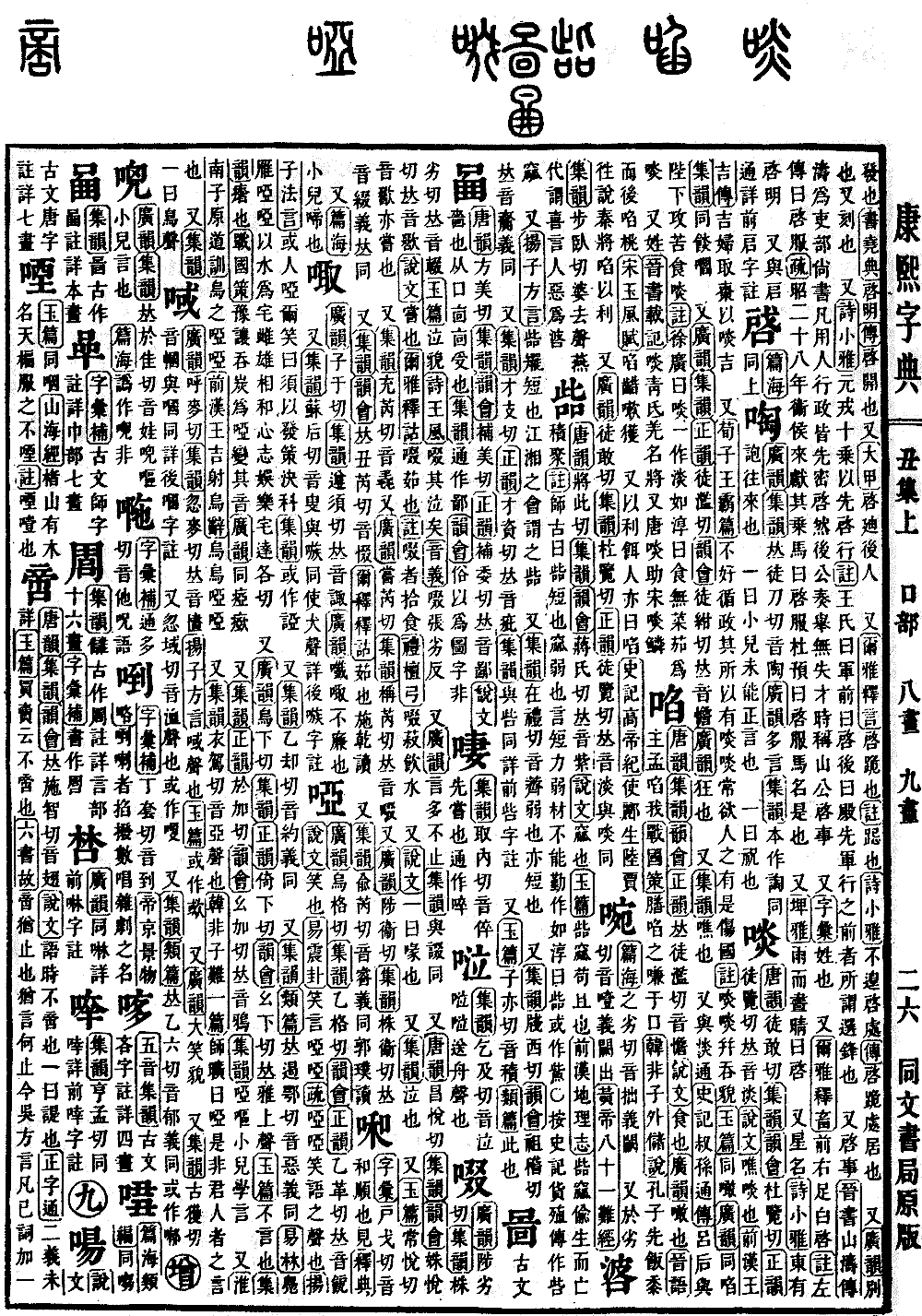
Chou Collection, Upper Volume
Radical: Mouth (kǒu)
Kangxi strokes: 11
Page 196, Entry 03
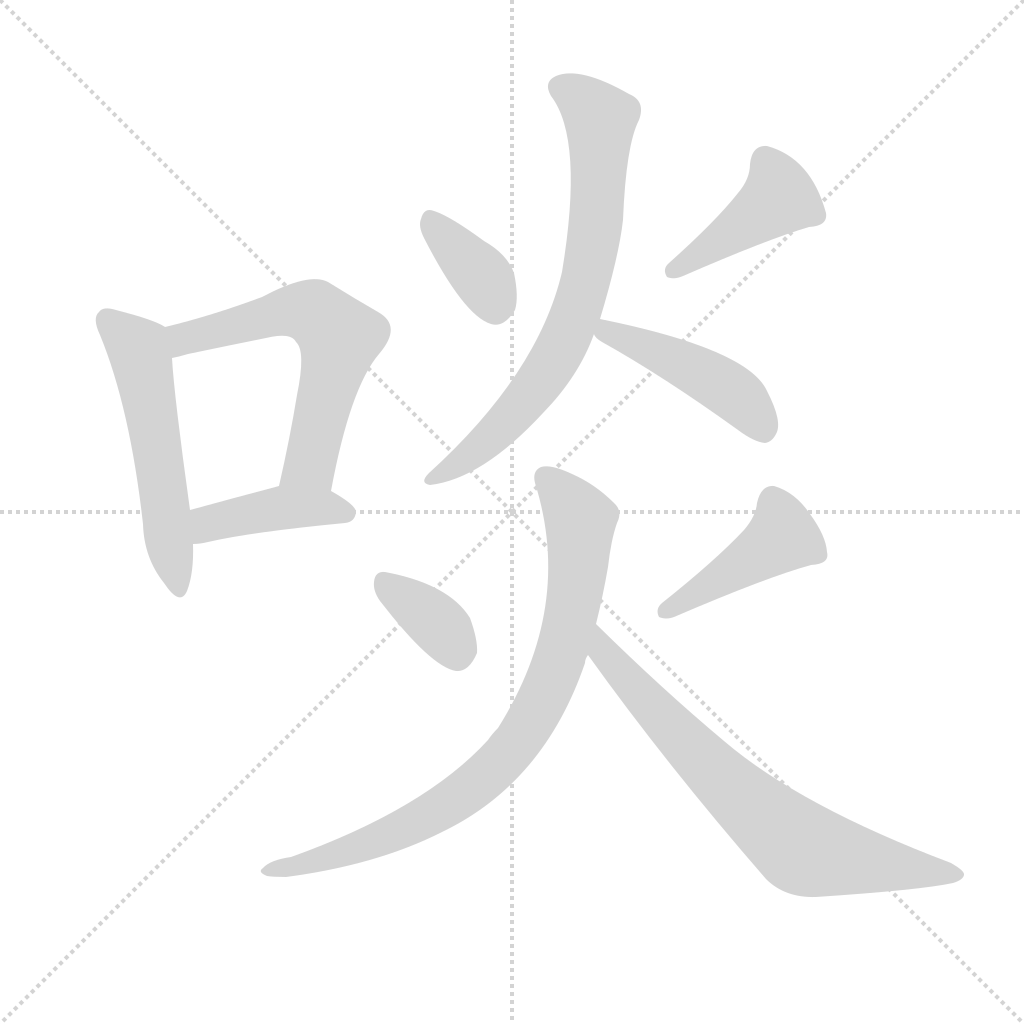
Pronounced dan (falling tone).
Shuowen Jiezi (Explanation of Simple and Compound Characters): The act of chewing and eating.
Book of Han (Hanshu), Biography of Wang Ji: Wang Ji's wife offered him dates to eat.
Also, Xunzi, Kingly Governance Chapter: They do not like to follow government decrees; they are always greedily and insatiably desiring to possess others' property, which harms the state.
Annotation: Dan-dan describes the appearance of annexing or swallowing up.
Yupian: Identical to the character dan (to eat).
Guangyun: Identical to the character dan (to eat).
Jiyun: Identical to the characters dan and tan.
Also, pronounced dan (falling tone).
Guangyun: Meaning reckless or arrogant.
Also, Jiyun: Meaning to chew.
Also, interchangeable with the character dan (bland or light).
Records of the Grand Historian (Shiji), Biography of Shusun Tong: Empress Lu shared hardships with His Majesty and ate coarse, bland food.
Annotation: Xu Guang stated: In some editions, this character is written as dan (bland). Ru Chun stated: Eating a meal without vegetables is called dan.
Also, a surname.
Book of Jin (Jinshu), Annals of the Warlords: Dan Qing was a famous general of the Di and Qiang tribes. Also, there was Dan Zhu of the Tang dynasty and Dan Lin of the Song dynasty.
Textual Research:
Records of the Grand Historian (Shiji), Biography of Shusun Tong, Annotation: Ru Chun stated that eating a meal without vegetables is called dan. According to the original text, the term has been corrected from vegetable-eggplant to vegetable-herb.