Wu Collection, Lower Volume
Radical: Stone (shí)
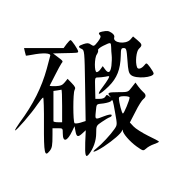
Character: duàn
Kangxi stroke count: 14
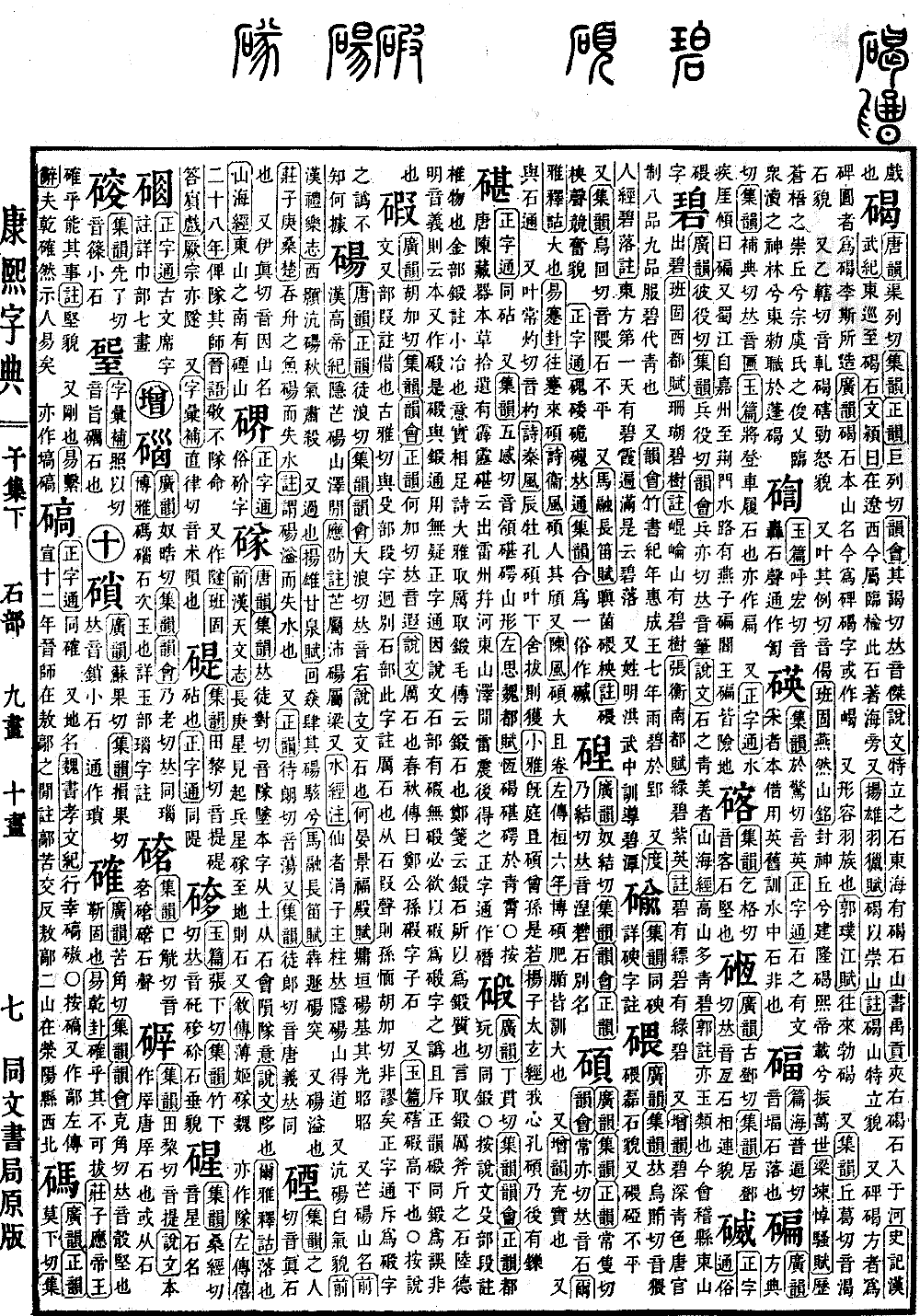
Page 833, Entry 15
According to the Extensive Rhymes (Guangyun), it is pronounced duàn. According to the Collected Rhymes (Jiyun), the Rhyme Collection (Yunhui), and the Correct Rhymes (Zhengyun), it is pronounced duàn, and is identical to the character for forging. Note that the commentary on the Shuowen Jiezi, under the radical Weapon (shu), states it means to hammer an object. The entry for forging under the Metal (jīn) radical states it refers to small-scale smelting. The meaning is consistent. In the Book of Odes (Shijing), it says: take the whetstone and take the duàn. The Mao commentary states: duàn is a stone. The Zheng commentary states: duàn is a stone used to provide a base for forging. It means to take the stone used for whetting and sharpening axes. Lu Deming in his Explanation of Sounds and Meanings (Yinyi) states: it is also written as duàn in original texts. Thus, duàn and the character for forging are undoubtedly used interchangeably. The Correct Meaning of Characters (Zhengzitong) claims that because the Shuowen Jiezi contains the character for a whetstone but lacks the character for duàn, it insists that the former must be a misspelling of the latter, and it further criticizes the Correct Rhymes (Zhengyun) for stating that duàn is equivalent to the character for forging; this is incorrect.