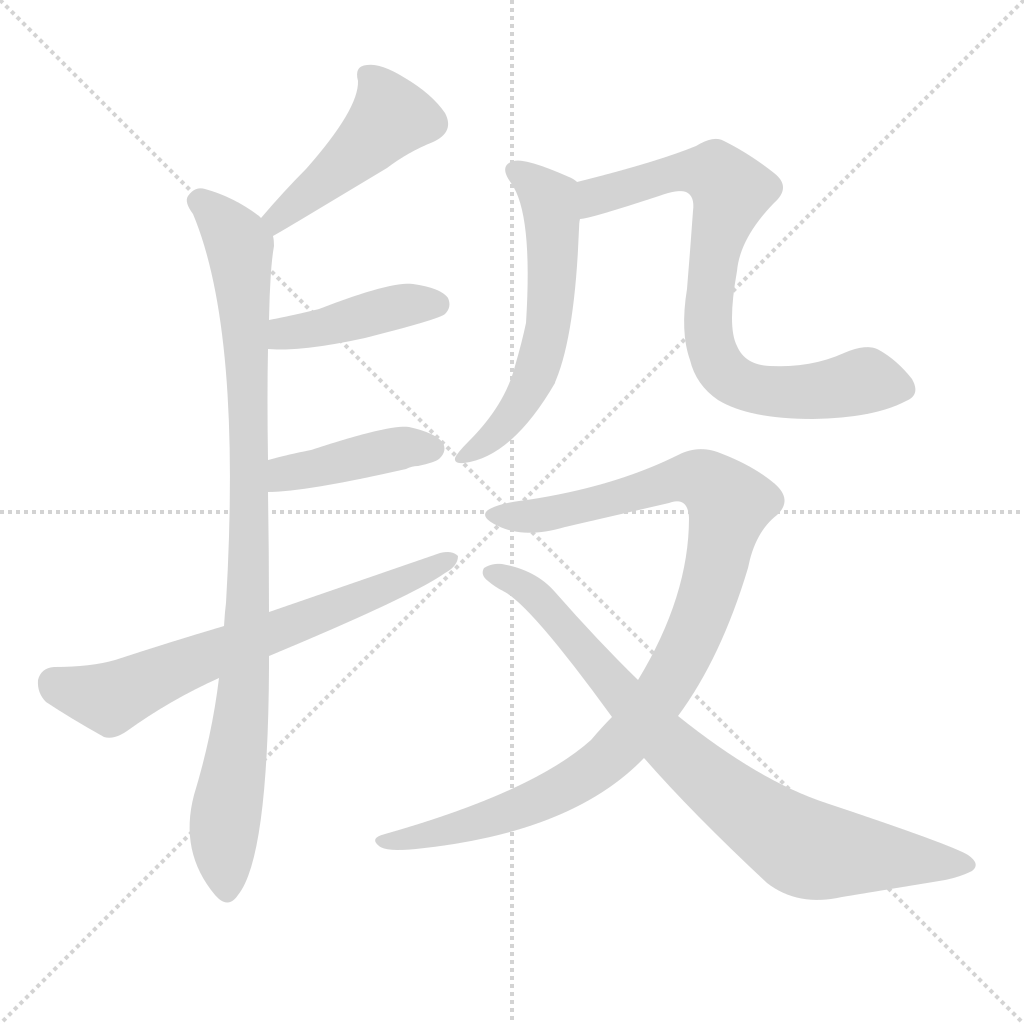
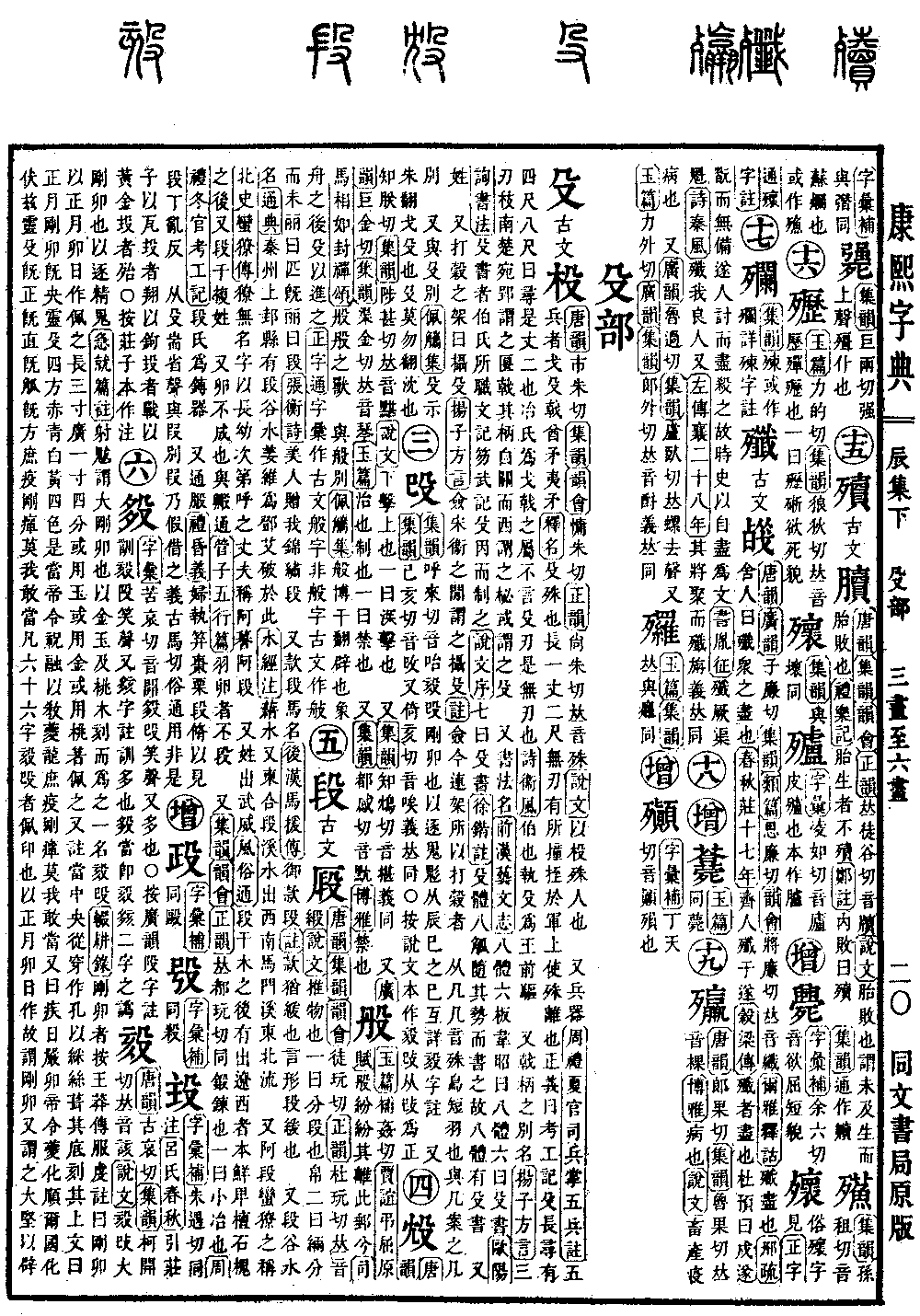
Chen Collection, Lower Volume
Radical: Weapon (shū)
Page 584, Entry 22
Ancient phonology books record: Tangyun, Jiyun, and Yunhui state it is pronounced duan. Zhengyun states it is pronounced duan. The pronunciation is the same as the character for satin (duan). Explaining Writing (Shuowen Jiezi) defines it as striking an object with a mallet. Another interpretation refers to dividing into sections. Two rolls of silk are called liang; separated pieces not yet connected are called pi; when connected, they are called duan. Zhang Heng’s poetry contains the line: A beauty presented me with a length of embroidered silk. It also refers to kuanduan, a type of horse. The Book of the Later Han (Hou Hanshu), Biography of Ma Yuan, mentions driving a kuanduan. The commentary explains: Kuan means slow, describing the horse's relaxed pace and gait. It also refers to Duangu, the name of a body of water. Comprehensive Institutions (Tongdian) records: In Shanggui County of Qinzhou, there is the Duangu River, where Jiang Wei was defeated by Deng Ai. Commentary on the Water Classic (Shuijing Zhu) records: The Jie River flows east and joins the Duan Creek; the Duan Creek originates from Mamen Creek in the southwest and flows northeast. It also refers to A-Duan, a title for ethnic minorities in the south. The History of the Northern Dynasties (Bei Shi), Biography of the Man and Liao, records: The Liao people have no personal names and address each other according to birth order; adult males are called A-mo or A-duan. It is also a surname, originating from Wuwei Commandery. Comprehensive Records of Customs (Fengsu Tong) records: They are descendants of Duangan Mu; others originate from Liaoxi and were originally descendants of the Xianbei leader Tanshihuai. There is also the compound surname Duangan. It also refers to an egg that fails to hatch. It is interchangeable with the character for unhatched egg (duan). Guanzi, Five Elements Chapter, records: Creatures with feathers that are born from eggs will not experience unhatched eggs. Also, Jiyun, Yunhui, and Zhengyun state it is pronounced duan. It is the same as the character for forge (duan). It means to hammer and refine. Another interpretation refers to small-scale smelting. The Rites of Zhou (Zhouli), Winter Officials, Record of Trades, records: The position of Duan-shi, an official responsible for manufacturing bells. It is also interchangeable with the character for dried meat (duan). The Book of Rites (Liji), Meaning of Marriage, records: The new bride holds a bamboo container filled with dates, chestnuts, and dried meat seasoned with ginger and cinnamon (duanxiu) to offer in greeting. Duan is pronounced duan. The character is composed of the weapon radical, with the abbreviated form of the character duan serving as the phonetic component. It is different from the character for borrow (jia). Jia means to borrow and is pronounced jia. People often confuse these two characters, which is incorrect. Textual note: Explaining Writing (Shuowen Jiezi) originally wrote it as pushing objects. I have corrected the text to say striking with a mallet.