Si Collection, Middle Volume
Radical: Father (fù)
Kangxi Strokes: 10
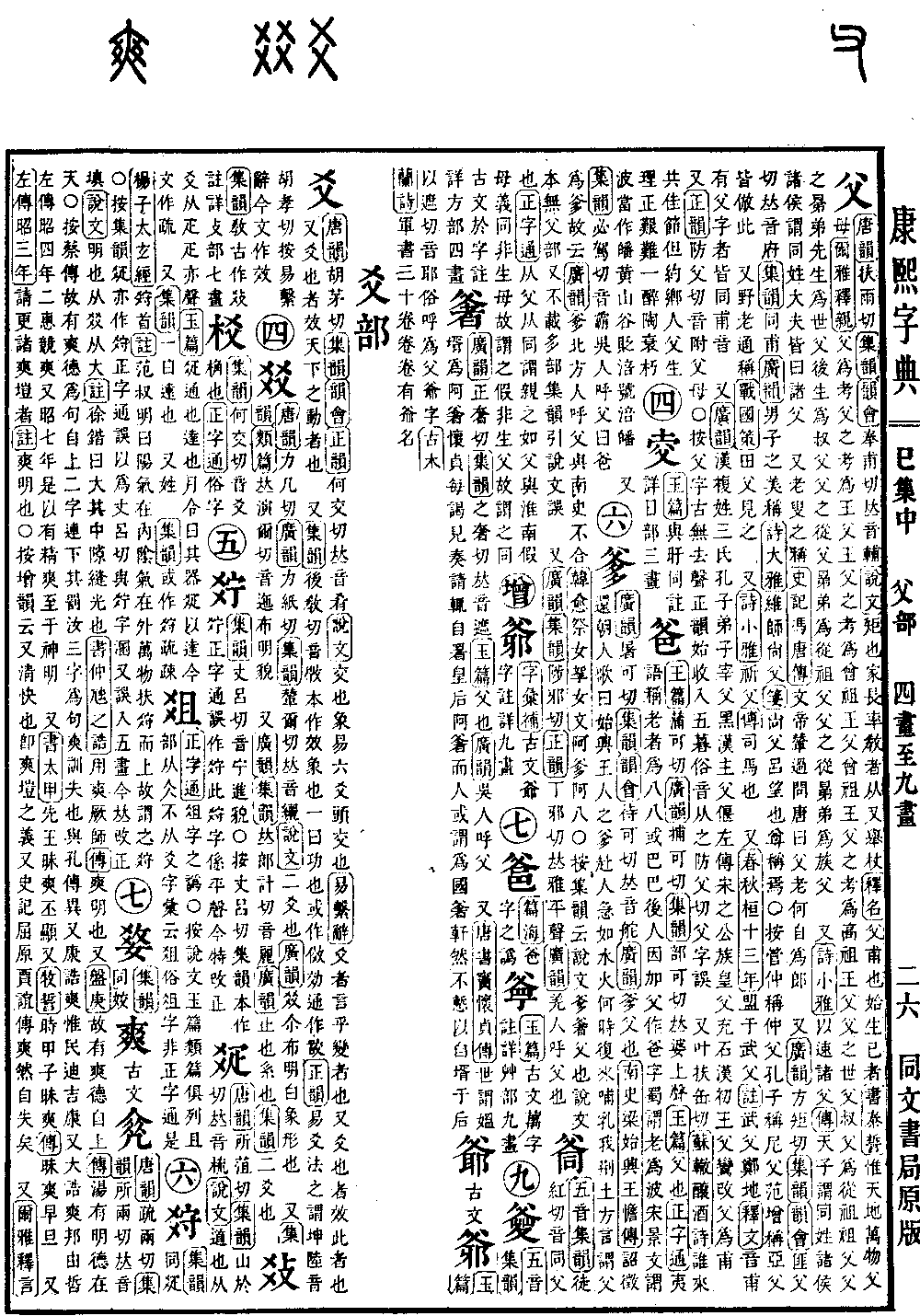
Page 690, Entry 04
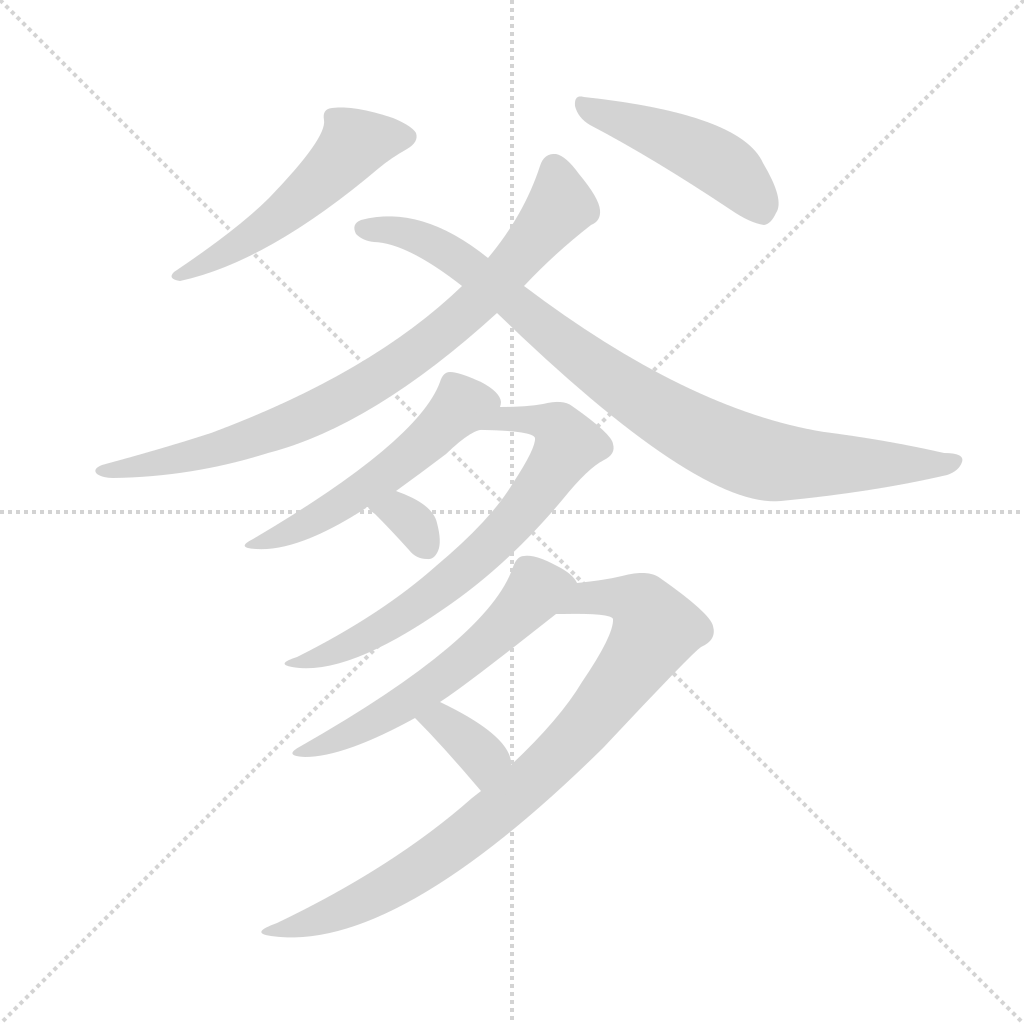
Pronounced duo. According to the Classic of Refined Knowledge (Guangya), die refers to a father. In the History of the Southern Dynasties (Nan Shi), specifically the Biography of Wang Dan of Shixing, the Emperor issued a decree summoning him back to the court. The common people sang in praise: The Prince of Shixing is the father of the people; he rescues them from emergency as quickly as water and fire. When will he return to nurture us again? In the dialects of the Jing and Chu regions, the term for father is die, which is why it is used this way. The Book of Rhymes (Guangyun) states that die is the term used for father by people in the north, which contradicts the account in the History of the Southern Dynasties. In Han Yu’s Eulogy for My Daughter Na, he uses the phrases ah die and ah ba. Note: The Collection of Rhymes (Jiyun) states that in the Explaining Graphs and Analyzing Characters (Shuowen Jiezi), die means father. However, the original text of the Explaining Graphs and Analyzing Characters does not contain the Father radical, nor is the term recorded under any other radical; therefore, the citation of the Explaining Graphs and Analyzing Characters in the Collection of Rhymes is erroneous.
Also pronounced ya (level tone). According to the Book of Rhymes (Guangyun) and the Collection of Rhymes (Jiyun), it is the term used for father by the Qiang people.
Textual Research: The original entry cited the Book of Rhymes (Guangyun) for the definition of die as father; this has been corrected to the Classic of Refined Knowledge (Guangya) in accordance with the original text.