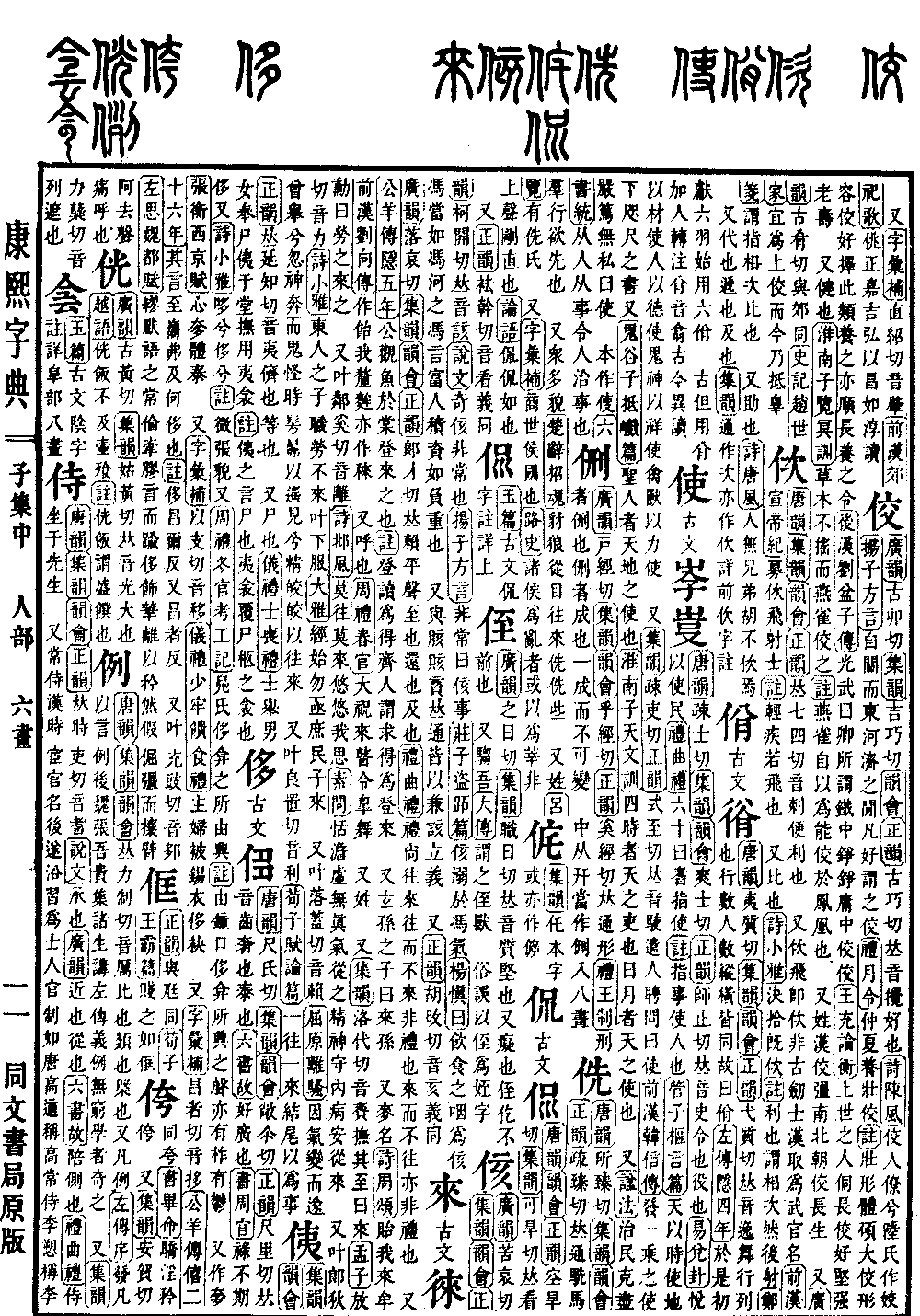
Zi Collection, Middle Volume. Radical: Person (rén). Character: chi. Kangxi stroke count: 8. Page 101, Number 19. Ancient script form. According to the Tang Dynasty Rhyme Dictionary (Tangyun), it is pronounced chi. According to the Compiled Rhymes (Jiyun) and Rhyme Collection (Yunhui), it is pronounced chi. According to the Correct Rhymes (Zhengyun), it is pronounced chi. Sounding like chi. Meaning extravagant or excessive. According to the Explanation of the Six Classes of Writing (Liushugu), it means to favor expansiveness. In the Book of Documents (Shangshu), Offices of Zhou (Zhouguan), it states: Official salary should not be expected to be extravagant. Also, in the Book of Odes (Shijing), Minor Odes (Xiaoya): Wide and expansive. The note states: The appearance of opening slightly. Also, in the Rites of Zhou (Zhouli), Winter Offices, Records of Trades (Kaogongji): Regarding the bell-maker (fushi), where the widening and narrowing of the bell mouth originate. The commentary states: From the widening and narrowing of the bell mouth, the sounds produced also have qualities of clarity or muffled resonance. Also written in a variant form pronounced zha. In the Western Metropolis Rhapsody (Xijing Fu) by Zhang Heng: The mind is expansive and the body is relaxed. Also, according to the Supplement to the Lexicon (Zihuibu), it is pronounced yi. In the Book of Etiquette and Ceremonial (Yili), Minor Sacrifice of a Single Offering: The mistress of the house wore a fine linen robe with wide sleeves. Also, according to the Supplement to the Lexicon, it is pronounced chi. In the Gongyang Commentary (Gongyang Zhuan), Twenty-sixth Year of Duke Xi: In speaking of reaching Gui, why is it so exaggerated? The note states: Chi is pronounced as chang-er, or also as chang-zhe. Also, used as a rhyming pronunciation chi. In the Rhapsody on the Wei Capital (Weidu Fu) by Zuo Si: Confusing the common rules of silence and speech, clinging to stubborn words and becoming excessively boastful. Adorning with flowery language to show pride, pretending to be unyielding while baring one's arms. Textual Research: In the Rites of Zhou, Winter Offices, Records of Trades: Regarding the bell-maker, where the widening and narrowing originate. The note states: From the widening and narrowing of the bell mouth, the sounds produced. Respectfully changed the citation from Commentary to Note according to the original text.