Wu Collection, Lower Volume
Radical: Spirit (shì)
Kangxi strokes: 10
Page 842, Entry 06
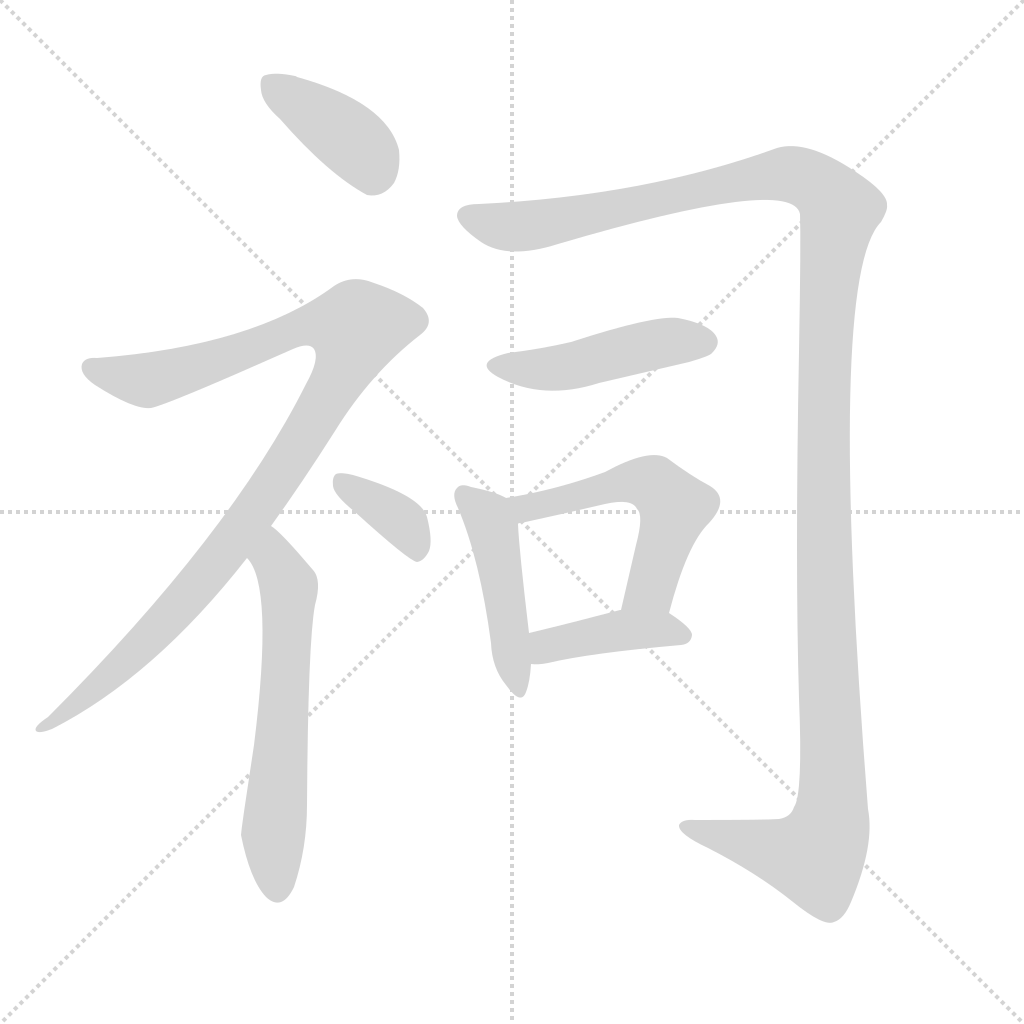
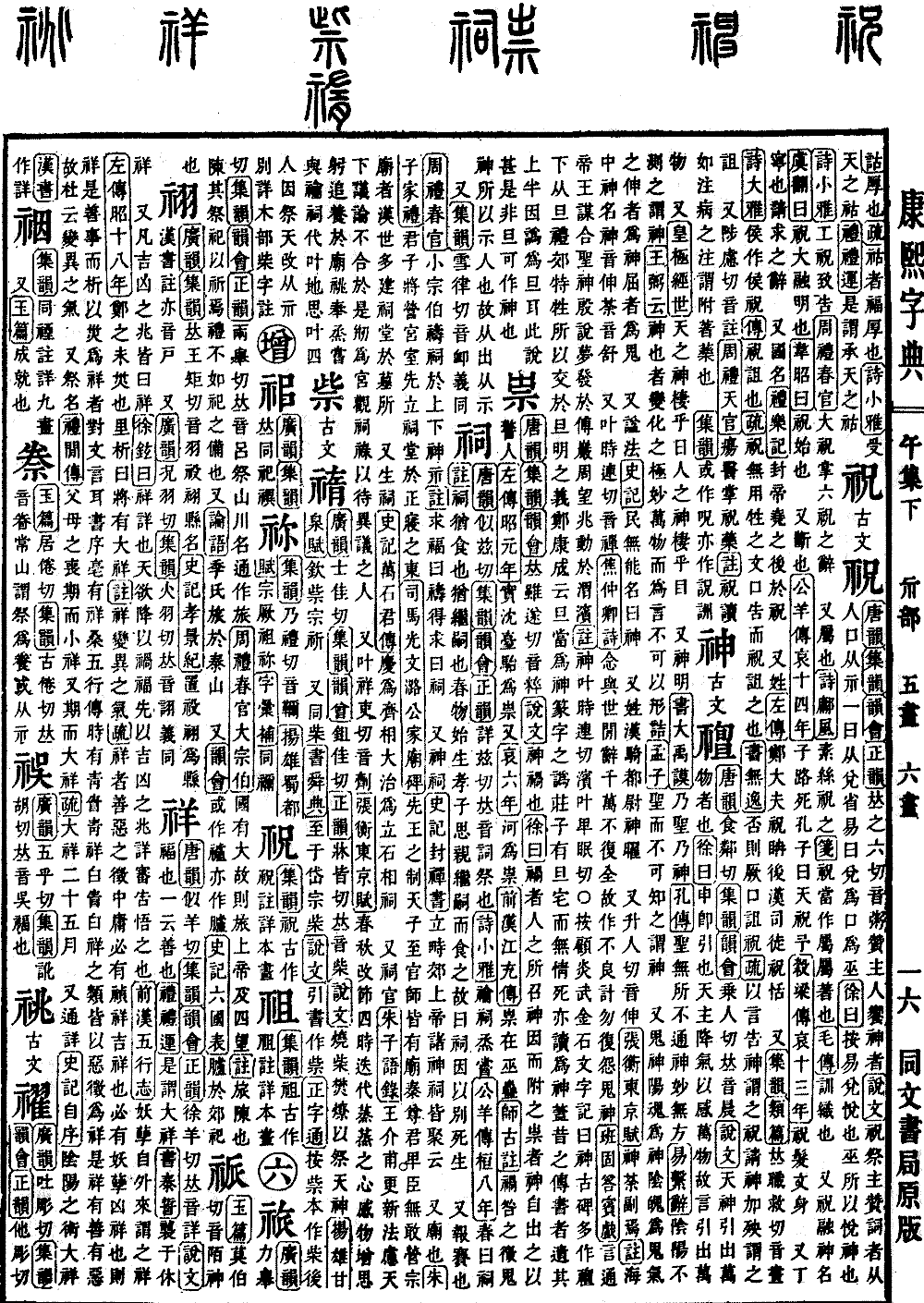
Pronounced cí. To sacrifice. Book of Odes (Shijing), Lesser Odes: Offering the spring, summer, autumn, and winter sacrifices. Gongyang Commentary on the Spring and Autumn Annals (Gongyang Zhuan), 8th year of Duke Huan: The spring sacrifice is called ci. Commentary: Ci is like serving food, as if extending the lineage. In spring, all things begin to grow, and the filial son thinks of his relatives, continuing the lineage by offering food, which is why it is called ci, distinguishing the dead from the living. Also refers to sacrifices made to repay divine favor. Rites of Zhou (Zhouli), Officers of Spring: The Small Minister of Clans prays and performs ci sacrifices to the spirits of heaven and earth. Commentary: Praying for blessings is called dao; rewarding those prayers once granted is called ci. Also refers to a place for worshipping deities. Records of the Grand Historian (Shiji), Treatise on the Feng and Shan Sacrifices: Altars were established in the suburbs to sacrifice to the Supreme Deity, and the temples of many gods were gathered there. Also refers to ancestral temples. Master Zhu's Family Rituals (Zhuzi Jiali): A gentleman, upon building a house, first establishes an ancestral hall on the east side of the main hall. Sima Guang, Wen Lugong Family Temple: According to the institutions of the former kings, from the Son of Heaven down to the officials, all had ancestral temples. The Qin dynasty exalted imperial authority, and officials dared not build ancestral temples. In the Han dynasty, ancestral halls were often built at gravesites. Also refers to temples built for the living. Records of the Grand Historian (Shiji), Biography of Lord Wanshi: Shi Qing served as the chancellor of Qi and governed well, so the people built the Shi Chancellor Temple for him. Also refers to temple officials. Classified Conversations of Master Zhu (Zhuzi Yulei): When Wang Anshi implemented his new policies, he feared public dissent, so he established temple official positions with stipends to accommodate those who held differing opinions. Also pronounced jì. Zhang Heng, Rhapsody on the Eastern Capital (Dongjing Fu): The spring and autumn change the seasons, and the four seasons rotate in order. A sincere and filial heart grows more nostalgic when moved by external things. Personally visit the ancestral temple to perform sacrifices, carrying out the winter, autumn, spring, and summer rites.