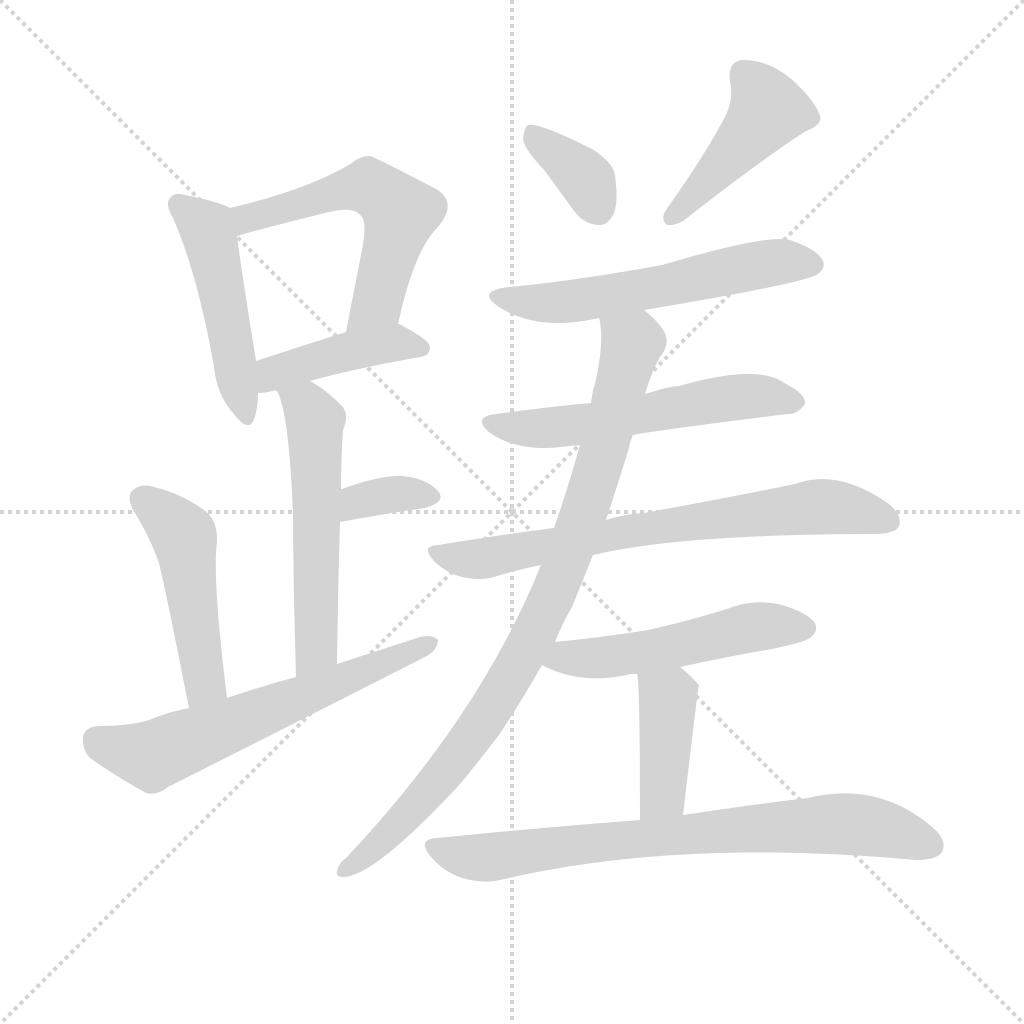
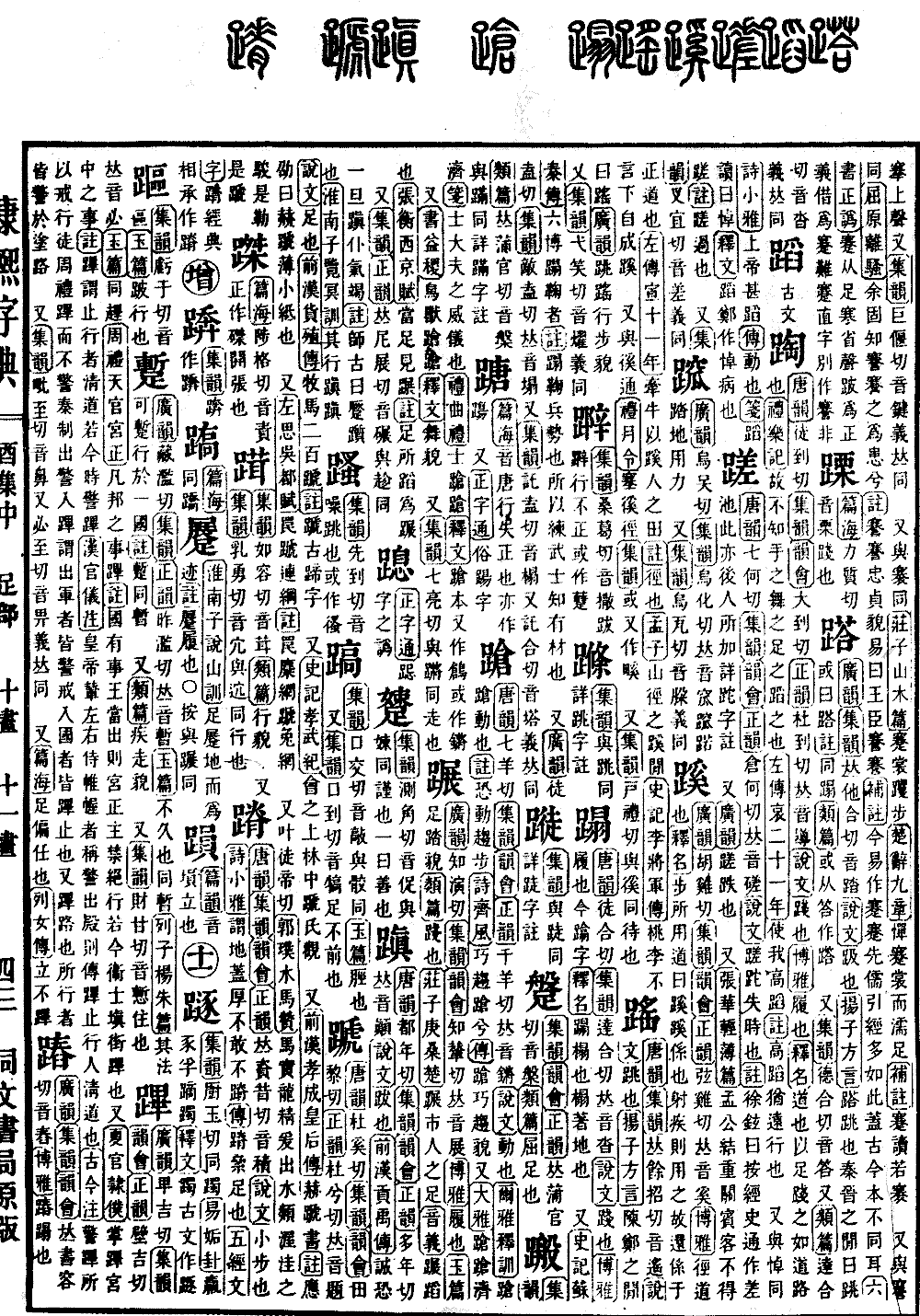
You Collection, Middle Volume. Radical: Foot (zú). Kangxi stroke count: 17. Page 1231, Entry 05.
According to Tang Rhymes (Tangyun), pronounced cuo (level tone). According to Collected Rhymes (Jiyun), Rhyme Meetings (Yunhui), and Orthodox Rhymes (Zhengyun), pronounced cuo (level tone), matching the sound of cuo. According to the Explaining Graphs and Analyzing Characters (Shuowen), it means to miss an opportunity. Note: Xu Xuan states that in classical texts and historical records, it is commonly written as the variant form chachi, which is a later addition by subsequent generations. See the detailed note under the character tuo.
Additionally, according to Broad Rhymes (Guangyun), it means to stumble.
Additionally, in the poem Light and Frivolous (Qingbo Pian) by Zhang Hua, it states that Meng Gong established heavy gates, so guests could not pass by. Note: Here it means to pass by.
Additionally, according to Collected Rhymes (Jiyun), pronounced cha (level tone). The meaning is the same.