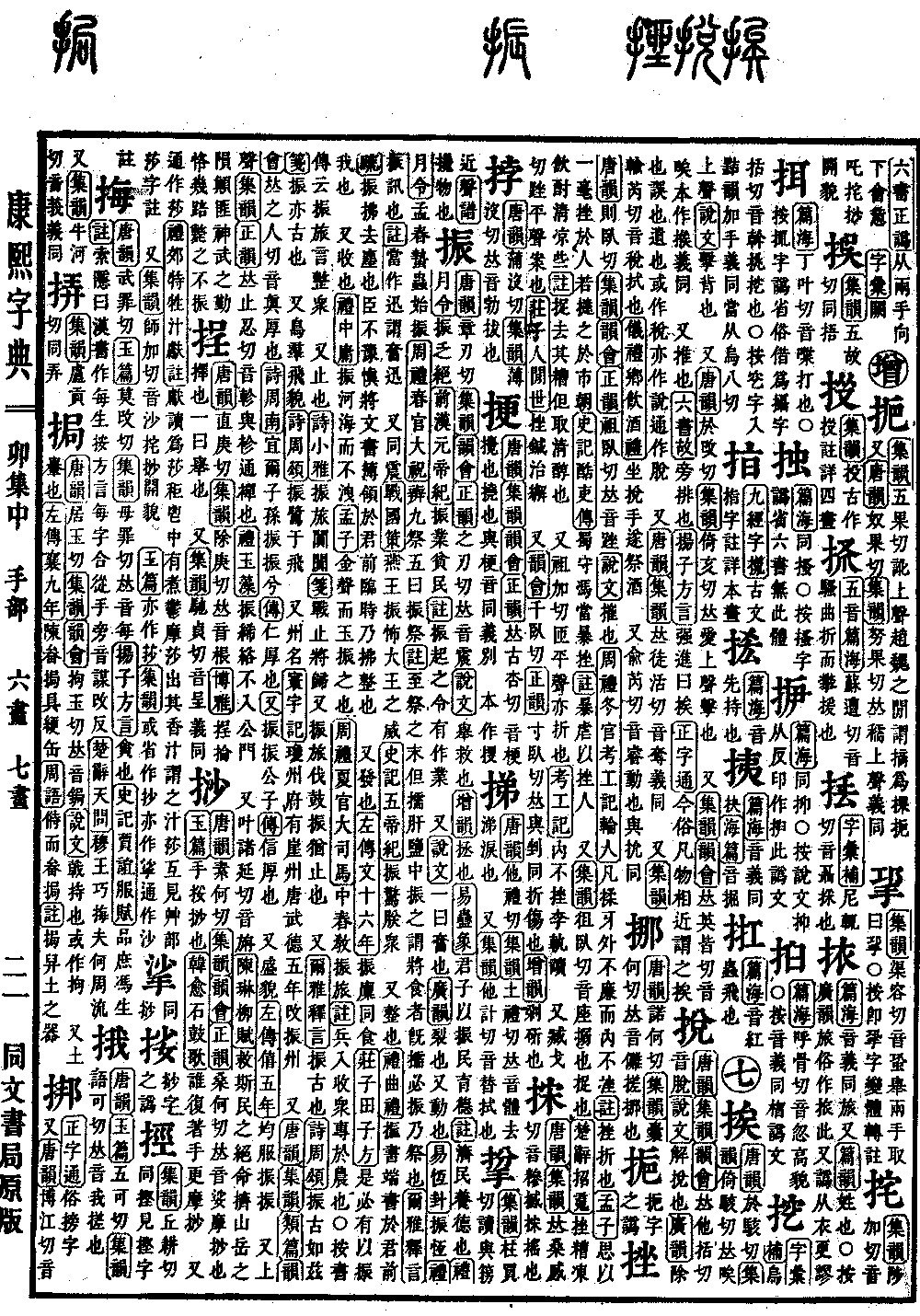
Mao Collection, Middle Volume
Radical: Hand (shǒu)
Kangxi Strokes: 11
Page 431, Entry 22
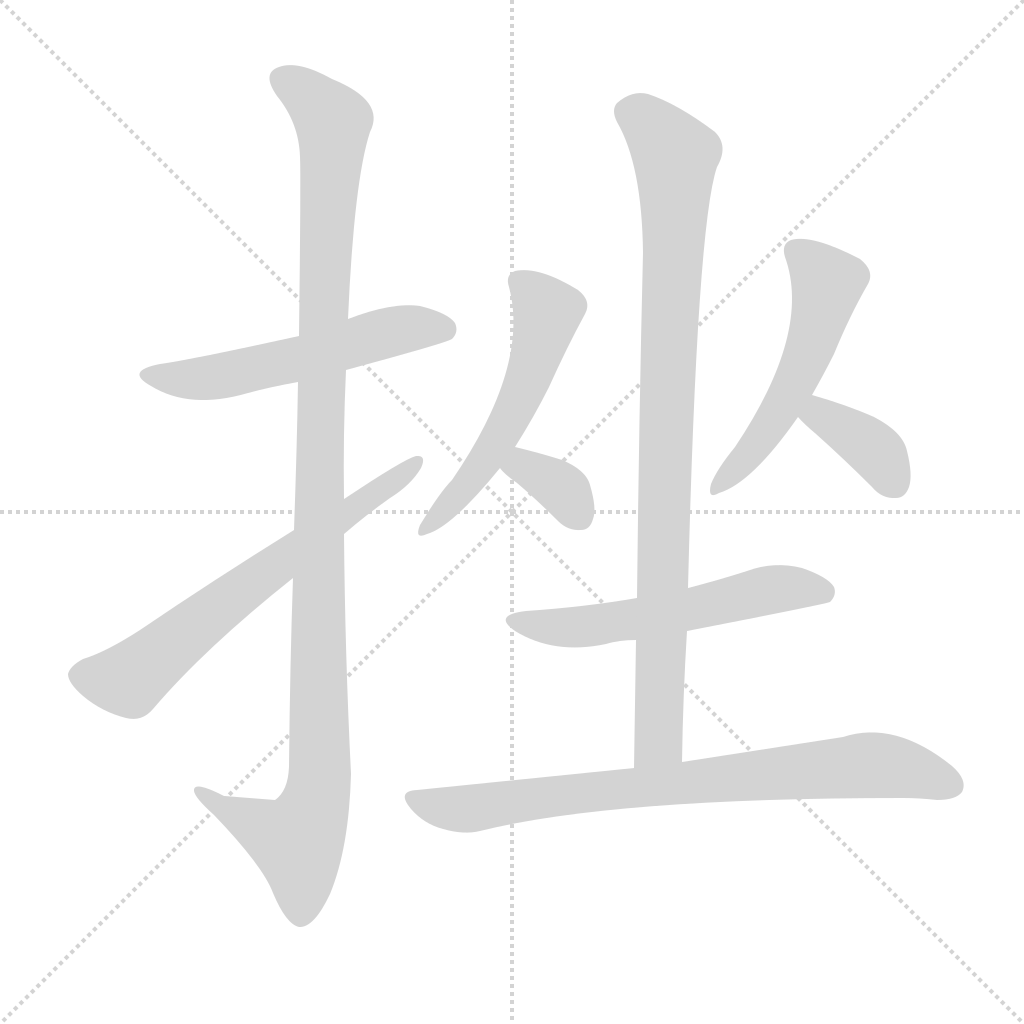
Pronounced zuò
Shuowen Jiezi (Explaining Simple and Analyzing Compound Characters): To break or destroy.
Rites of Zhou (Zhouli), Winter Official, Artificers Record: In the bending of the rim, the exterior should not be sharp, and the interior should not be broken.
Commentary: Broken means fractured.
Mencius: If one thought that a single hair was broken by another, it would be as if they were whipped in the marketplace.
Records of the Grand Historian (Shiji), Biographies of Harsh Officials: The Governor of Shu, Feng, was violently oppressive.
Commentary: Being cruel and oppressive in order to break the spirit of others.
Also, pronounced zuò: To grasp or to seize.
Songs of Chu (Chuci), Summoning the Soul: Grasping the dregs and drinking the chilled wine, the refined liquor is clear and cool.
Commentary: Seizing and removing the dregs, while taking only the clear and pure liquid.
Also, pronounced zā: To break.
Artificers Record: The interior should not be broken. Li Gui reads it as such.
Also, pronounced zā: To press down.
Zhuangzi, In the World of Men: Pressing the needle to mend the clothing.
Also, pronounced cuò: A variant form of a character meaning to break or injure.
Zengyun (Expanded Rhymes): To chop or to hew.