Yin Collection, Upper Volume
Radical: Child (zǐ)
Kangxi Strokes: 6
Page 278, Entry 02
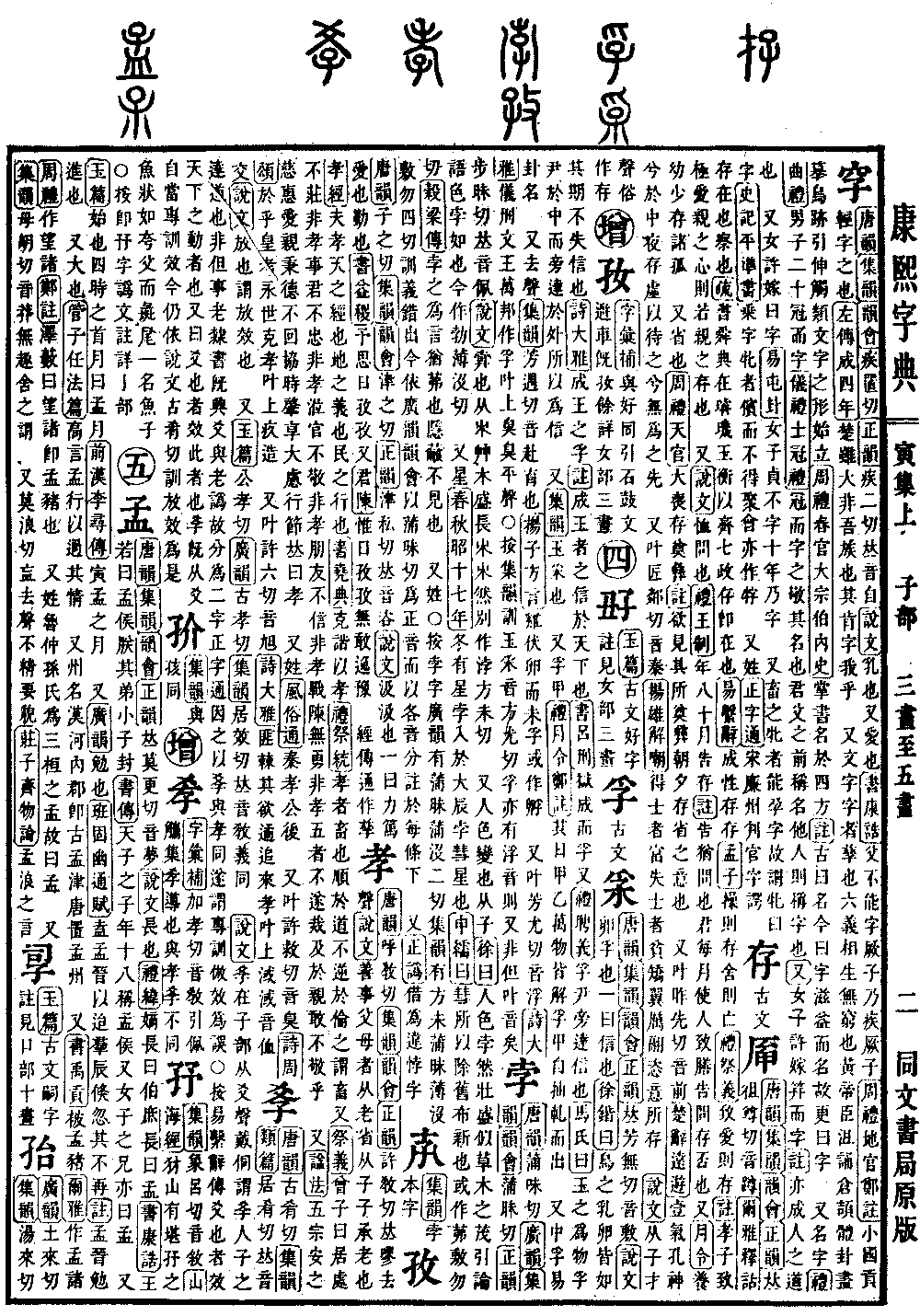
According to Tang Rhymes (Tangyun), Collected Rhymes (Jiyun), Rhyme Meetings (Yunhui), and Correct Rhymes (Zhengyun), it is pronounced cun.
According to the Erya (Erya: Explanation of Ancient Terms), cun means to exist or to inspect.
The commentary explains that in the Book of Documents (Shangshu): Shun Canon, the phrase regarding the celestial instruments implies that cun means to be present.
In the Book of Changes (Yijing): Appended Judgments, it says to perfect one’s nature and preserve it.
In the Mencius, it says if one exerts control, it exists; if one abandons it, it perishes.
In the Book of Rites (Liji): Meaning of Sacrifices, it speaks of expressing profound love as if the relative were still present.
The commentary notes that a filial son exhausts his love for his parents as if they were still alive.
It also means to comfort or console according to the Explaining Graphs and Analyzing Characters (Shuowen Jiezi).
In the Book of Rites (Liji): Royal Regulations, for those eighty years of age, the ruler sends someone monthly to inquire after their well-being.
The Collected Explanations (Jishuo) state that to report means to inquire, where the ruler sends food monthly to ask if the elder is still alive.
It also denotes fostering the young and caring for orphans, as seen in the Monthly Ordinances (Yueling).
It also indicates to inspect or visit.
In the Rites of Zhou (Zhouli): Heaven’s Officials, it refers to inspecting the ritual vessels during a great mourning period.
The commentary notes this expresses the intention of mourning and remembering the deceased morning and evening.
It is also used with a rhyme variant pronounced qian. In the Songs of Chu (Chuci): Distant Travels, it says that the vital energy is wondrous, preserved and nurtured at midnight, waiting with an empty and quiet mind, without acting rashly.
It is also used with a rhyme variant pronounced qin. In Yang Xiong’s Dissuasion Against Ridicule (Jiechao), it says gaining a worthy scholar leads to prosperity, while losing one leads to poverty; one can spread wings and soar, wandering freely at will.
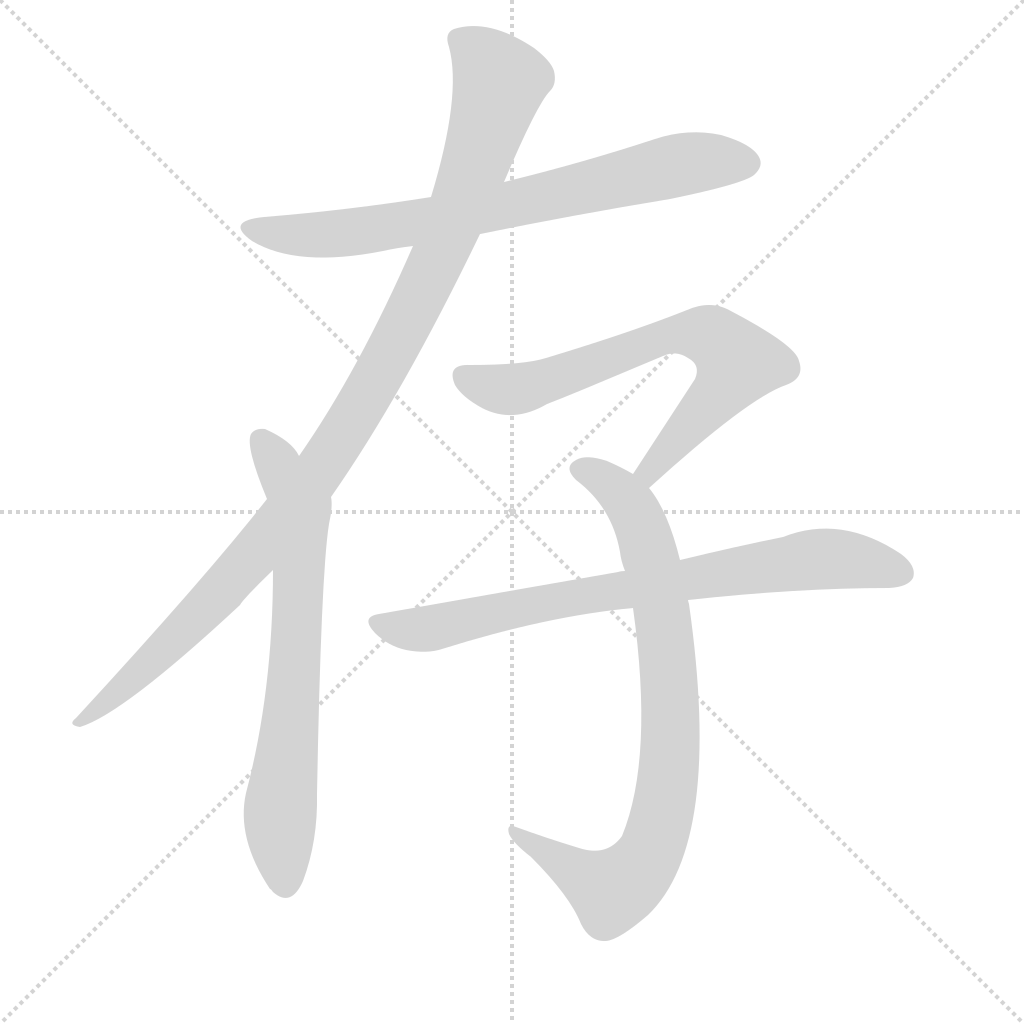
According to the Explaining Graphs and Analyzing Characters (Shuowen Jiezi), the character is formed from child, with cai serving as the phonetic component. The common variant is written as cun.
Textual research: In the Book of Rites (Liji): Royal Regulations, it reads: At age eighty, monthly inquire after their existence. The note is corrected to read according to the original text as: At age eighty, monthly inquire after their existence. The annotation is changed to: Collected Explanations (Jishuo).