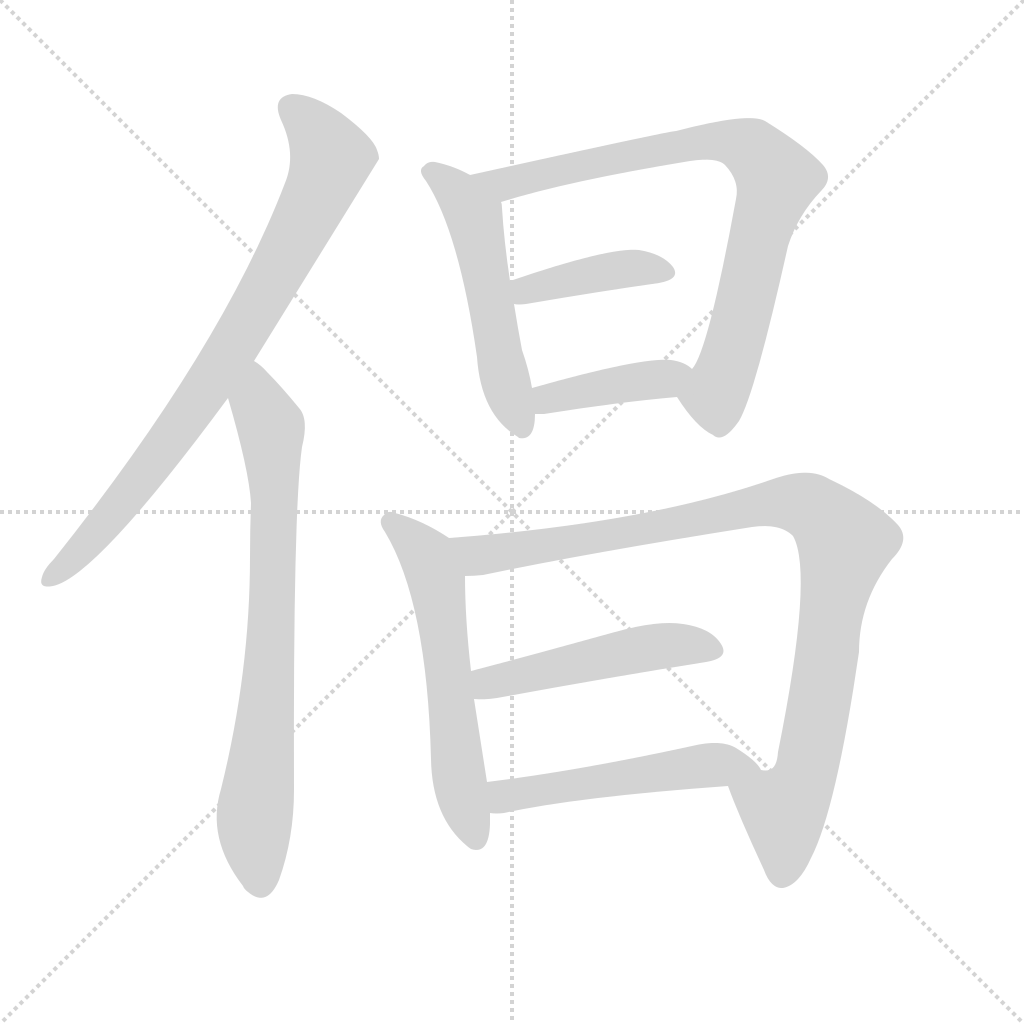
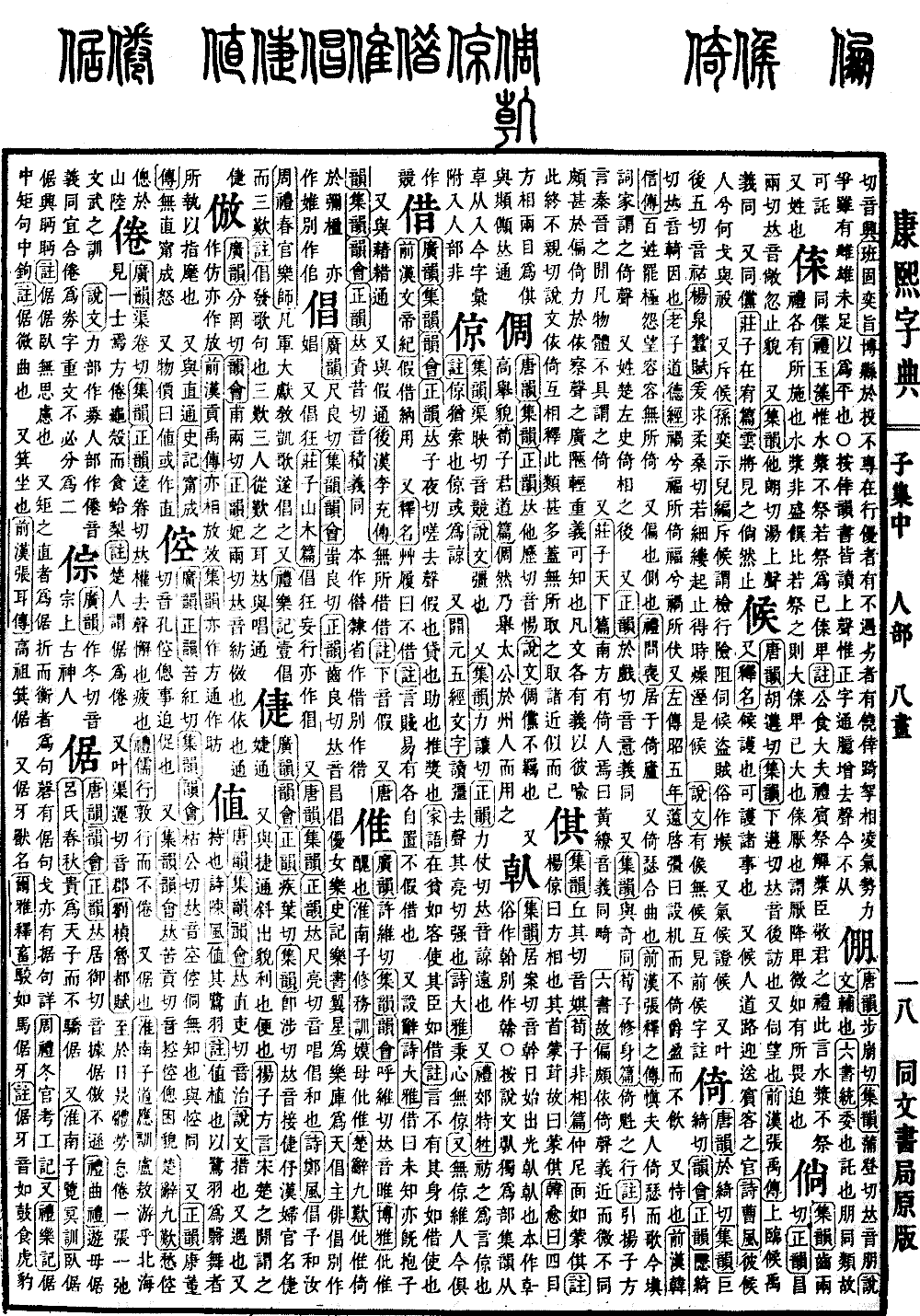
Zi Collection, Middle Volume. Radical: Person (rén). Headword: Chang. Kangxi stroke count: 10. Page 108, number 12. According to the Broad Rhymes (Guangyun), the Collected Rhymes (Jiyun), the Rhyme Assembly (Yunhui), and the Correct Rhymes (Zhengyun), the pronunciation is like chāng. Performers and female musicians. The Springs and Autumns: Yuenmingbao (Chunqiu yuanmingbao) states that the star Yi acts as the warehouse for music and serves as the heavenly entertainer, presiding over performers and actors. Also written in a variant form pronounced chāng. Also used in the phrase chàngkuáng, meaning to act wildly. The Mountain Tree (Shanmu) chapter of the Zhuangzi states: wandering wildly and acting recklessly. Also written in a variant form pronounced chāng. Also, according to the Tang Rhymes (Tangyun), the Collected Rhymes, and the Correct Rhymes, the pronunciation is like chàng. To lead in singing and be responded to. The Odes of Zheng in the Book of Odes (Shijing) states: sing to me, and I will respond to you. The Spring Officers, Music Master section of the Rites of Zhou (Zhouli) states: for all major military offerings, teach the songs of victory, then lead the singing. Also, the Records of Music in the Records of Ritual (Liji) states: one person leads the singing, and three others join in response. Note: Chàng means to start the song's lines; the three responses refer to three people following along in response. Interchangeable with the character chàng. Textual Research: Regarding the statement that the star Yi acts as the warehouse for music and serves as the heavenly entertainer, presiding over performers and actors, a check of the Records of Music in the Records of the Grand Historian (Shiji) shows this phrasing is actually found in the Springs and Autumns: Yuenmingbao as quoted in the Taiping Imperial Overview (Taiping yulan). The reference to the Records of the Grand Historian has been corrected to the Springs and Autumns: Yuenmingbao.