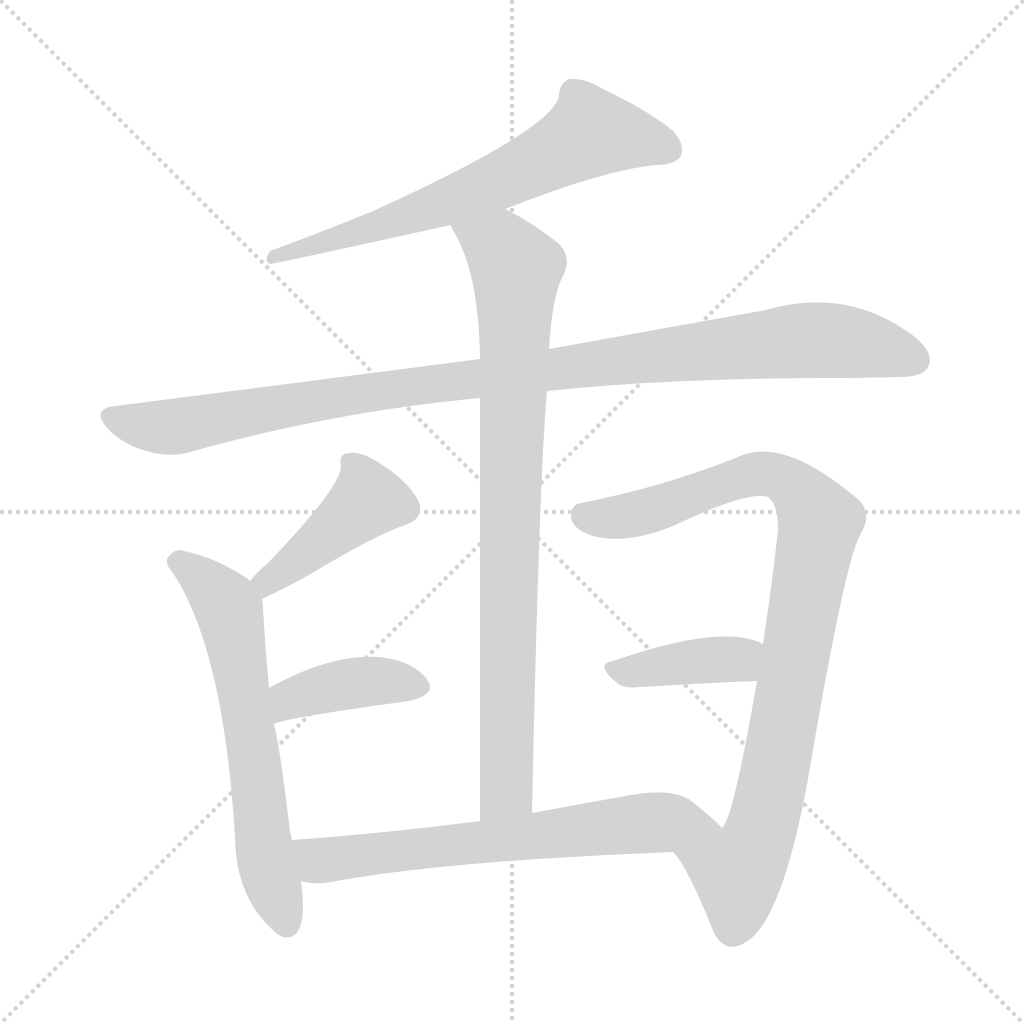
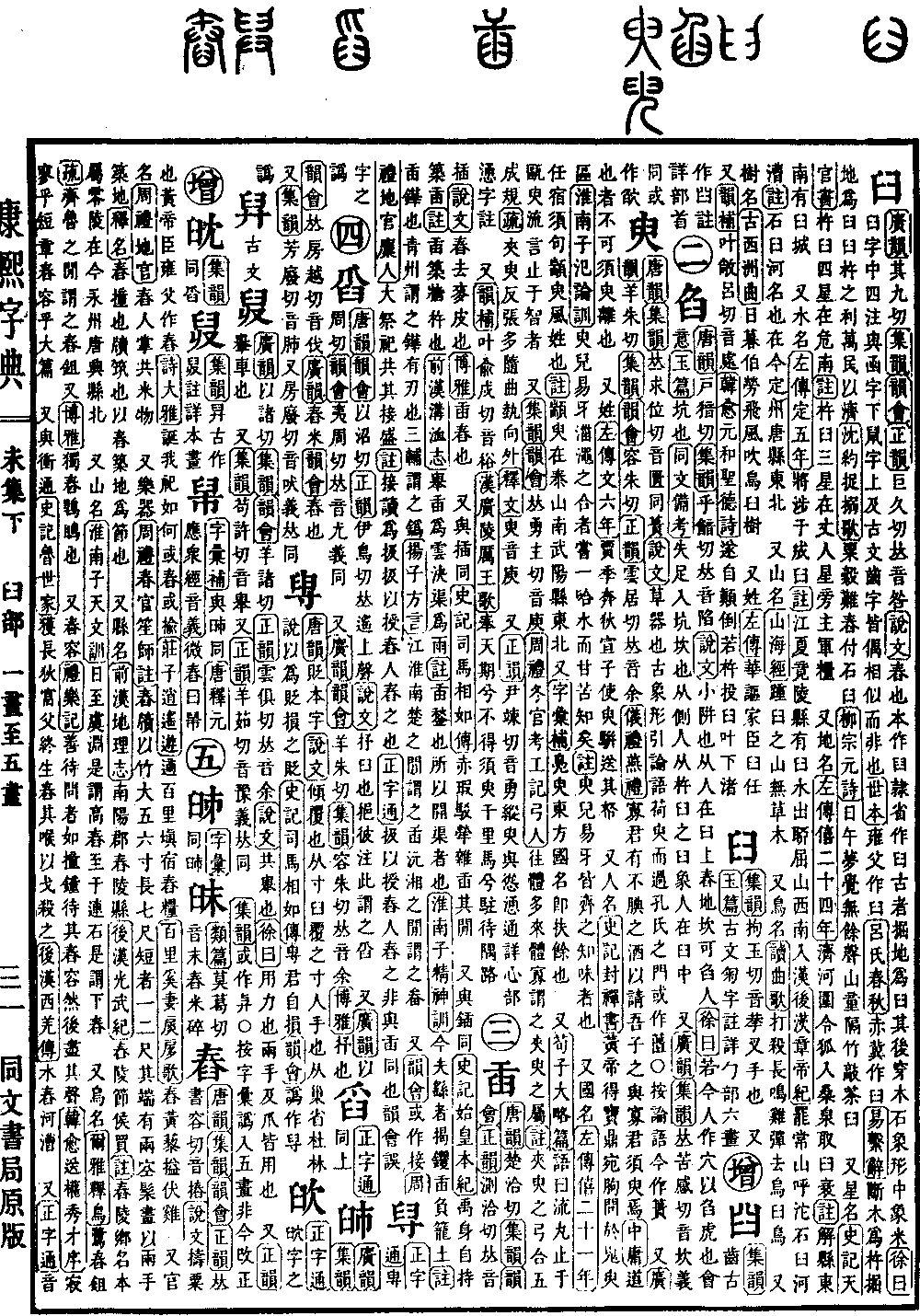
Wei Collection, Lower Volume
Radical: Mortar (jiù)
Page 1003, Entry 06
Pronounced cha (entering tone).
In the Tang Dynasty Dictionary of Characters (Tangyun), it is defined as removing the husk from wheat by pounding. In the Extensive Glossaries (Boya), it is defined as pounding.
Also written interchangeably with the character for insert (cha). In the Records of the Grand Historian (Shiji), Biography of Sima Xiangru: Red jasper and variegated stone are inserted among them.
Also written interchangeably with the character for spade (cha). In the Records of the Grand Historian (Shiji), Annals of the First Emperor: Yu himself held the rammer and spade. The commentary states: The spade is a pestle for building walls. In the History of the Former Han (Qianhan), Treatise on Rivers and Canals: Raising spades creates clouds, breaking channels brings rain. The commentary states: The spade is a shovel, used for digging channels. In the Huainanzi, Treatise on the Nature of the Spirit: Now, the laborers lift their mattocks and spades, carrying baskets of earth. The commentary states: The spade is a plowshare. In Qingzhou it is called a plowshare, which has a blade. In the region of Sanfu it is called this. In Master Yang's Dialects (Fangyan), it is said that in the regions of the Yangtze, Huai, Southern Chu, and between the Yuan and Xiang rivers, it is called a spade, and between the Yuan and Xiang rivers it is called a basket.
According to the Rhyme Compendium (Yunhui), sometimes written as a variant form (jie). In the Rites of Zhou (Zhouli), Earth Officers, Grain Official: During the great sacrifices, provide the grain containers. The commentary states: The variant form is read as chā. It is used to hand grain to the pounder to be pounded.
According to the Correct Character Guide (Zhengzitong), the variant form used to hand grain to the pounder is not the same as this character. The Rhyme Compendium (Yunhui) is mistaken.