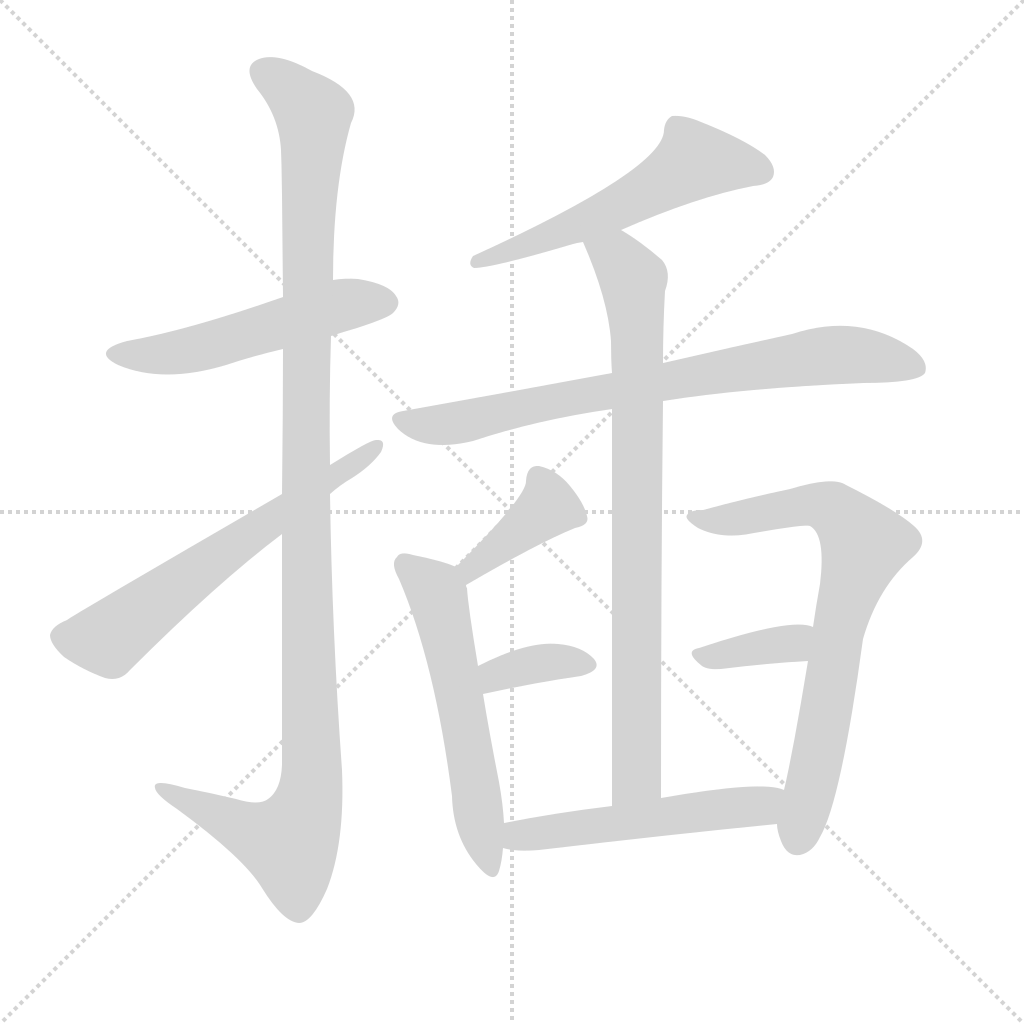
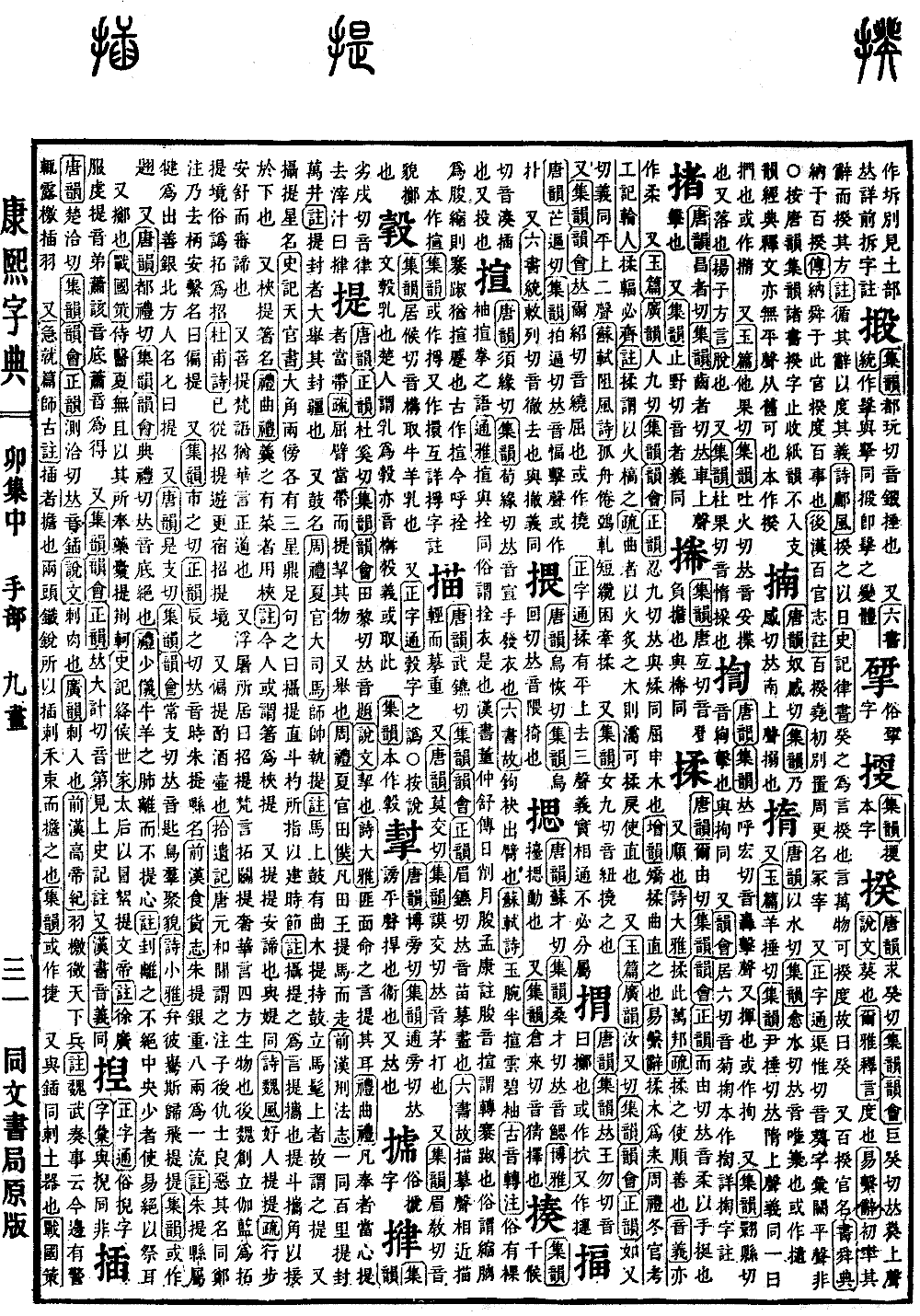
Mao Collection, Middle Volume. Radical: Hand (shǒu). Kangxi stroke count: 13. Page 441, Entry 24.
Pronounced cha.
According to the Explaining Graphs and Analyzing Characters (Shuowen), it means to pierce flesh. According to the Extended Rhymes (Guangyun), it means to pierce or insert. In the Annals of Emperor Gao of the Former Han (Qianhan Gao di ji), it is used in reference to emergency military dispatches marked with feathers. The commentary by Yan Shigu states that when there is a border alarm, officials immediately prepare a feathered dispatch. In the commentary by Yan Shigu on the Urgent Need for Learning (Jijiu pian), it is noted that a tool for carrying, pointed at both ends, is used for piercing and gathering grain bundles to carry them.
According to the Collected Rhymes (Jiyun), it is sometimes written in a variant form (jie). It is also identical to a spade-like tool used for digging soil. In the Strategies of the Warring States (Zhanguo ce), it is mentioned that when sitting one weaves baskets, and when standing one leans on a spade.
Also pronounced qie. It means to tuck into the belt, and is synonymous with the character for gathering (cha).
Also pronounced zha. It means to lift or grasp.
It is formed from the components for shield and pestle. The common forms are vulgar and incorrect.