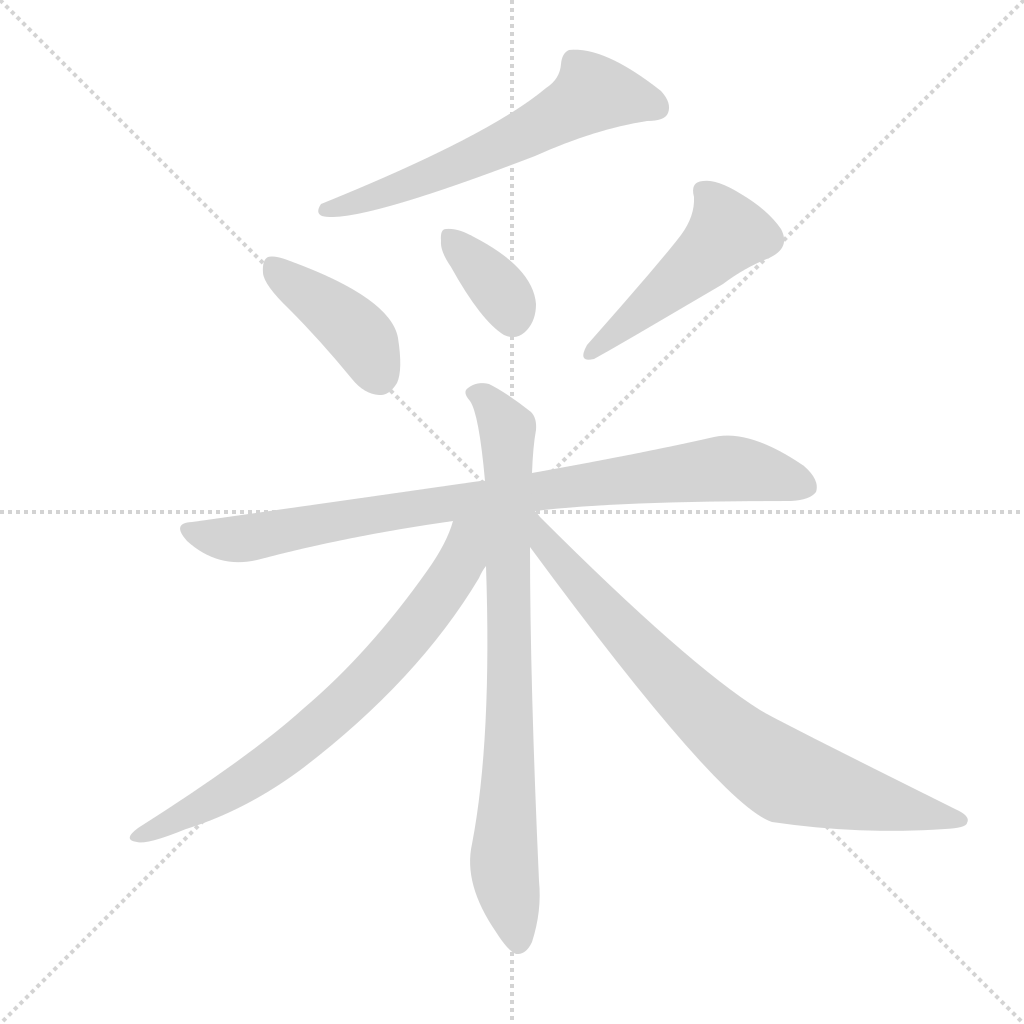
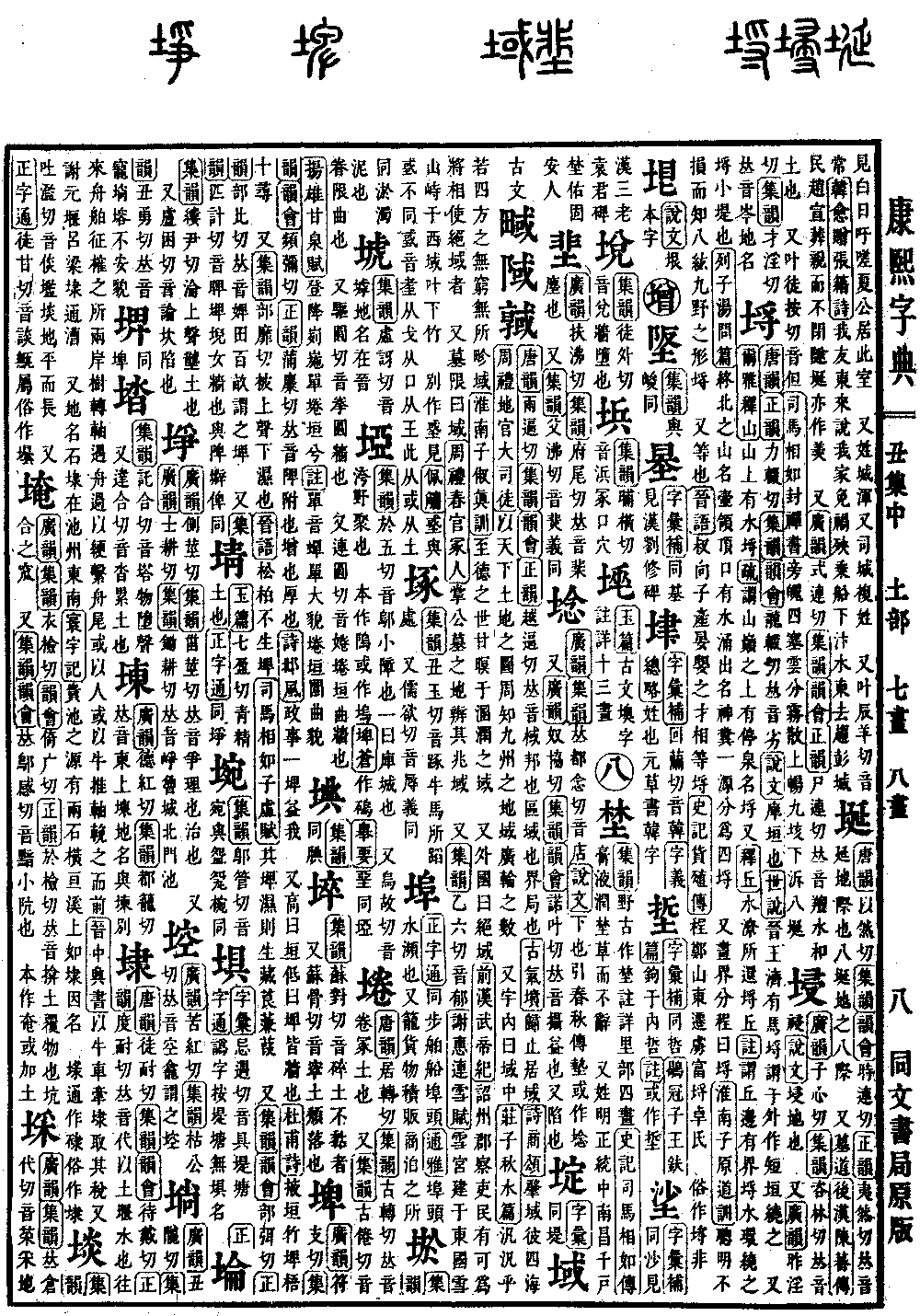
You Collection, Lower Volume, Radical: Gather (cǎi); Kangxi strokes: 7; Page 230, Entry 01
Pronounced cǎi.
Shuowen Jiezi (Explanation of Characters): To pluck or gather.
Book of Odes (Shijing): Gathering, gathering the curled ears. Zhu Xi's commentary: Gathering, gathering does not mean gathering only once. Also means to select.
Book of Rites (Liji): In the wedding ceremony, the presentation of gifts, asking for names, presenting lucky tokens, presenting betrothal gifts, and requesting the date. Explication of the Text (Shifen): Cǎi means the act of selecting. Commentary: The presentation of gifts refers to the ritual of selection.
Records of the Grand Historian (Shiji): Gathered the titles of the ancient emperors and called himself Emperor.
Ban Gu, Rhapsody on the Western Capital (Xidu Fu): Xi Si's Odes of Lu were both recognized by the Kong family.
Also, color. Book of Documents (Shangshu): Use the five colors to manifest and apply to the five hues.
Records of the Grand Historian (Shiji): I had someone observe his aura, all in the shape of dragons and tigers, displaying five-colored brilliance; this is the aura of a Son of Heaven.
Also, decorative patterns on objects. Zuo Tradition (Zuozhuan): Collect materials to distinguish objects; patterns are called objects. Commentary: Taking the skins and furs of birds and beasts to manifest the colors of objects; decorative patterns are called objects.
Also, official attire. Lu Yu: The Son of Heaven wears the great adornments to greet the morning sun, and lesser adornments to greet the evening moon. Commentary: Great adornments are the sacrificial robes. Lesser adornments are the ceremonial robes.
Also, patterns on jade. Zuo Si, Rhapsody on the Shu Capital (Shudu Fu): The patterns on the jade are bright and distinct. Commentary: The patterns are the horizontal lines on the jade.
Also, affairs. Records of the Grand Historian (Shiji): To allow the last light and fading flames of the sun and moon to expand the application of affairs. Commentary: Cǎi refers to official duties. To fulfill his duties and arrange his affairs.
Also, official position. Book of Documents (Shangshu): The Emperor said: Who can consult on the execution of my affairs? Commentary: Cǎi means affairs. Ma Rong says: Official position.
Book of Rites (Liji): The nine territories of the feudal lords. Commentary: Each manages the affairs of the feudal lords of their own province.
Also, an estate or fief. Book of Rites (Liji): A high official has an estate to support his descendants.
History of the Former Han (Qianhan Shu): The high official Han Wuzi received an estate at Hanyuan.
Also, to decorate. History of the Former Han (Qianhan Shu): If music is lost, there is licentiousness; if ritual is lost, there is decoration. Commentary: Ru Chun says: Cǎi means to decorate. Shi Gu says: Cǎi means to make something appear more than it is.
Also, a burial ground. Yang Xiong, Dialect (Fangyan): Tombs, in the regions of Qin and Jin, are called graves, or sometimes called cǎi. Commentary: In ancient times, high officials held estates and were buried there after death, hence the name.
Also, demeanor or appearance. History of the Former Han (Qianhan Shu): Political decrees were issued by him alone; the people of the world all wanted to witness his demeanor.
Zuo Si, Rhapsody on the Wei Capital (Weidu Fu): Exhausting the strange sights of his demeanor.
Also, Book of Odes (Shijing): The reeds are lush and verdant. Commentary: Lush and verdant is like the appearance of flourishing growth.
Also, Book of Odes (Shijing): The wings of the mayfly, the decorated robes. Commentary: Decorated means the appearance of being numerous. Zhu Xi's commentary: Decorated means the appearance of magnificent adornment.
Xie Lingyun, Slow Song: Decorated red clouds float.
Also, a gift. Records of the Grand Historian (Shiji): Duke Shao Shi complimented the gifts. Commentary: Justice says: Cǎi means a gift.
Also, name of a poem. Book of Rites (Liji): Moving to the tune of Caiqi, proceeding with the Sixia.
Also, a surname. Customs and Traditions (Fengsu Tong): Han General Who Pacifies the Liao, Cai Hao.
Also, a place name. Zuo Tradition (Zuozhuan): Jin commander Li Ke led his troops to defeat the Di at Caisang. Commentary: Southwest of Beiqu County in Pingyang there is the Caisang Ferry.
Also, name of a jade. Sima Xiangru, Rhapsody on the Shanglin Park: Chao-cai and Wanyan jades originate from here. Commentary: Chao-cai is a type of jade.
Also, a tree name. Records of the Grand Historian (Shiji): Yao and Shun used plain rafters without scraping. Commentary: Sou-yin says: Cǎi is the name of a tree; it is the present-day oak.
Also, a grass name. Erya (Boya): Cǎi is a type of plant.
Pronounced cài. The fief of a minister. Book of Rites (Zhouli): The fiefs of dukes, ministers, and high officials. Pronounced cài. The system of fiefs received by the nobility. Pronounced cài. History of the Former Han (Qianhan Shu): Cǎi means official position. Because of the position one enjoys land, hence it is called an estate.
Also, same as the character for vegetable. Book of Rites (Zhouli): In the spring, when entering the school, they perform the ritual of offering vegetables and combined dances. Commentary: To offer vegetables means that the dancers hold fragrant vegetables. Zheng Kangcheng says: To offer means to release; cǎi is read as cài (vegetable). When first entering school, one must perform the vegetable-offering ritual to worship the former masters. Vegetable refers to aquatic plants of the pondweed or artemisia variety.
Pronounced zǒu. The meaning of to take or gather.