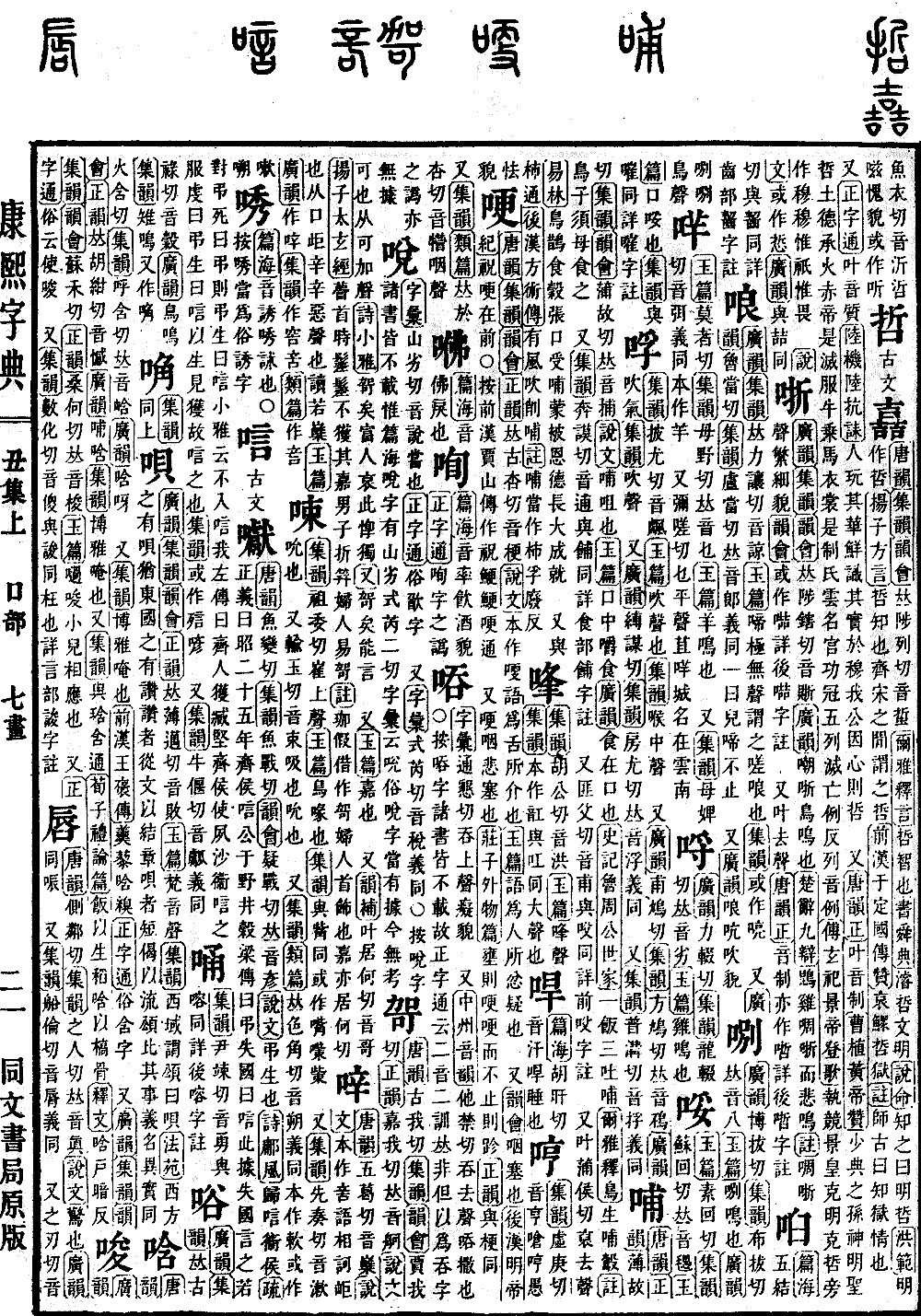
Chou Collection, Upper Volume
Radical: Mouth (kǒu)
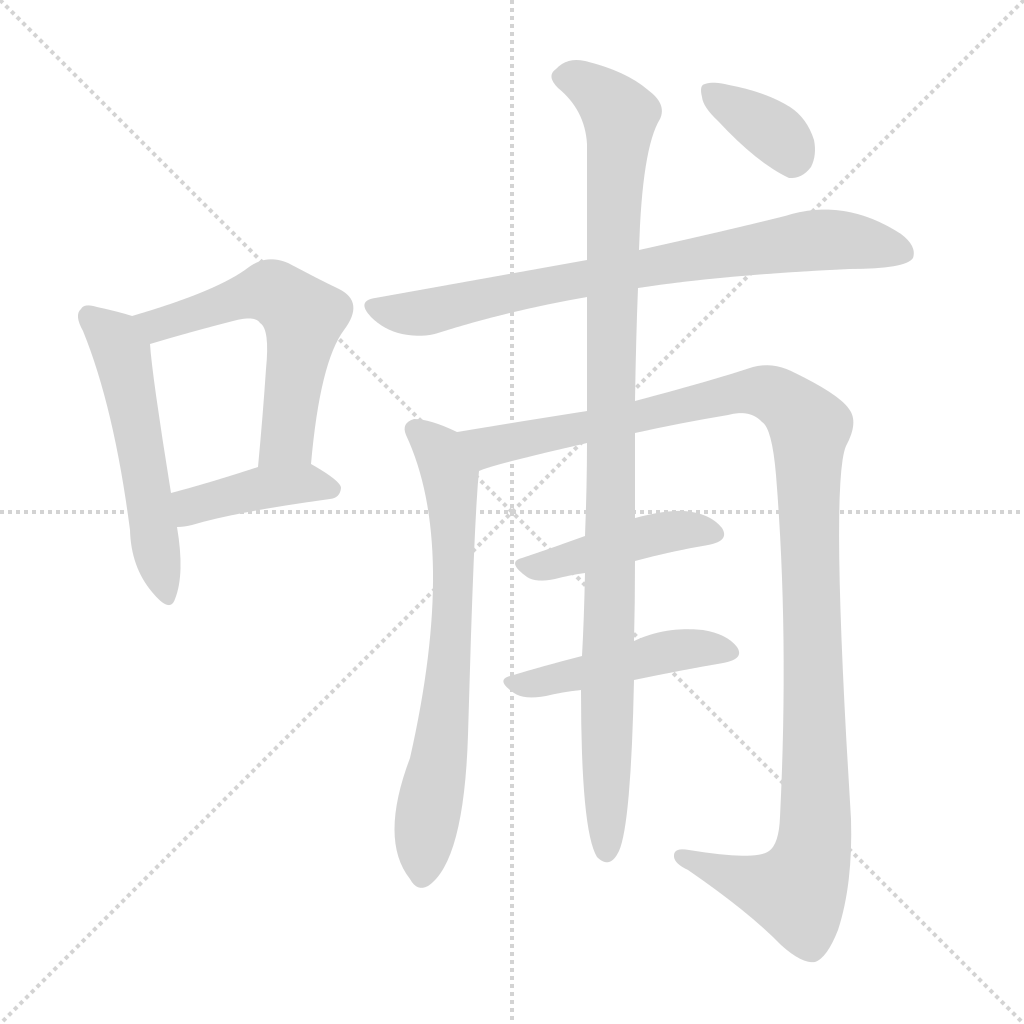
Bu (哺)
Kangxi stroke count: 10
Page 191, Entry 11
Pronounced bu. In the Shuo Wen Jie Zi (Shuo Wen), it means to chew. In the Yu Pian, it refers to chewing food in the mouth. In the Guang Yun, it refers to food held in the mouth. In the Records of the Grand Historian (Shiji), Biography of the Duke of Zhou of Lu: one meal three times spit out food (a reference to Duke Zhou interrupting his meal to receive guests). In the Erya, Explaining Birds: to feed. Note: It refers to a fledgling bird that must be fed by its mother.
Also pronounced bu. Same as the character bu (餔). For details, see the entry for bu under the food radical.
Also pronounced fu. Same as the character fu (same as previous character, specific to the entry). For details, see the note for the previous character.
Also pronounced pou (falling tone). In the Yi Lin: birds and magpies eat grain, open their mouths to receive food, are covered by grace and virtue, and grow to maturity.
Also used interchangeably with the character shi. In the Book of the Later Han (Hou Hanshu), Biography of the Artful Masters: a wind blew the wooden shavings and food. Note: Bu should be read as shi, pronounced fu (falling tone).