Chen Collection, Middle Volume
Radical: Wood (mù)
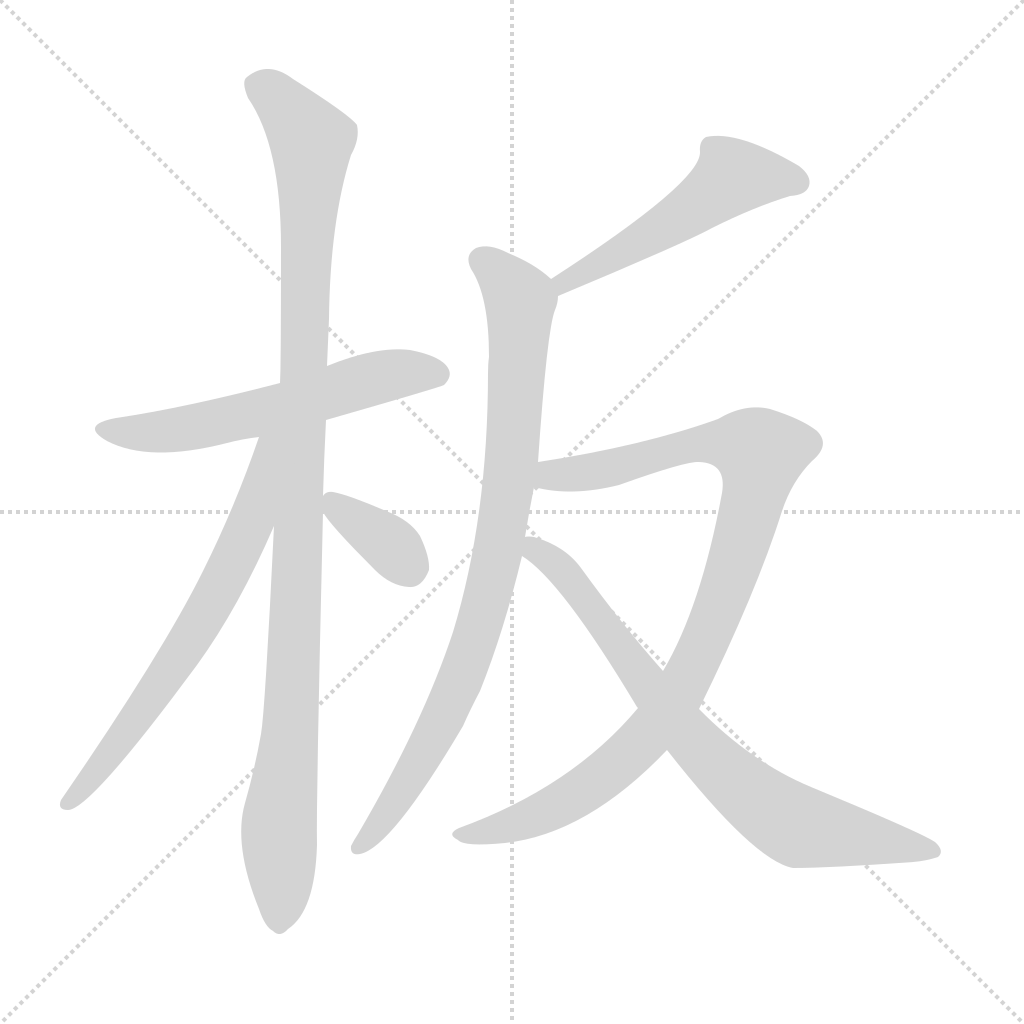
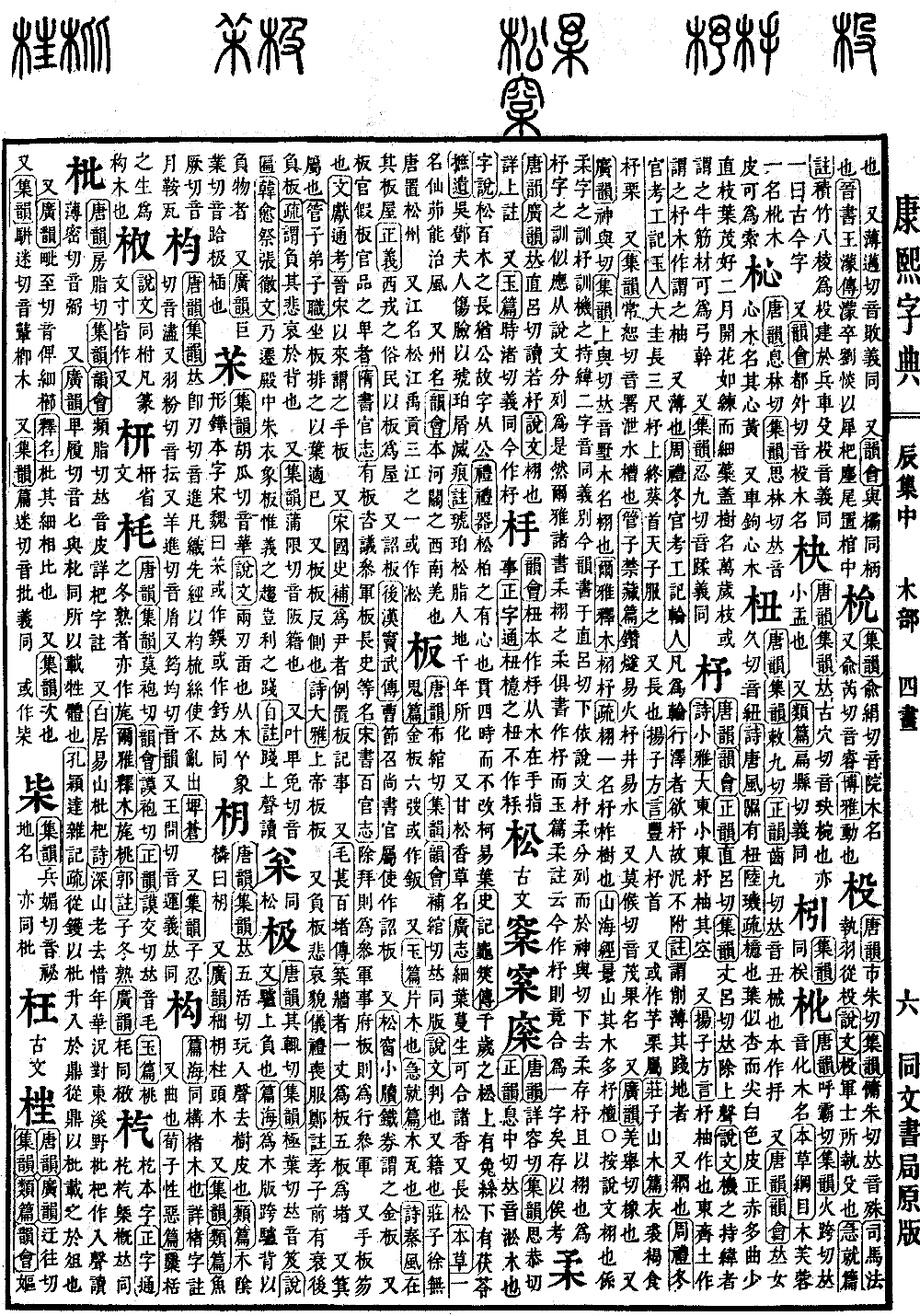
Board (bǎn); Kangxi stroke count: 8; Page 514, Entry 15
Pronounced ban (falling tone). The same as board.
Shuowen Jiezi (Dictionary of Explaining Graphs): To divide. Also a register.
Zhuangzi (The Book of Master Zhuang): Six bows stored in a metal case. Sometimes written in a variant form (bǎn).
Yupian (Jade Chapters): A piece of wood.
Jijiupian (Quick Learning): Wood or tile.
Book of Odes (Shijing): In their board house.
Zhengyi (Correct Meaning): The customs of the Western Rong people, where the commoners built houses using wooden boards.
Imperial edict board.
Book of the Later Han (Hou Hanshu): Cao Jie summoned the officials of the Secretariat to have them create an imperial edict board.
Songchuang Xiaodu (Small Records from Pine Window): An iron certificate of merit is called a golden board.
Temporary appointment boards, granted to those with official rank.
Book of Sui (Suishu): Included titles such as auxiliary advisory counselor and acting chief clerk.
Book of Song (Songshu): A formal appointment was called an advisory counselor. An appointment made by the regional government was called an acting advisory counselor.
Hand board, ceremonial tablet.
Wenxian Tongkao (Comprehensive Examination of Literature): Since the Jin and Song dynasties, it has been called a hand board.
Song Guoshi Bu (Supplementary History of the Song State): Those who served as regional governors traditionally set up boards to record matters.
Book of Odes (Shijing): Mao Commentary: One zhang (a unit of measure) is a board, and five boards make a du (a unit of wall construction).
A container similar to a winnowing basket.
Guanzi (The Book of Master Guan): Sitting down, push aside with a board, and bring leaves close to oneself.
Banban, fickle and capricious.
Book of Odes (Shijing): God is capricious.
Carrying a board on the back, the appearance of mourning.
Book of Etiquette and Ceremonial (Yili): Zheng Commentary: The filial son has mourning clothes in front and carries a board on his back.
Shu (Sub-commentary): This refers to carrying grief upon one's back.
Pronounced ban (third tone). A register.
Pronounced bian (rising tone).
Han Yu, Sacrificial Oration for Zhang Che: Then moved to the Palace Secretariat, wearing red robes and holding an ivory board. Only pursuing righteousness, how could one tread for profit?
Author Note: Tread, read in the rising tone.
Textual research: Mao Chang, Commentary on the Hongyan Poem. Note: The original text does not contain the three characters for wall builder. Corrected according to the original text of the Mao Commentary on the Hongyan poem in the Book of Odes (Shijing).