Zi Collection, Page Position: Lower
Radical: Knife (dāo)
Bō; Kangxi stroke count: 10; Page number: Page 141, Number 41
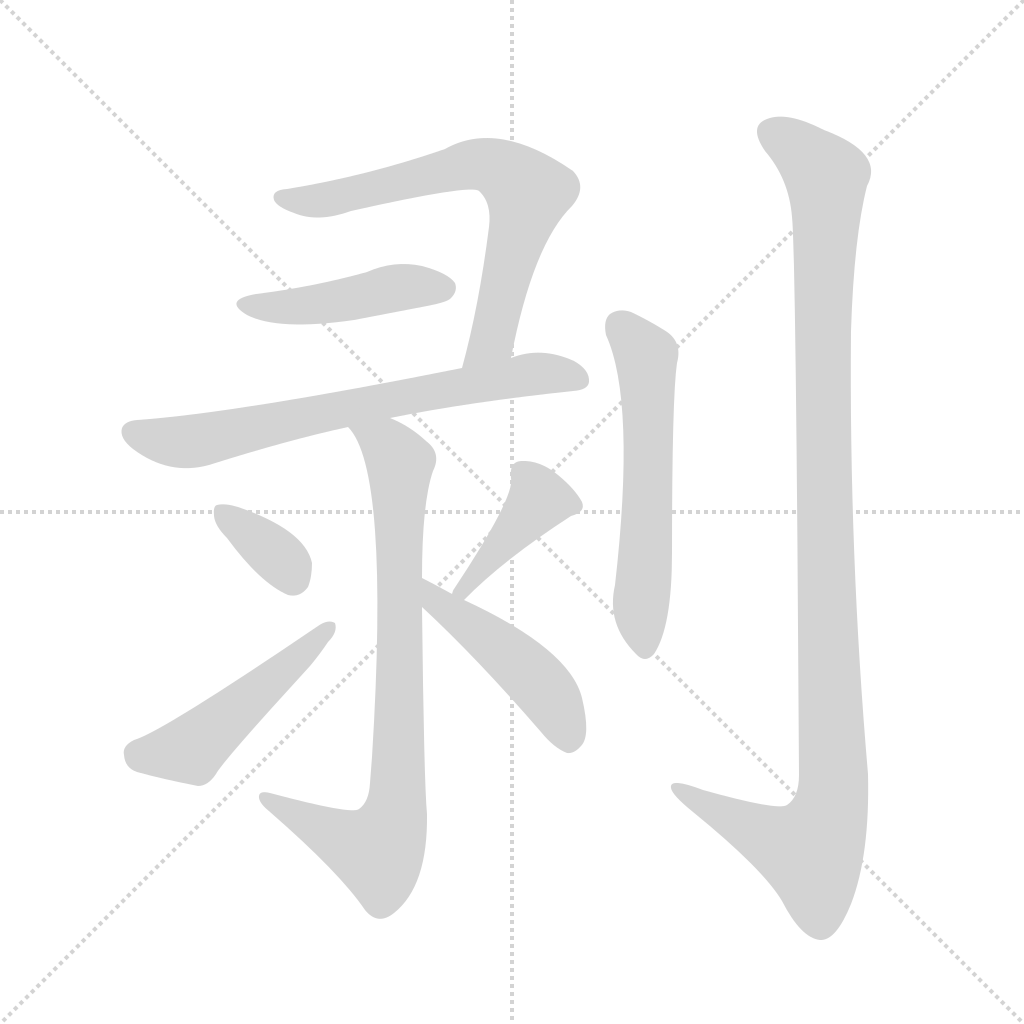
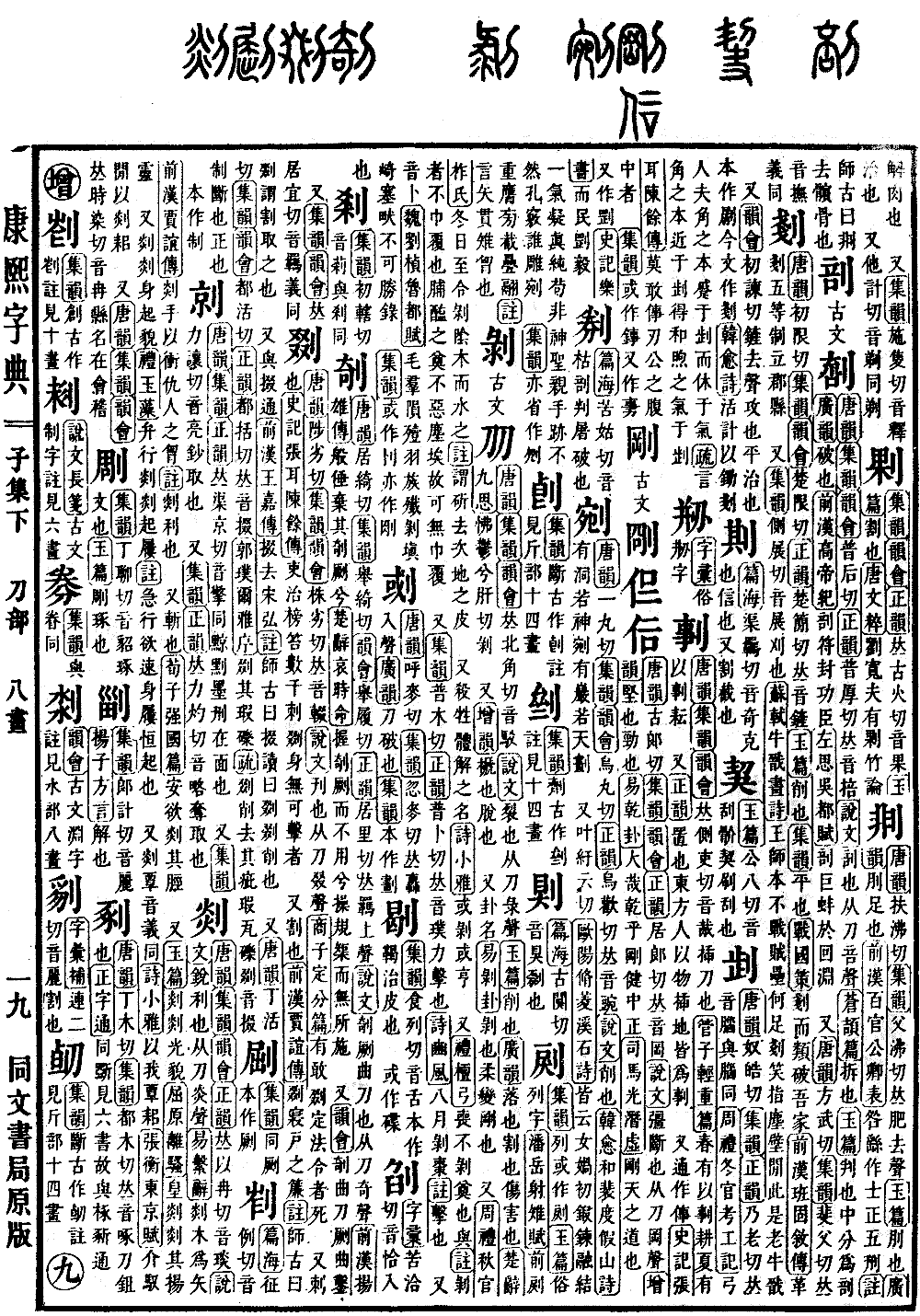
Ancient form. Tang Rhymes (Tangyun), Collected Rhymes (Jiyun), and Collected Rhymes (Yunhui) define the pronunciation by the fanqie method as beijiǎoqiè, pronounced the same as bó. The Analytical Dictionary of Characters (Shuowen) describes it as to split or tear. It is derived from the radical for knife with the character lù providing the sound. The Jade Chapters (Yupian) defines it as to pare or whittle. The Broad Rhymes (Guangyun) defines it as to fall, to cut, or to harm. From the Nine Longings (Jiusi) in the Songs of the South (Chuci): My liver is cut and peeled by pent-up frustration. Also, the Supplemented Rhymes (Zengyun) defines it as to strip or take off.
Also used as the name of a hexagram. In the Bō hexagram of the Book of Changes (Yijing): Bō signifies the soft transforming the hard.
Also, in the Rites of Zhou (Zhouli), Ministry of Justice (Qiuguan), Officer of the Oak (Zuoshi): On the winter solstice, orders are given to peel the bark of trees on the shaded side and submerge them in water. The commentary states this means chopping away the bark near the ground.
Also a term for slaughtering and butchering livestock. From the Minor Odes of the Kingdom (Xiaoya) in the Book of Odes (Shijing): Some are flayed and some are boiled.
Also, from the Tangong section of the Book of Rites (Liji): In mourning, why are the offerings not uncovered? The commentary explains that bō refers to not using a cloth covering. Since offerings of dried meat and minced meat sauce are not ruined by dust, they do not need to be covered with a cloth.
Also, Collected Rhymes and Correct Rhymes (Zhengyun) give the fanqie pronunciation as pǔmùqiè and pǔbǔqiè, pronounced as pǔ. It means to strike forcefully. From the Odes of Bin (Binfeng) in the Book of Odes: In the eighth month, we knock down the dates. The commentary defines it as to strike.
Also pronounced as bǔ. In the Rhapsody on the Capital of Lu (Ludu Fu) by Liu Zhen of the Wei Dynasty: The furred beasts fall dead, and the feathered tribes are utterly destroyed. Filling the valleys and blocking the ditches, they are too numerous to record. Collected Rhymes notes it is sometimes written in variant forms pronounced pū or pǔ.