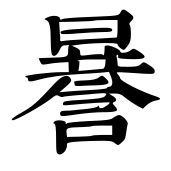
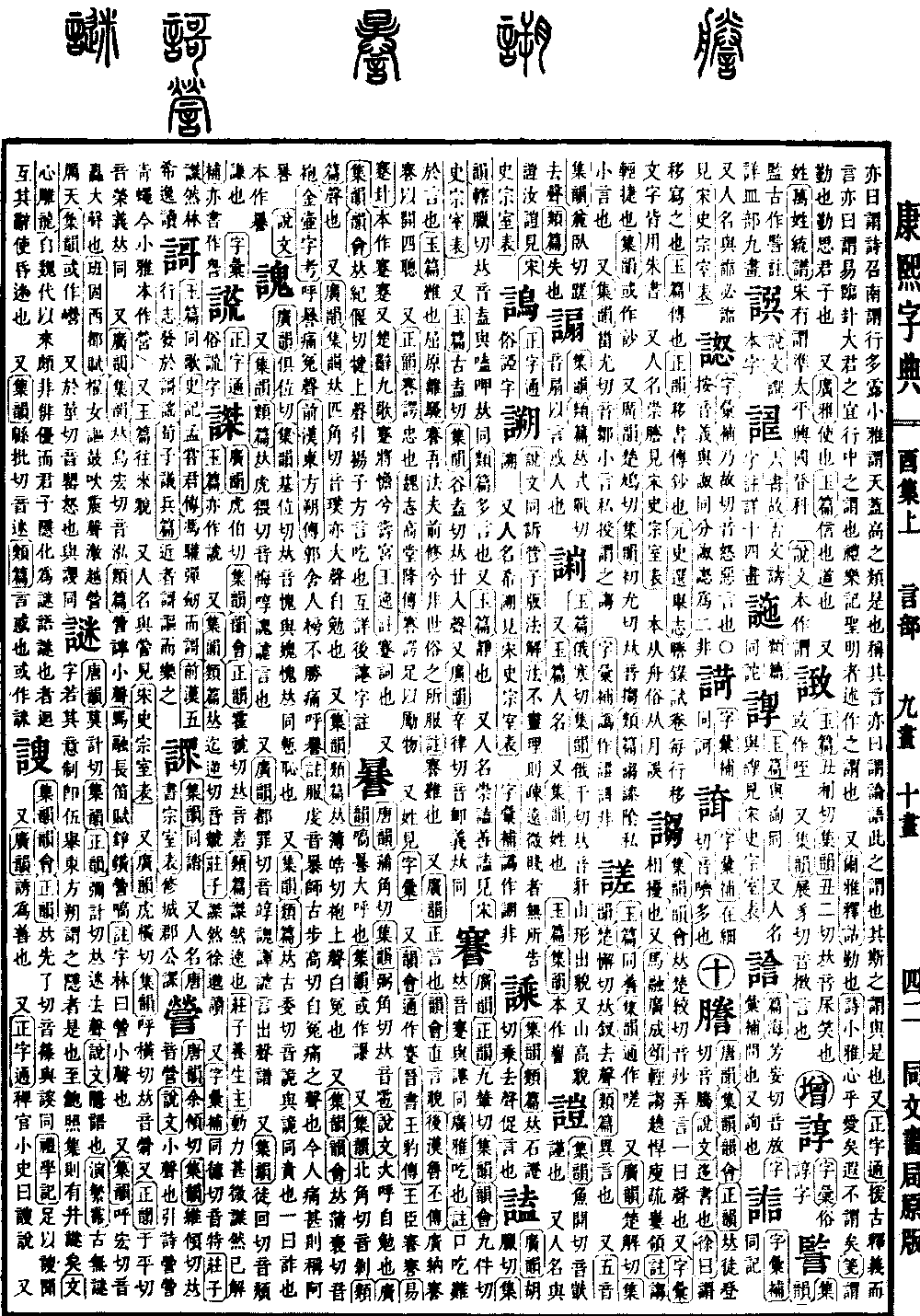
You Collection, Upper Volume
Radical: Speech (yán)
17 Kangxi strokes
Page 1174, Entry 24
Pronounced bao (rising tone).
Pronounced bao (rising tone).
Pronounced bao (rising tone).
Pronounced bao (rising tone), same sound as hail.
Explained in Explanation of Simple and Compound Characters (Shuowen Jiezi) as: to call out in a loud voice to encourage oneself.
Explained in Extensive Rhymes (Guangyun) as: a harsh clamor, meaning to call out in a loud voice.
Recorded in Collection of Rhymes (Jiyun): sometimes also written in a variant form (zhuàn).
Also pronounced bo.
Explained in Categorized Compilation (Leipian) as: sound.
Also pronounced pu.
Also refers to calling out in a loud voice to encourage oneself.
Also pronounced bao (rising tone).
Meaning: to appeal against an injustice.
Also pronounced bao.
Explained in Record of the Golden Pot (Jinhu Zikao) as: a clamorous cry, referring to the sound made due to pain or injustice.
Recorded in History of the Former Han (Qianhan Shu), Biography of Dongfang Shuo: Guo Sheren endured a beating, unable to bear the pain, he cried out loudly.
Note: Fu Qian glosses the pronunciation as bao (falling tone). Shi Gu glosses the pronunciation as bu gao. This is the sound made when one is suffering from injustice or pain. Modern people, when in unbearable pain, will cry out a bao.
Originally written in a variant form (zhuàn) in the Explanation of Simple and Compound Characters (Shuowen Jiezi).