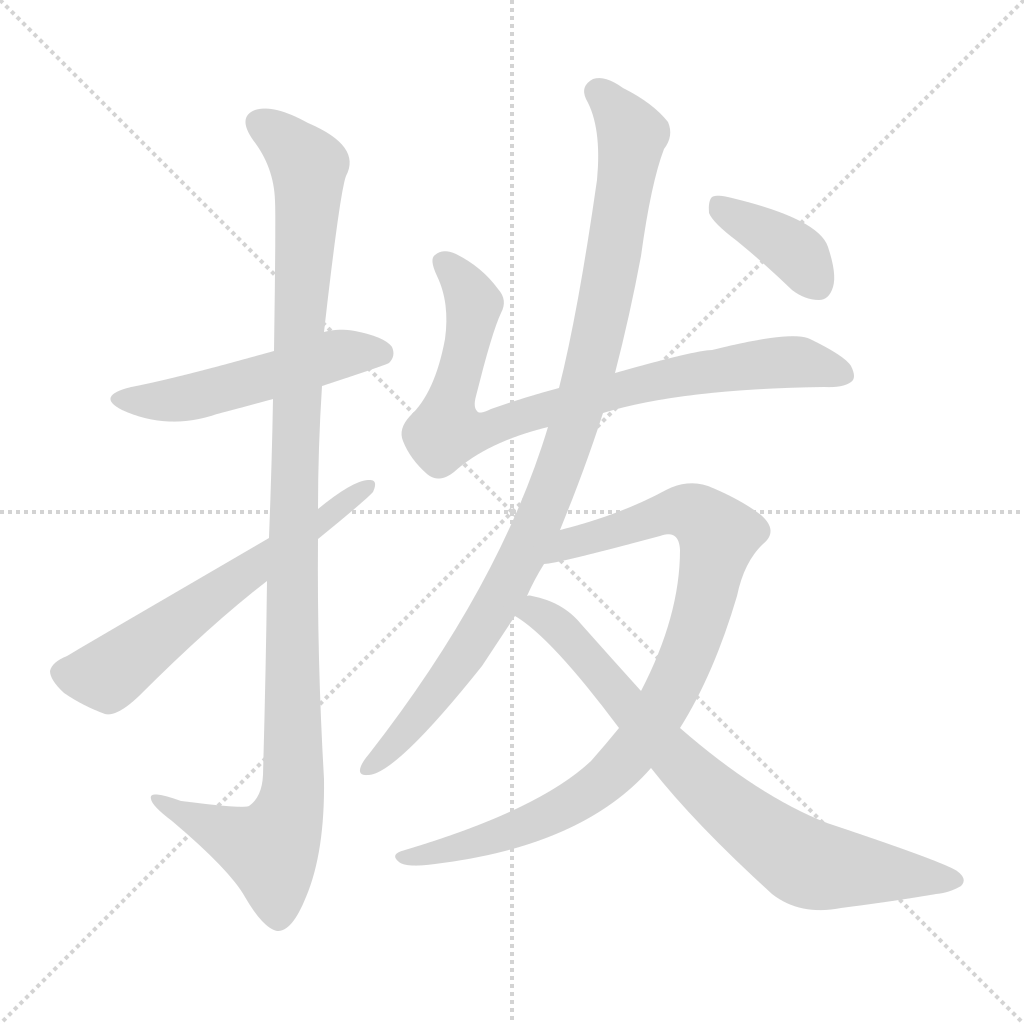
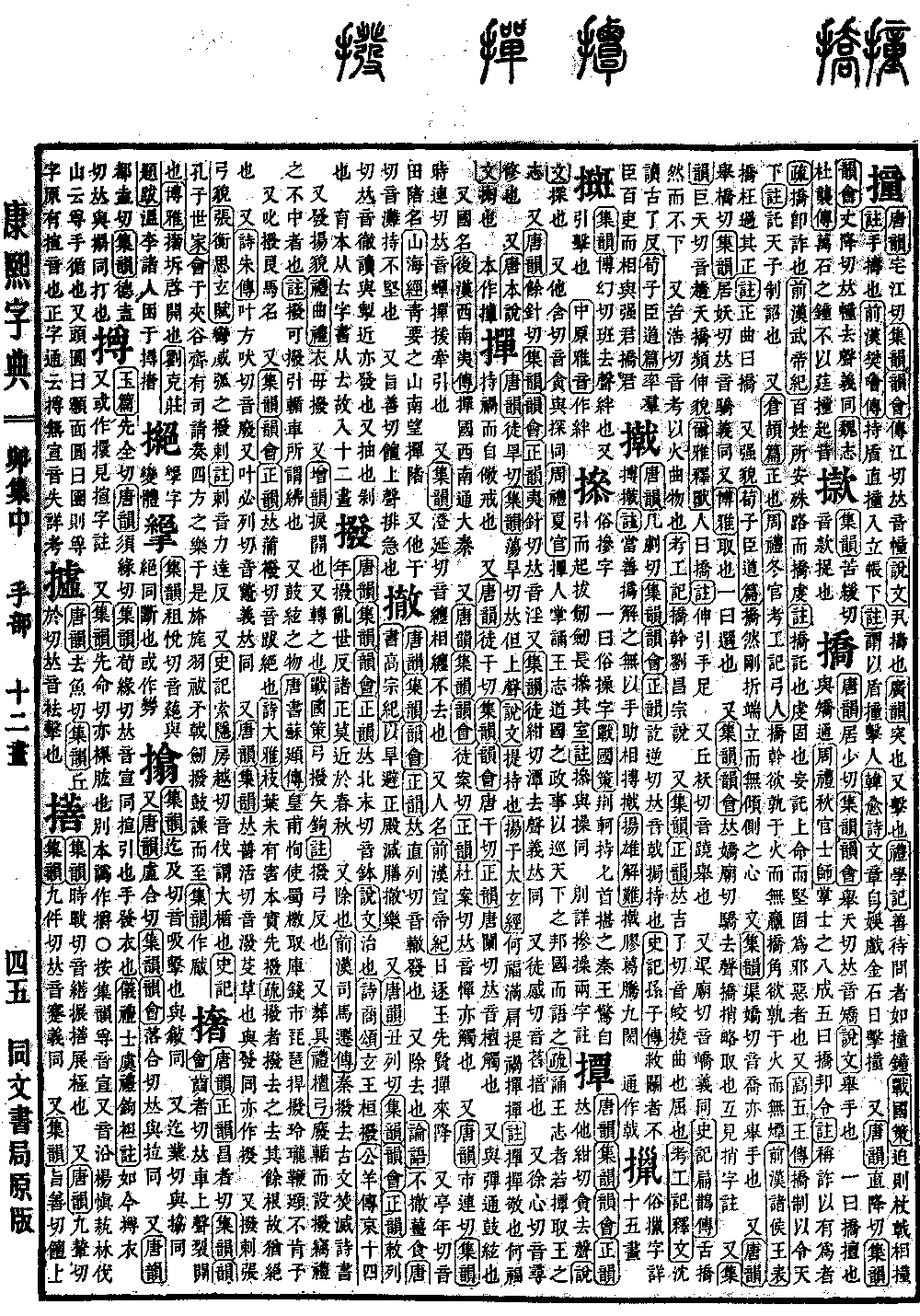
Mao Collection, Middle Volume
Radical: Hand (shǒu)
Kangxi stroke count: 16
Page 455, Entry 01
Pronounced bo.
In the Shuowen Jiezi (Dictionary of Characters), it means to manage.
In the Book of Odes (Shijing), Shang Song section: The king is martial and manages [the state].
In the Gongyang Commentary (Gongyang Zhuan), 14th year of Duke Ai: To manage a chaotic age and return to righteousness, nothing is closer than the Spring and Autumn Annals (Chunqiu).
Also means to remove.
In the History of the Former Han (Hanshu), Biography of Sima Qian: The Qin dynasty removed the ancient texts and burned the Book of Odes and the Book of Documents (Shangshu).
Also refers to an appearance of being ruffled or flaring up.
In the Book of Rites (Liji), Quli section: Do not let your robes be ruffled.
According to the Zengyun (Expanded Rhymes), it also means to pry open.
Also, to turn or rotate.
In the Strategies of the Warring States (Zhan Guo Ce): The bow is pulled back and the arrow is crooked.
Commentary: This means the bow is bent backward.
Also refers to funeral equipment.
In the Book of Rites (Liji), Tanjong section: Setting aside the hearse and using a pulling rope (bo) is a practice that does not accord with the rites.
Commentary: The bo is used to pull the hearse, which is what is called a funerary cord (fu).
Also refers to a plectrum used for playing stringed instruments.
In the History of the Tang (Tangshu), Biography of Su Ting: Huangfu Xun was sent on a mission to Shu, where he demanded treasury funds to purchase a lute with an ornamental plectrum and a whip. Su Ting refused to provide them.
Also refers to a chibo, a type of fine horse.
Pronounced ba.
Means to sever.
In the Book of Odes (Shijing), Daya section: The branches and leaves have not yet been harmed, but the root is already severed.
Note: To sever means to cut off.
Commentary: To remove the remaining roots, thus it is used to mean to sever.
Also pronounced fei.
Also pronounced bie.
The meaning is the same.
Pronounced po.
To mow grass. Similar to the character meaning to develop or issue. Also written as the variant character (bo).
Also refers to bolla, the appearance of a bow being drawn.
In Zhang Heng, Si Fu (Rhyme-prose on Thinking): Drawing the powerful bow with a bolla sound.
Commentary: La is pronounced li da.
Also pronounced fa.
Refers to a large shield.
In the Records of the Grand Historian (Shiji), Biography of Confucius: At the meeting at Jiagu, the officials of Qi requested to perform music from the four quarters, whereupon they arrived with banners, plumes, shields, spears, halberds, swords, and large shields, accompanied by the beating of drums.
In the Jiyun (Collection of Rhymes), written as the variant character (fa).
Correction: In the Book of Odes (Shijing), Daya section: The branches and leaves have not yet been harmed, but the root is already severed.
Commentary: Severing means to remove, removing the remaining roots, thus it is used to mean to sever.
Note: The four characters meaning it is a term of explanation for the note should be placed after the note and before the commentary. The text has been corrected to read: Note: To sever means to cut off. Commentary: To remove the remaining roots, thus it is used to mean to sever.