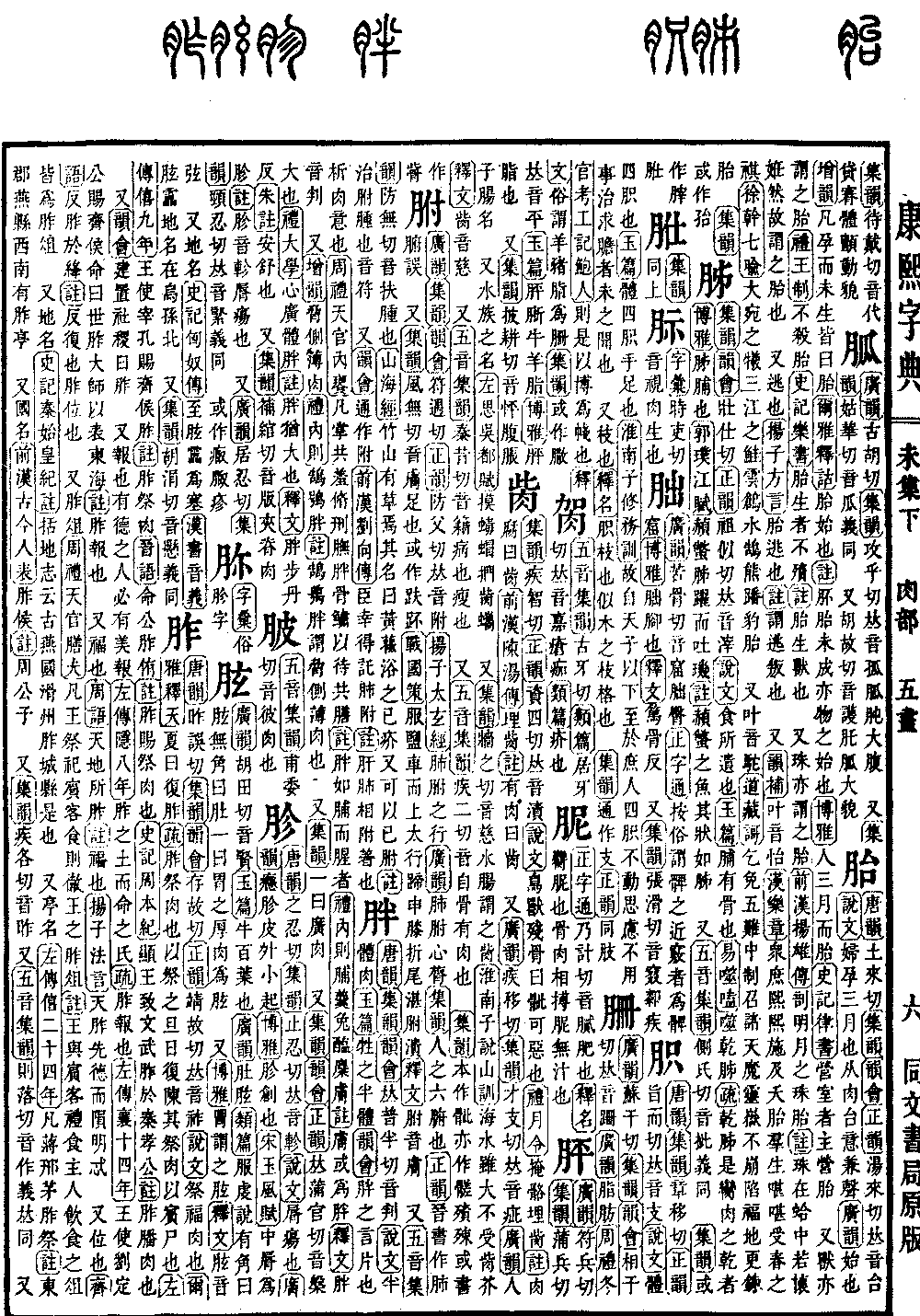
Wei Collection, Lower Volume
Radical: Meat (ròu)
Zi
Kangxi stroke count: 11
Page 978, Entry 12
According to Rhyme Dictionary of Collections (Jiyun), pronounced zi (falling-rising tone); according to Correct Rhymes (Zhengyun), pronounced zi (falling-rising tone).
According to Explaining Graphs and Analyzing Characters (Shuowen), the remaining bones of birds and animals are called zi, which is considered offensive.
Book of Rites (Liji), Monthly Ordinances (Yueling): Cover the skeletons and bury the zi. Annotation: Rotten flesh is called zi.
History of the Former Han (Qianhan shu), Biography of Chen Tang: Bury the zi. Annotation: That which has flesh is called zi.
Also, according to Broad Rhymes (Guangyun), pronounced ci (level tone); according to Rhyme Dictionary of Collections (Jiyun), pronounced ci (level tone).
According to Broad Rhymes (Guangyun), the name for human intestines. Also, the name for an aquatic creature.
Zuo Si, Ode to the Capital of Wu (Wudu fu): Feeling the hawksbill turtle, touching the zi and sea turtles.
Also, according to Rhyme Dictionary of Collections (Jiyun), pronounced ci (level tone). Water intestines are called zi.
Huainanzi, Discourses on Mountains (Shuosan xun): Although the sea is vast, it does not hold zi or mustard seeds. Interpretation: zi is pronounced ci.
Also, according to Five Sound Rhyme Dictionary (Wuyin jiyun), pronounced ji (rising tone). It means sickness or thinness.
Also, according to Five Sound Rhyme Dictionary (Wuyin jiyun), pronounced zi (falling tone). Bones that still have flesh on them.
According to Rhyme Dictionary of Collections (Jiyun), originally written as zi. Also written as zi and zi. Sometimes also written in a variant form.