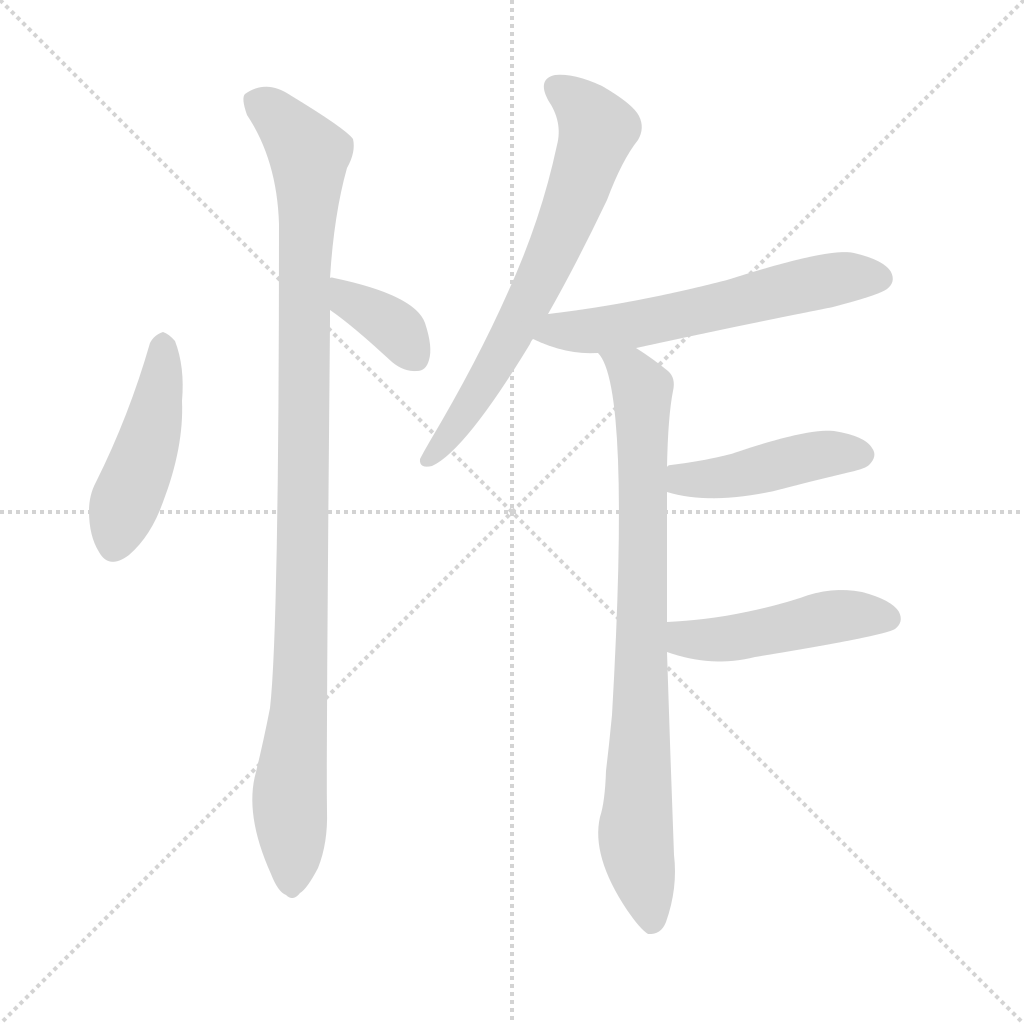
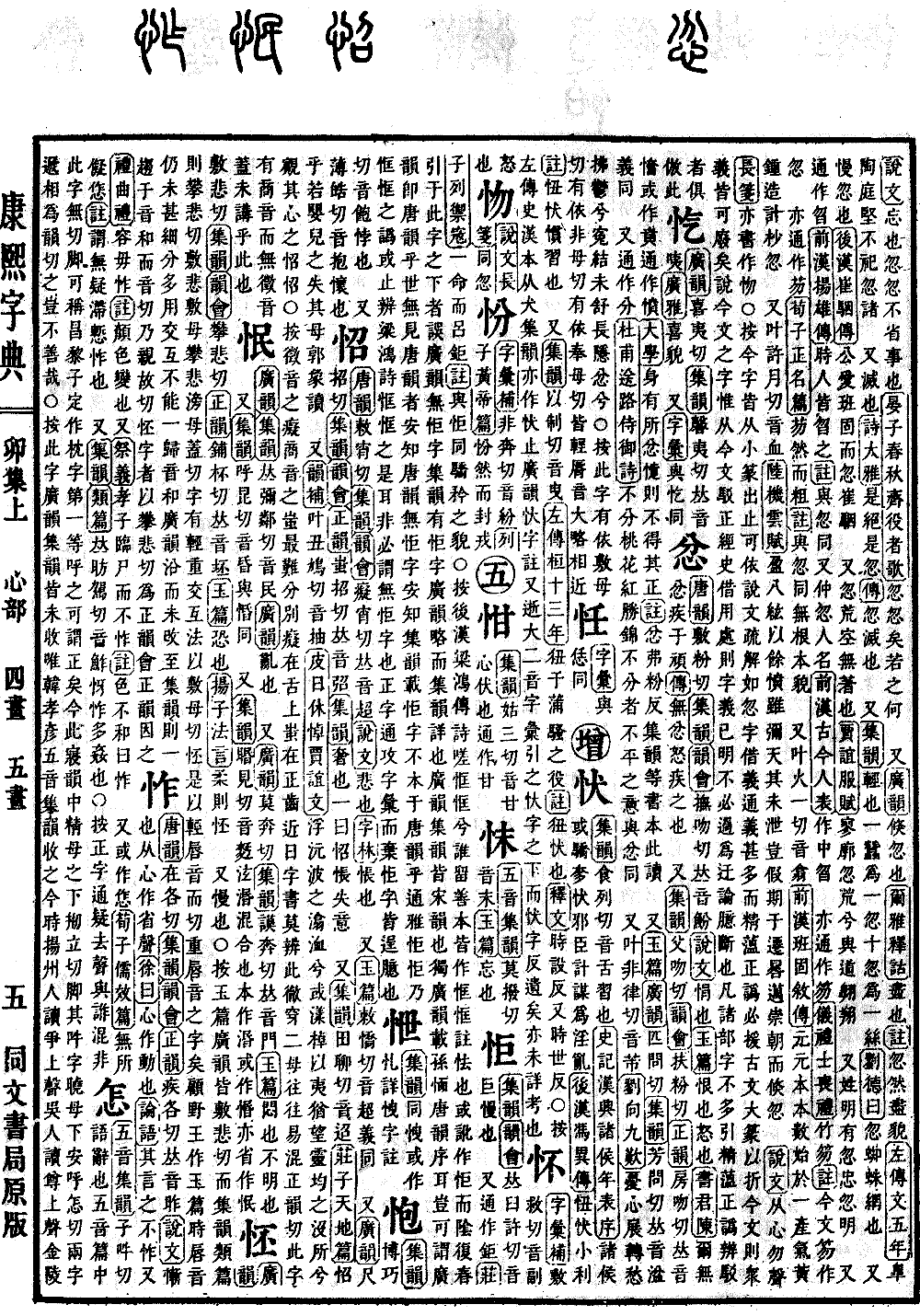
Mao Collection, Upper Volume
Radical: Heart (xīn)
Strokes: 9
Page 379, Entry 16
According to the Tang Rhyme (Tangyun), the Collection of Rhymes (Jiyun), the Collection of Rhymes and Annotations (Yunhui), and the Correct Rhymes (Zhengyun), it is pronounced zuo.
According to the Explaining Graphs and Analyzing Characters (Shuowen Jiezi), it means to feel ashamed. It is composed of the heart radical, with zuo as the phonetic component.
Xu says it refers to internal agitation or change of heart.
In the Analects of Confucius (Lunyu), it means to speak without feeling shame.
Also, in the Book of Rites (Liji), specifically in the section on general rules of conduct, it means that one's demeanor should not change. The commentary notes that this refers to a change in facial expression.
Furthermore, in the section on the meaning of sacrifice, it refers to a filial son who, when facing the deceased, does not change his expression. The commentary notes that an unnatural facial expression is called zuo.
It is also sometimes written in a variant form. In the Xunzi, in the section on the efficacy of Confucianism, it means to have no hesitation. The commentary notes that this refers to having no doubts or feelings of shame.
Additionally, in the Collection of Rhymes (Jiyun) and the Classified Dictionary (Leipian), it is pronounced zha, meaning to be full of deceit and craftiness. According to the Correct Meaning Dictionary (Zhengzitong), suspecting that it should be read in the departing tone and that it is confused with another character is incorrect.