You Collection, Middle Volume
Radical: Foot (zú)
Kangxi Strokes: 15
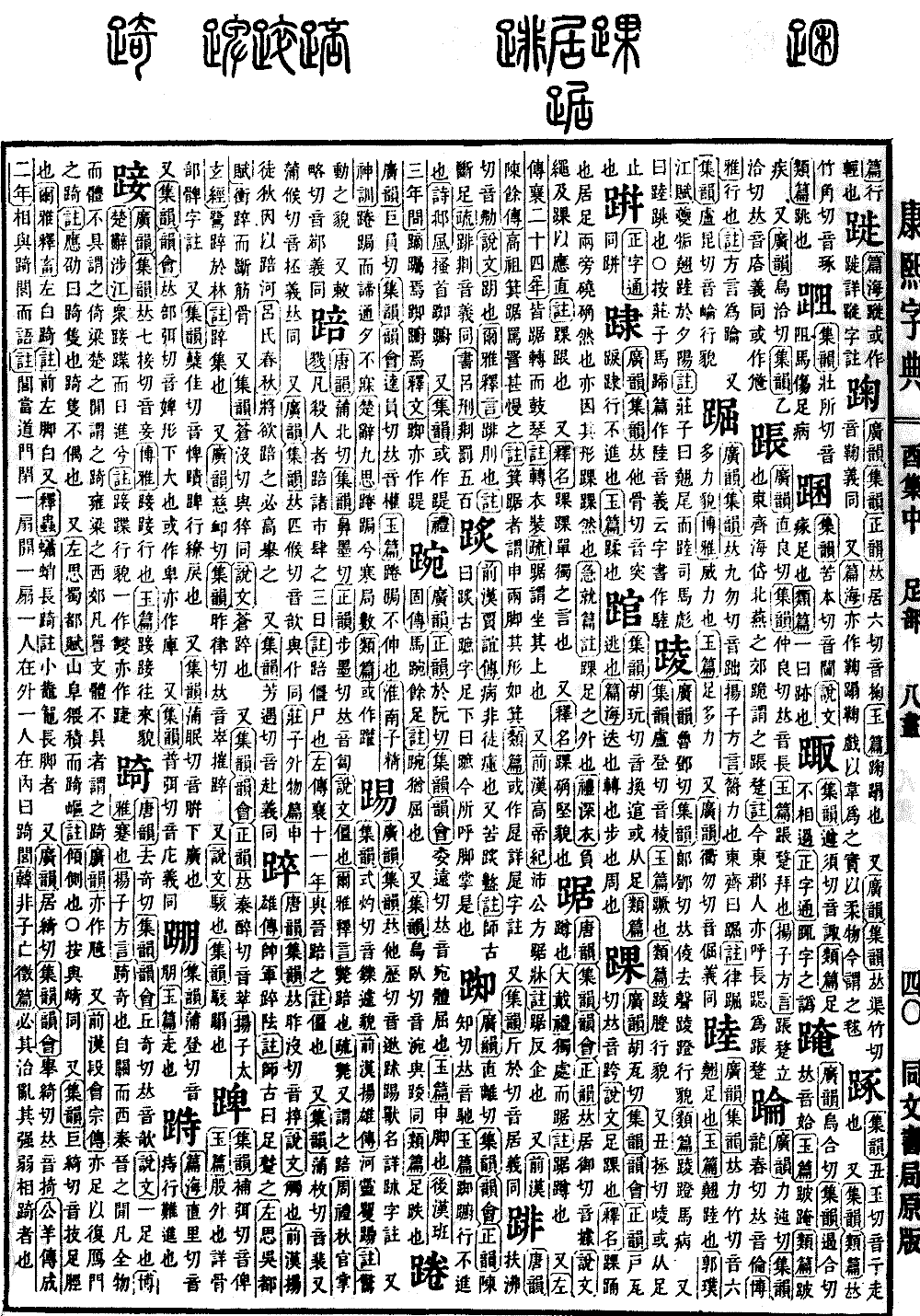
Page 1228, Entry 25
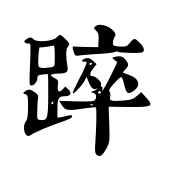
Tang Rhyme (Tangyun) and Collected Rhymes (Jiyun) state it is pronounced zuo, with the same sound as zuo. Explanatory Dictionary of Chinese Characters (Shuowen Jiezi) defines it as to touch or collide. In Biography of Yang Xiong (Yang Xiong Zhuan) from the History of the Former Han (Qian Han Shu), it is written: leading the army to collide and strike. Commentary: Yan Shigu states: to kick or trample with the feet. In Rhapsody on the Capital of Wu (Wu Du Fu) by Zuo Si, it is written: to collide and break tendons and bones.
Additionally, Collected Rhymes (Jiyun) states it is pronounced cu, the same as cu. Explanatory Dictionary of Chinese Characters (Shuowen Jiezi) defines it as sudden or abrupt.
Additionally, Collected Rhymes (Jiyun), Collection of Rhymes (Yunhui), and Correct Rhymes (Zhengyun) state it is pronounced cui, with the same sound as cui. In The Great Mystery (Taixuan Jing) by Yang Zi, it is written: the egret gathers in the forest. Commentary: zu, meaning to gather.
Additionally, Extended Rhymes (Guangyun) states it is pronounced xu, and Collected Rhymes (Jiyun) states it is pronounced zu, with the same sound as zu. It means to destroy or break.
Additionally, Explanatory Dictionary of Chinese Characters (Shuowen Jiezi) defines it as to be frightened. Collected Rhymes (Jiyun) defines it as to trample out of fear.