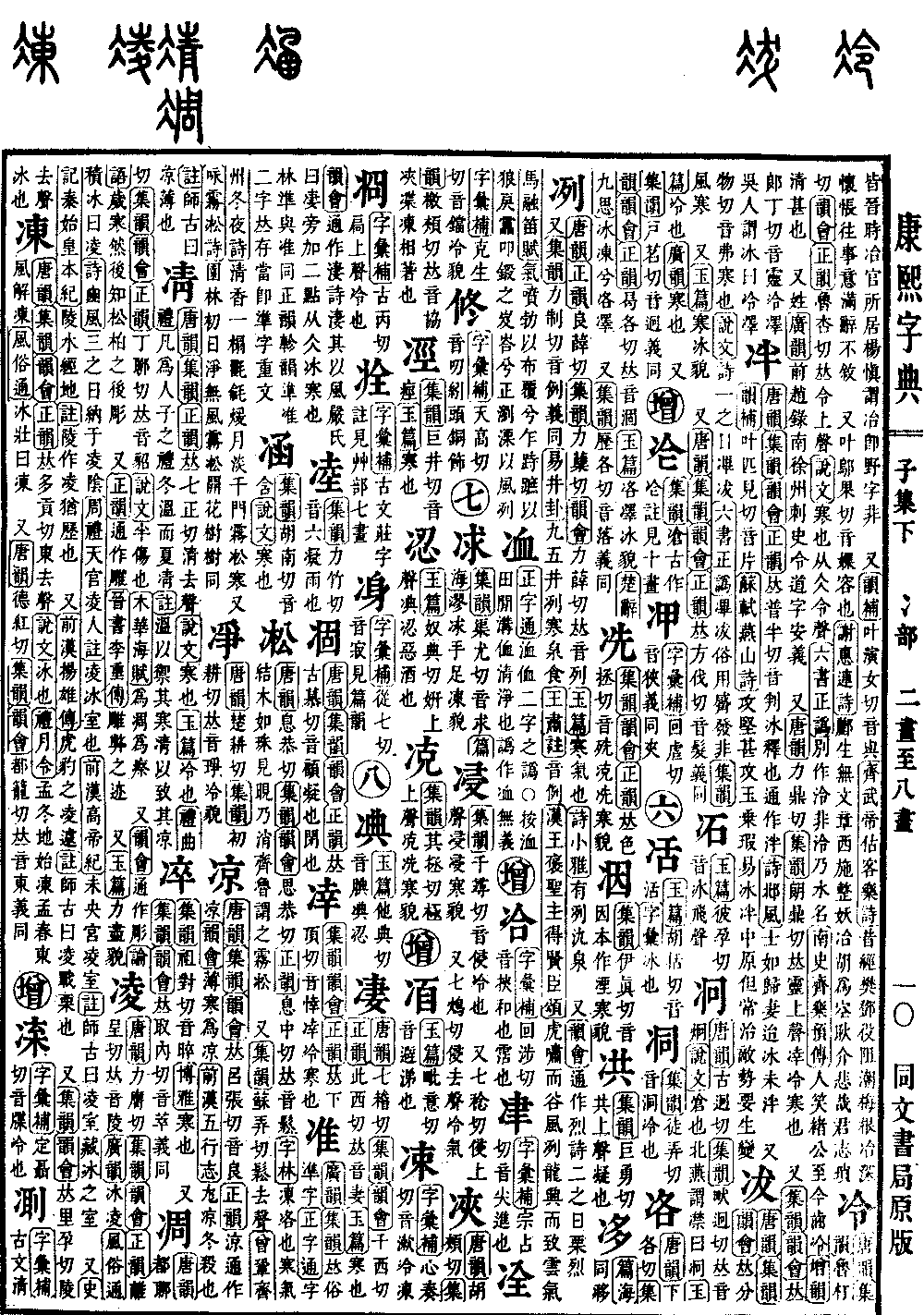
Si Collection, Upper Volume
Radical: Water (shuǐ)
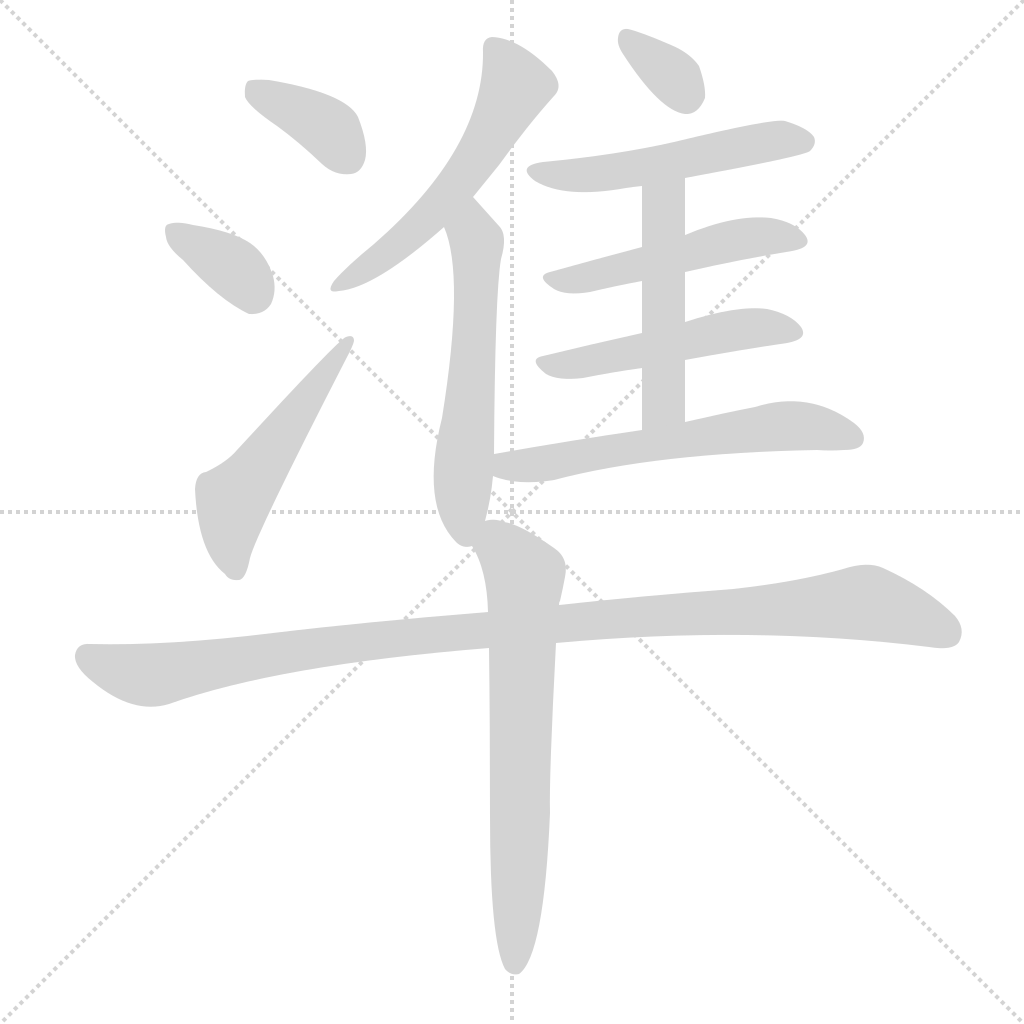
準
Kangxi strokes: 14
Page 132, Entry 01
Pronounced zhǔn (rising tone).
Shuowen Jiezi states: It means level.
Book of Han (Hanshu), Treatise on Harmonics and Calendrical Astronomy: A taut cord produces a standard. This term refers to a tool used to measure levelness and establish straightness.
Book of Documents (Shangshu), Chapter on Establishing Government: The zhǔn official. Commentary: The zhǔn official is one who holds the authority of the law, referring to a judicial officer.
It also refers to equality. Book of Rites (Liji), Monthly Ordinances: First, establish the standard measures. Commentary: Refers to the balancing of weights and measures.
Also, Rites of Zhou (Zhouli), Winter Office, Artificers' Record: Weigh it, then verify it with the zhǔn. Commentary: This means using the zhǔn to measure and ensure it is level.
It also refers to the Balanced Standard (Pingzhun), an official title during the Han dynasty. Emperor Wu established the official for the balanced standard to manage the salt and iron affairs of the empire.
It also refers to a standard or model to emulate. Book of Changes (Yijing), Appended Remarks: The Book of Changes is equal to heaven and earth, acting as a standard.
It also refers to a type of musical instrument, created by Jing Fang of the Han dynasty, used to determine the degrees of musical temperament.
It is also written in a variant form (zhǔn). Zhuangzi, Chapter on the Way of Heaven: When the water surface matches the zhǔn, the master craftsman takes it as his model.
Zilin states: The two forms are identical.
Pronounced zhuō.
Records of the Grand Historian (Shiji), Annals of Gaozu: With a high nose bridge and a dragon-like countenance. Commentary: Fu Qian states: The zhǔn refers to the cheekbones. Wen Ying states: The zhǔn refers to the nose.
Pronounced shuǐ.
Also means level. One interpretation refers to the ridge of a carriage shaft that does not retain water.
Textual verification:
Rites of Zhou, Winter Office, Artificers' Record: Verify it with the zhǔn, then measure it. Commentary: This refers to using the zhǔn to strike it level.
Note: The commentary cited actually belongs to the preceding phrase "Weigh it, then verify it with the zhǔn." I have corrected the phrase "Verify it with the zhǔn, then measure it" to "Weigh it, then verify it with the zhǔn."