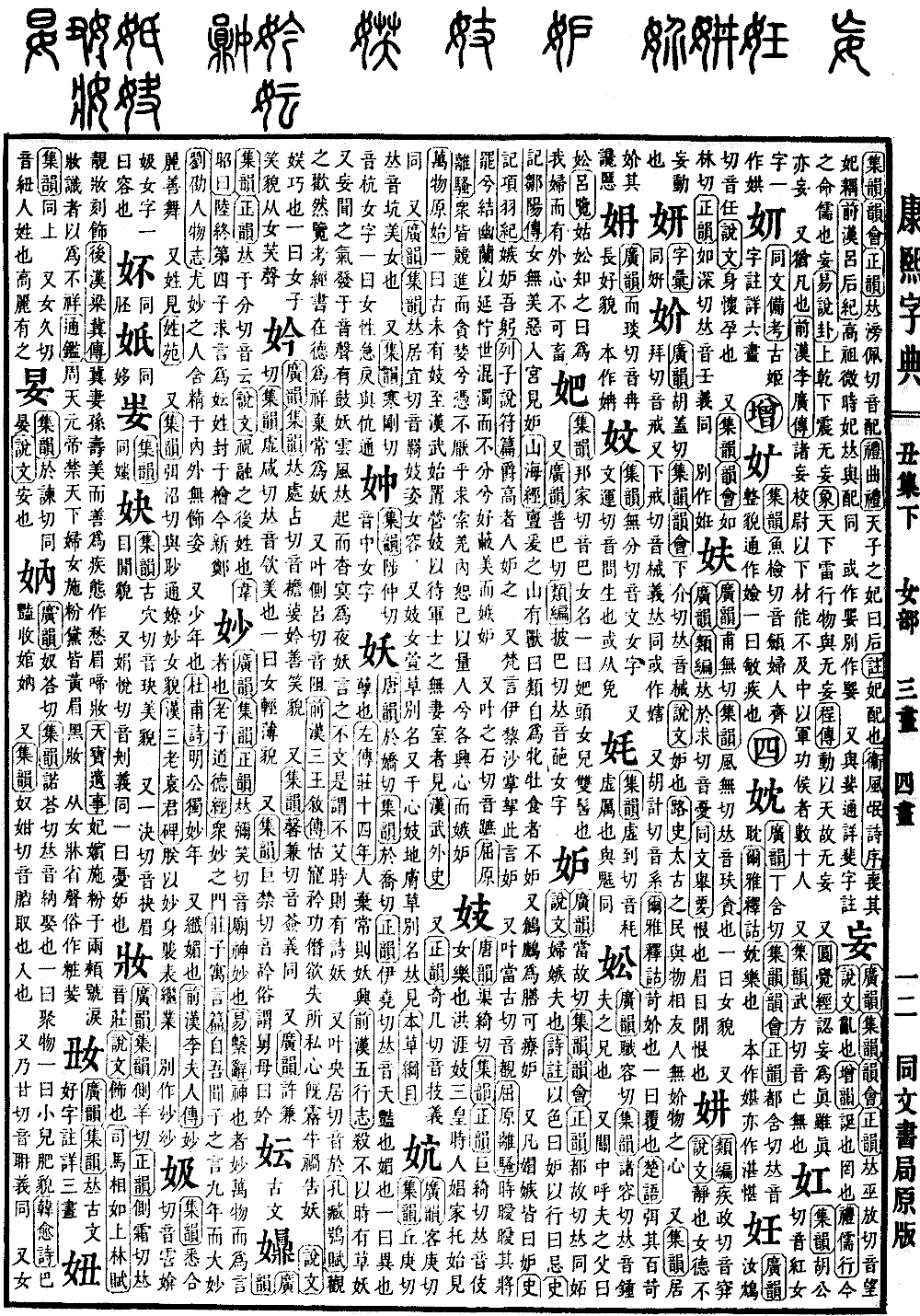
Chou Collection, Lower Volume
Radical: Woman (nǚ)
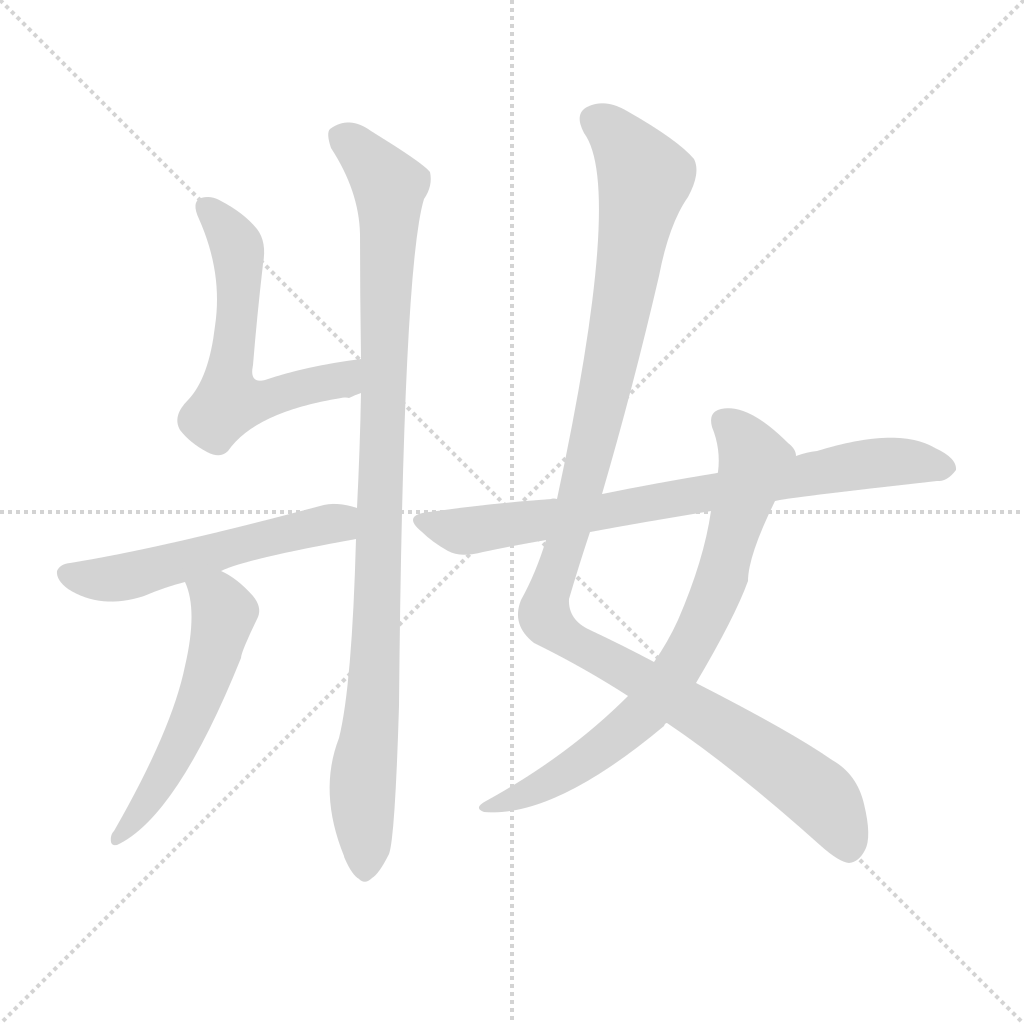
妆
Kangxi Stroke Count: 7
Page 256, Entry 30
Pronounced zhuang.
According to the Explaining and Analyzing Characters (Shuowen Jiezi), it refers to the meaning of decoration and dressing up.
As mentioned in the Rhapsody on the Shanglin Park (Shanglin Fu) by Sima Xiangru: Exquisitely decorated and adorned.
As mentioned in the History of the Later Han (Hou Hanshu), in the Biography of Liang Ji: The wife of Liang Ji, Sun Shou, was beautiful and skilled at feigning a sickly appearance, painting her eyebrows to look mournful and applying makeup to look as if she were crying.
As mentioned in the Past Events of the Tianbao Era (Tianbao Yishi): The imperial consort would apply powder to her cheeks, which was known as tear makeup. Those with insight considered this to be an omen of misfortune.
As mentioned in the Comprehensive Mirror for Aid in Government (Tongjian): Emperor Xuan of Northern Zhou prohibited women throughout the empire from applying powder or painting their eyebrows, requiring them all to paint yellow eyebrows and use black makeup.
The character is formed with the radical for woman, and the sound is derived from a shortened form of the character for bed (chuang). It is commonly written in variant forms (zhuang).