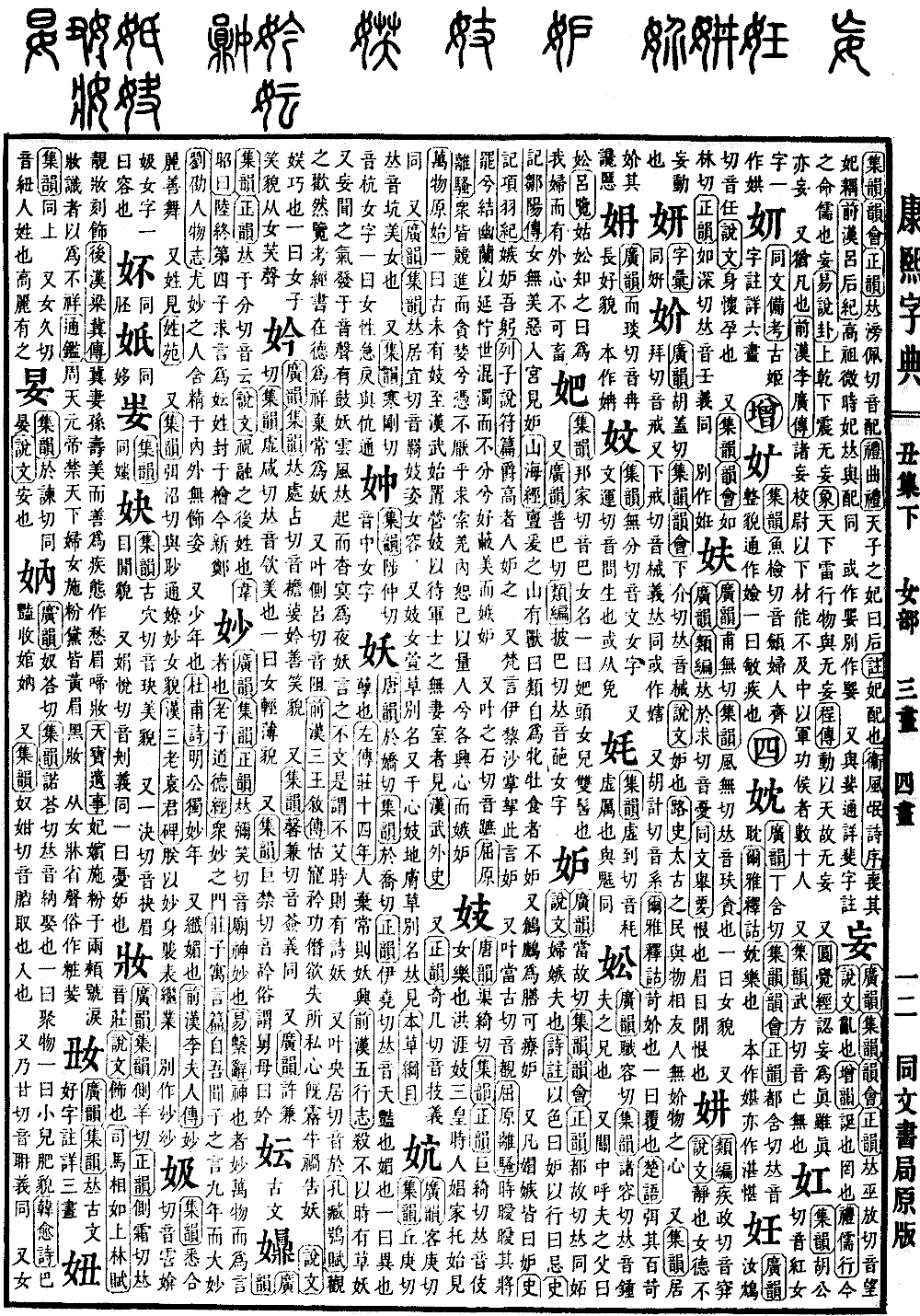
Chou Collection, Lower Volume
Radical: Woman (nǚ)
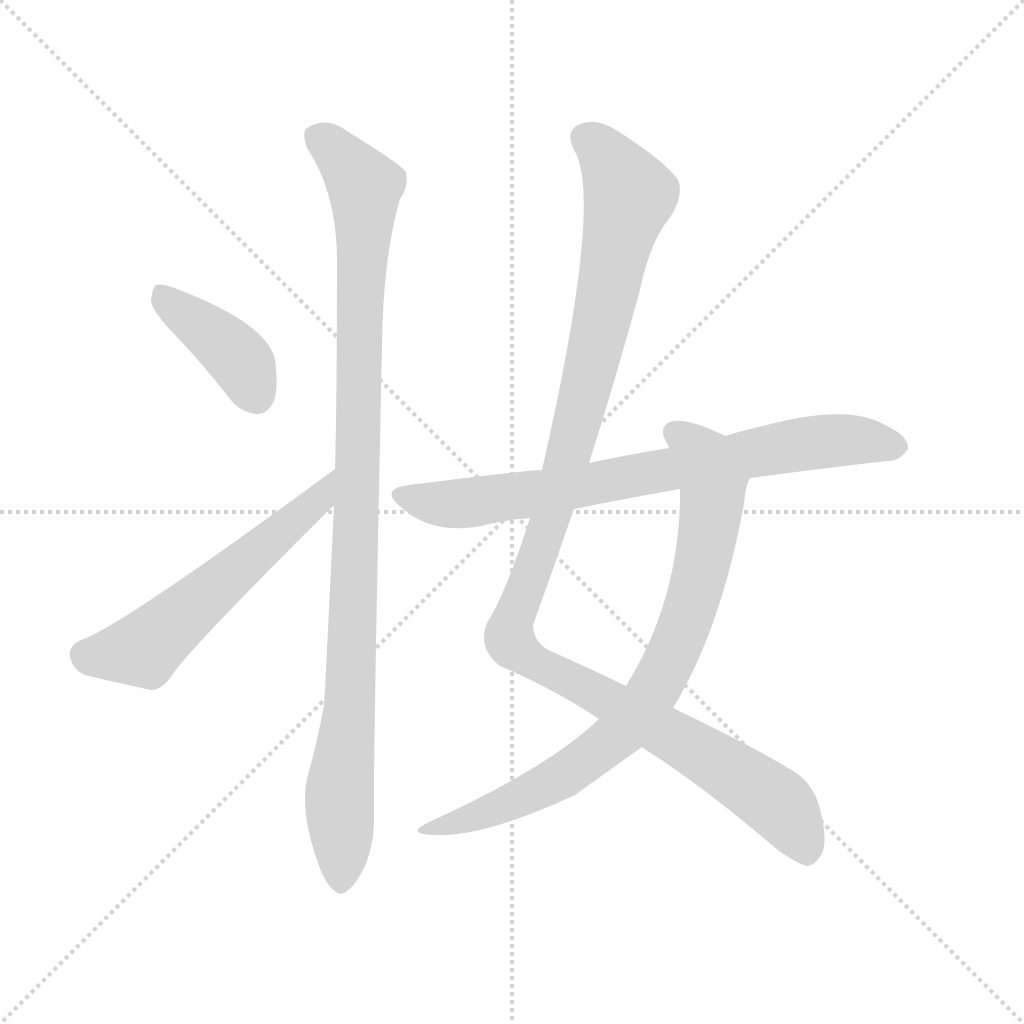
妝
Kangxi Stroke Count: 7
Page 256, Entry 04
Pronounced zhuang.
According to the Explaining and Analyzing Characters (Shuowen Jiezi), it refers to the act of adorning or dressing up.
In the Upper Forest Rhapsody (Shanglin Fu) by Sima Xiangru: Adorning with refined makeup and intricate decorations.
In the Biography of Liang Ji from the History of the Later Han (Hou Hanshu): The wife of Liang Ji, Sun Shou, was beautiful and skilled at striking coquettish poses; she would paint sorrowful eyebrows and apply tear-style makeup.
In the Anecdotes of the Tianbao Era (Tianbao Yishi): The imperial consort would apply powder to her cheeks, which was known as tear makeup. Discerning people considered this an ominous sign.
In the Comprehensive Mirror in Aid of Governance (Tongjian): Emperor Xuan of Zhou prohibited women across the realm from applying powder and dark pigments, mandating instead yellow-painted eyebrows and black-colored makeup.
The character is formed with the radical for woman and the abbreviated phonetic element for bed (chuáng). It is commonly written in variant forms as zhuang (粧) or zhuang (娤).