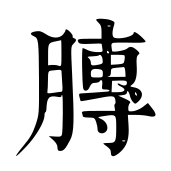
Wei Collection, Lower Volume
Radical: Meat (ròu)
Kangxi Strokes: 17
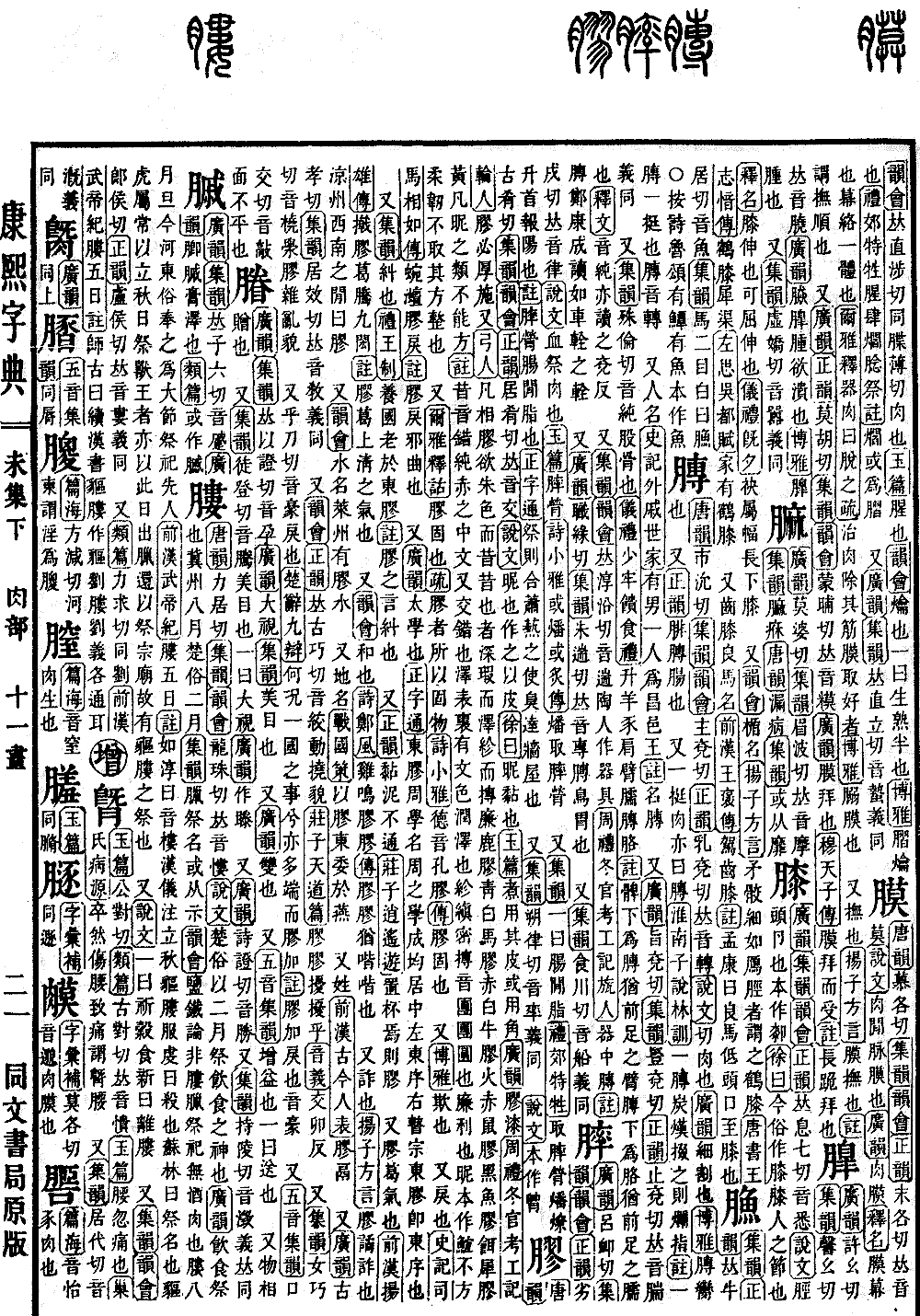
Page 993, Entry 06
Pronounced zhuan.
According to the Explaining Graphs and Analyzing Characters (Shuowen), it means to cut meat. According to the Broad Rhymes (Guangyun), it means to cut into small pieces. According to the Erudite Refinements (Boya), it is synonymous with slices of meat. It also refers to the calf of the leg, or a single strip of meat.
In the Huainanzi (Huainanzi), it states: A single strip of charcoal heats it, and if you pick it up, your fingers will be scorched. The commentary notes that a strip is a single piece. The character is pronounced zhuan.
Also used in a personal name. In the Records of the Grand Historian (Shiji), it is recorded that there was one son who became the King of Changyi. The commentary notes that his name was Zhuan.
Pronounced shuan. The meaning is the same as above.
Pronounced chun. Refers to the thigh bone. In the Ceremonial Rites (Yili), it is recorded: Present the shoulder, arm, upper leg, and thigh bone of the sheep and pig. The commentary explains that the part below the thigh is the zhuan, just as the arm is to the foreleg, and the part below the zhuan is the ge, just as the upper arm is to the foreleg. The commentary on sounds notes it is pronounced chun, or also as zhuan.
Pronounced chuan. Potters use it to make utensils. In the Rites of Zhou (Zhouli), it refers to the center of a vessel. The commentary by Zheng Kangcheng suggests it should be read like the word for an axle.
Pronounced zhuan. Refers to the gizzard of a bird.
Pronounced chuan. The meaning is the same as above.