Zi Collection, Middle Volume
Radical: Person (rén)
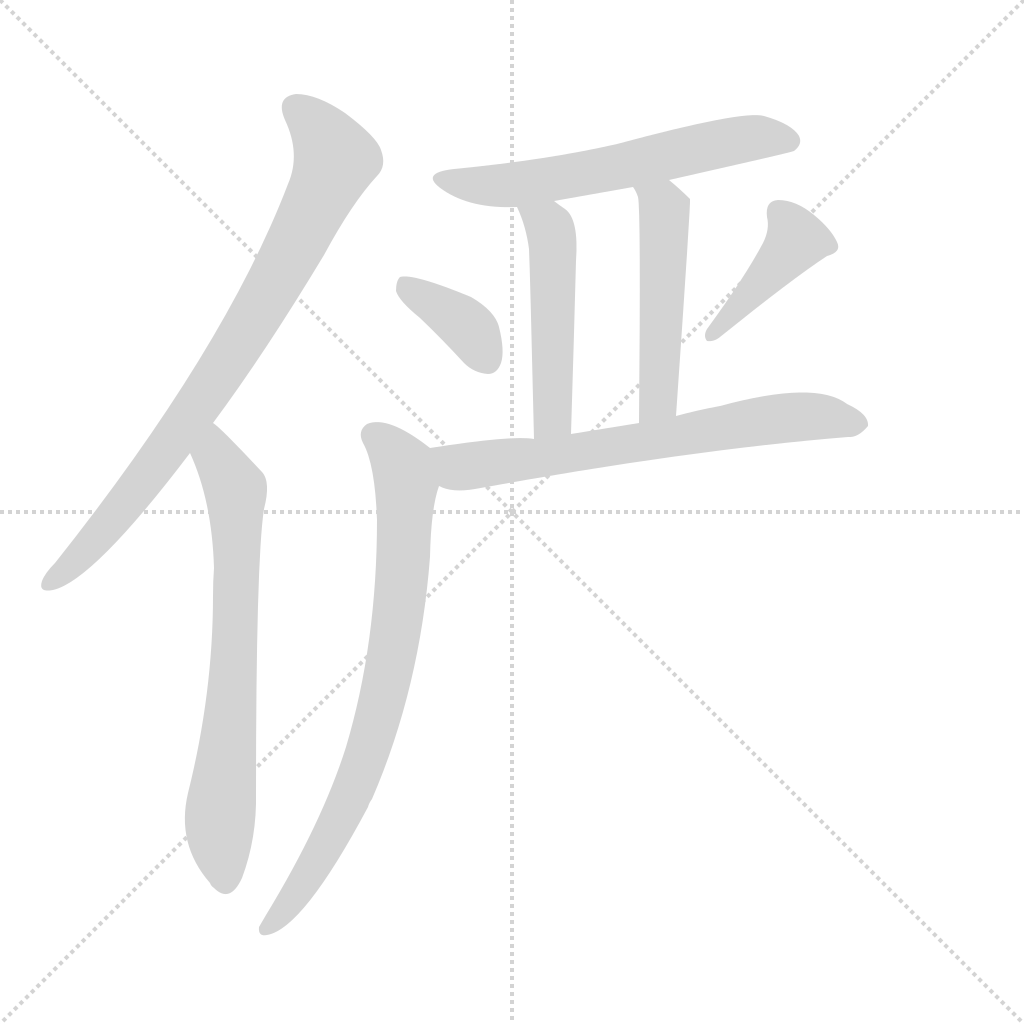
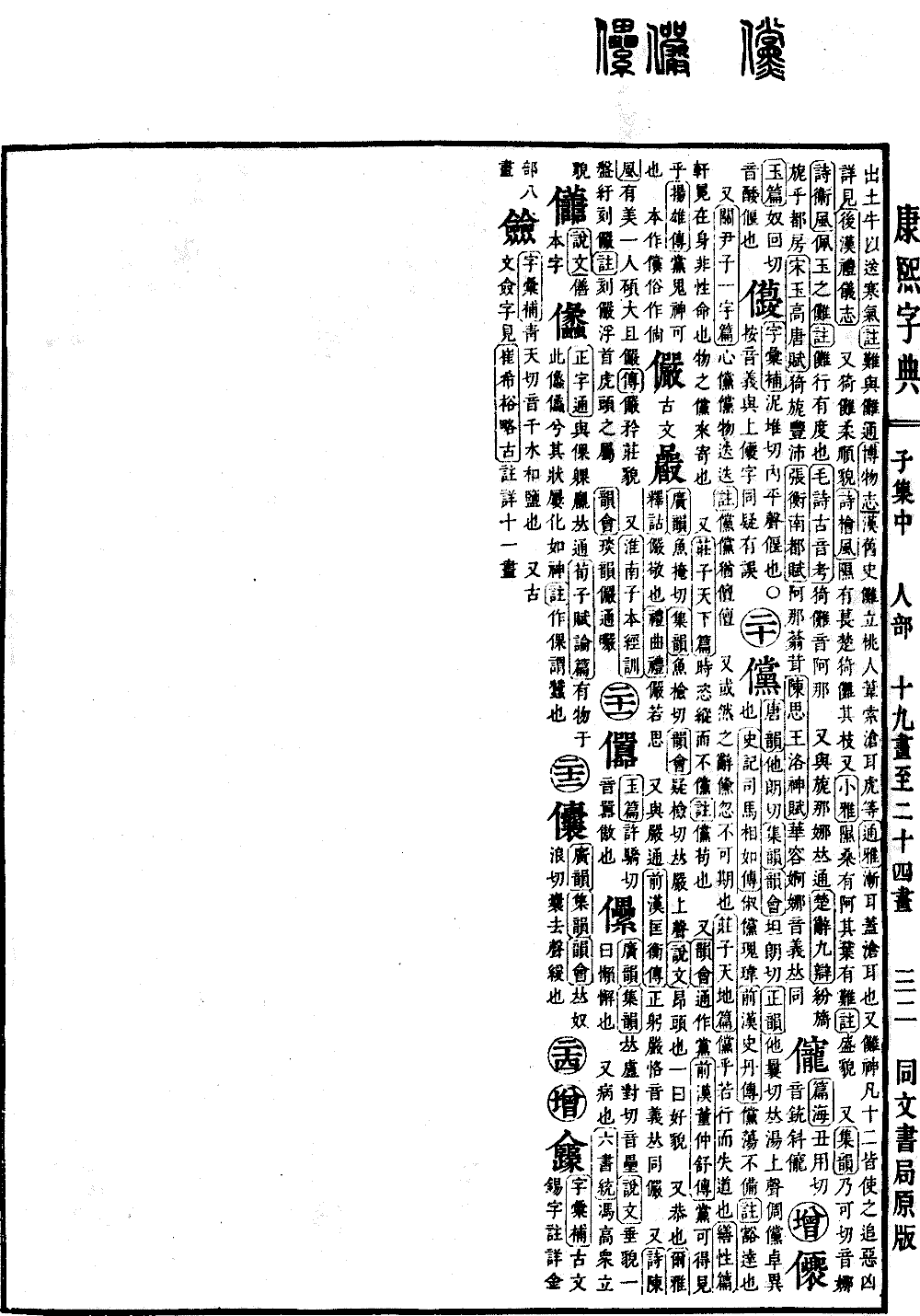
儼; Kangxi stroke count: 22; Page 122
Ancient text. Guangyun (Guǎngyùn): yú yǎn qiē. Jiyun (Jíyùn): yú jiǎn qiē. Yunhui (Yùnhuì): yí jiǎn qiē, pronounced in the rising tone of the character yán.
Shuowen (Shuōwén) states: To hold the head high. Another explanation is a beautiful appearance. Also means respectful. Erya (Ěryǎ), Explanation of Gu (Shìgǔ): Yǎn means respectful. Book of Rites (Lǐjì), Rules of Conduct (Qūlǐ): A respectful appearance as if in contemplation. Also interchangeable with the character yán. Former Han (Qiánhàn), Biography of Kuang Heng (Kuānghéng Zhuàn): "Rectify oneself with solemn respect." Its pronunciation and meaning are the same as yǎn. Also Book of Odes (Shijing), Odes (Fēng): "There was a beautiful person, tall and dignified." Commentary: Yǎn means a dignified and solemn appearance. Also Huainanzi (Huáinánzǐ), Original Teachings (Běnjīngxùn): "Coiling and twisting, carved with majestic patterns." Commentary: Kèyǎn refers to carved patterns resembling dragon heads, tiger heads, and such. Yunhui (Yùnhuì): In the yǎn rhyme, yǎn is interchangeable with the character yǎn.