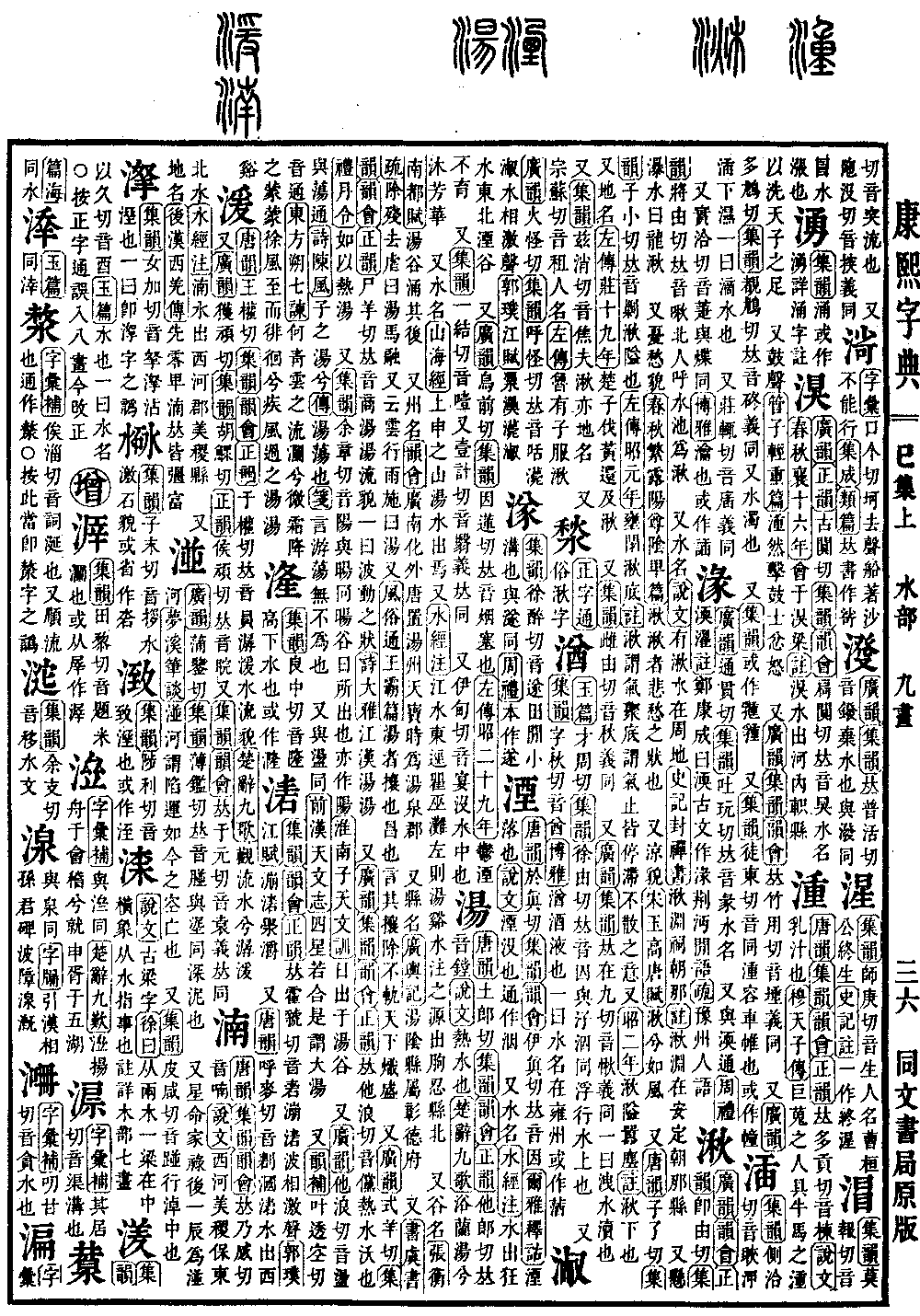
Si Collection, Upper Volume
Radical: Water (shuǐ)
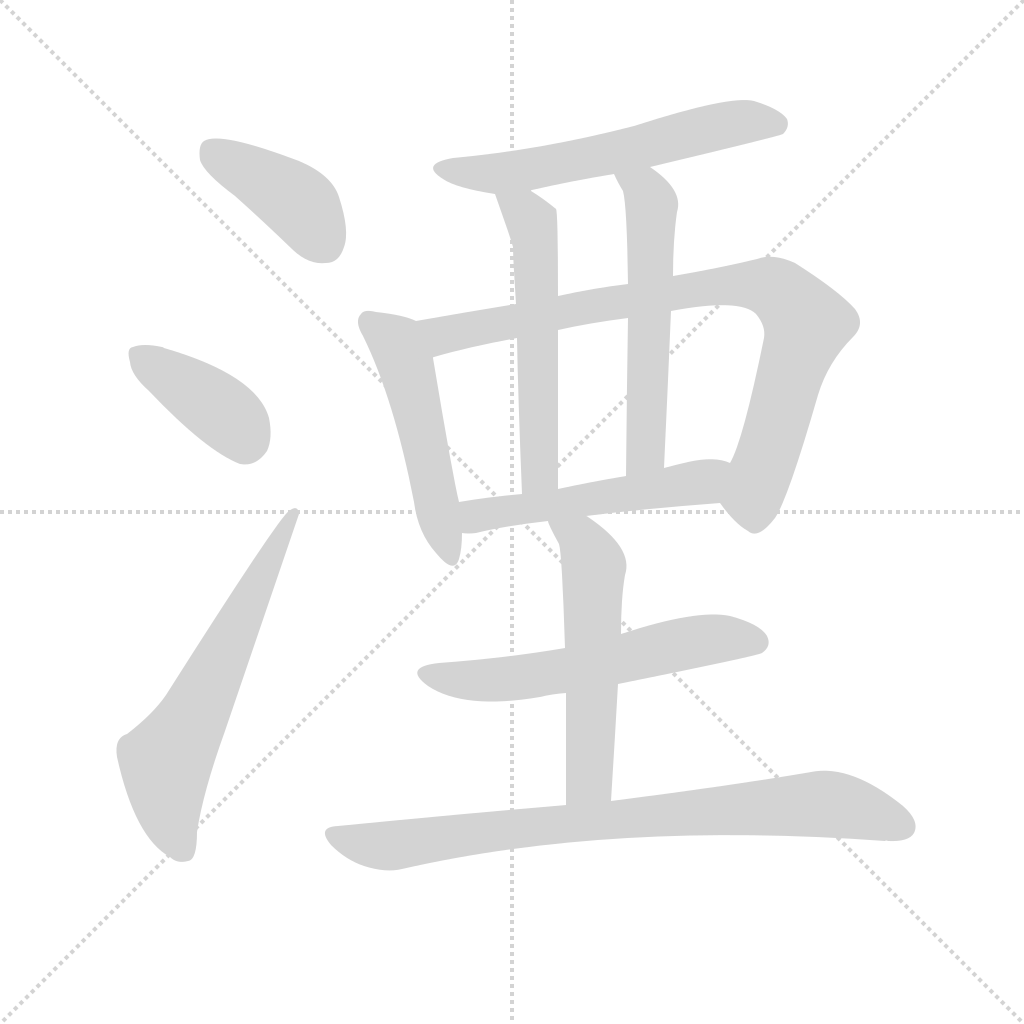
Yin; Kangxi strokes: 13; Page 638, Entry 15
Pronounced yin. According to the Tang Rhyme (Tangyun), Collection of Rhymes (Jiyun), and Rhyme Meeting (Yunhui), the pronunciation is the same as the character yin. In the Er Ya (Erya), a dictionary of ancient terms, it is stated that yin means to fall or sink. In the Explaining Graphs and Analyzing Characters (Shuowen Jiezi), it is stated that yin means to submerge or bury. It is also used as a variant form (yīn). It also refers to the name of a river. According to the Commentary on the Classic of Waterways (Shuijing Zhu), this river originates in the Yan Valley northeast of the Kuang River.
Also, according to the Broad Rhyme (Guangyun) and Collection of Rhymes (Jiyun), it is pronounced yan. It means to block or obstruct. According to the Zuo Commentary (Zuo Zhuan) in the twenty-ninth year of Duke Zhao, it refers to accumulated obstruction that prevents growth.
According to the Collection of Rhymes (Jiyun), it is also pronounced ye. It is also pronounced yi. The meaning is the same. It is also pronounced yan, and the meaning is to submerge in water.