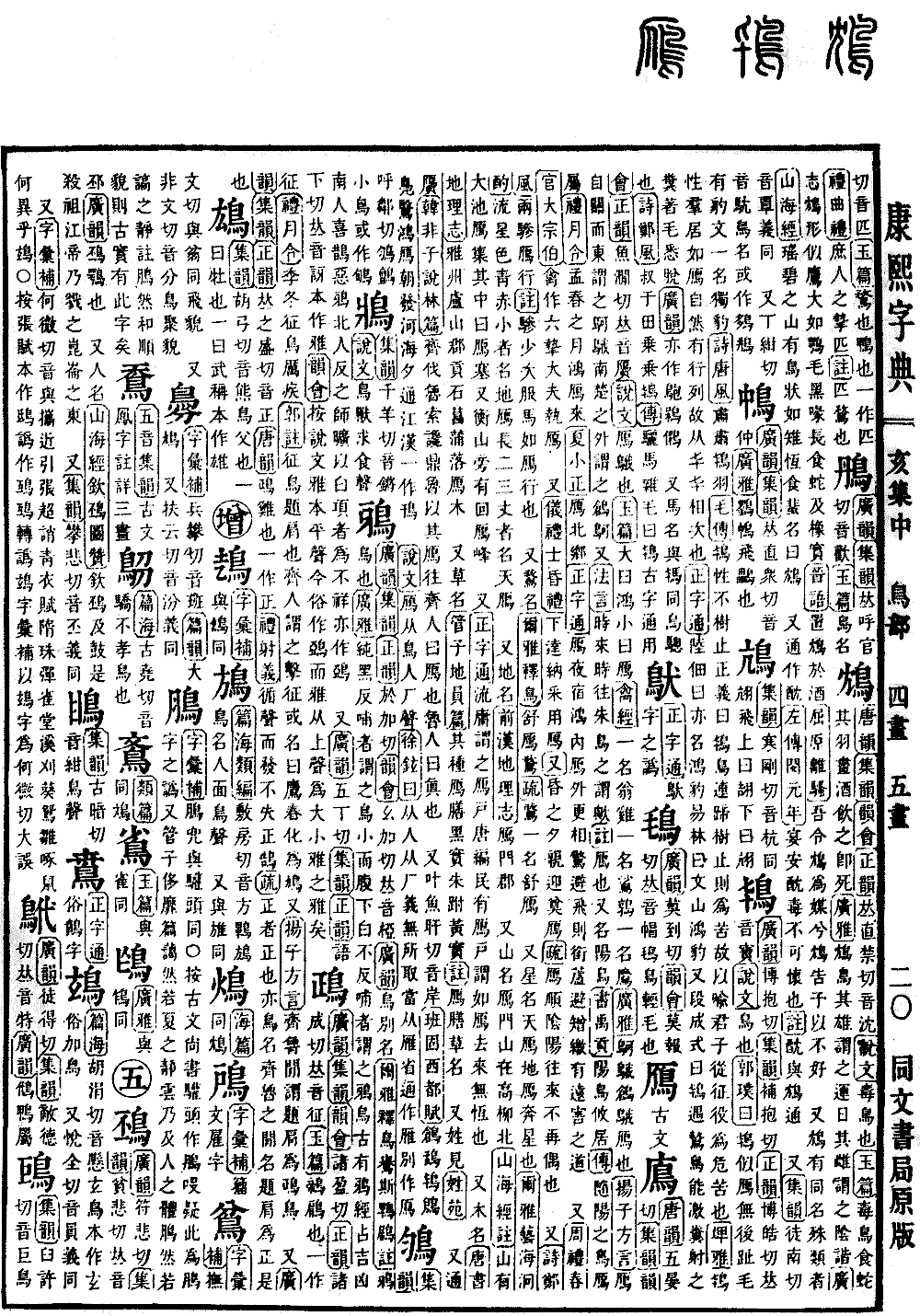
Hai Collection, Middle Volume
Radical: Bird (niǎo)
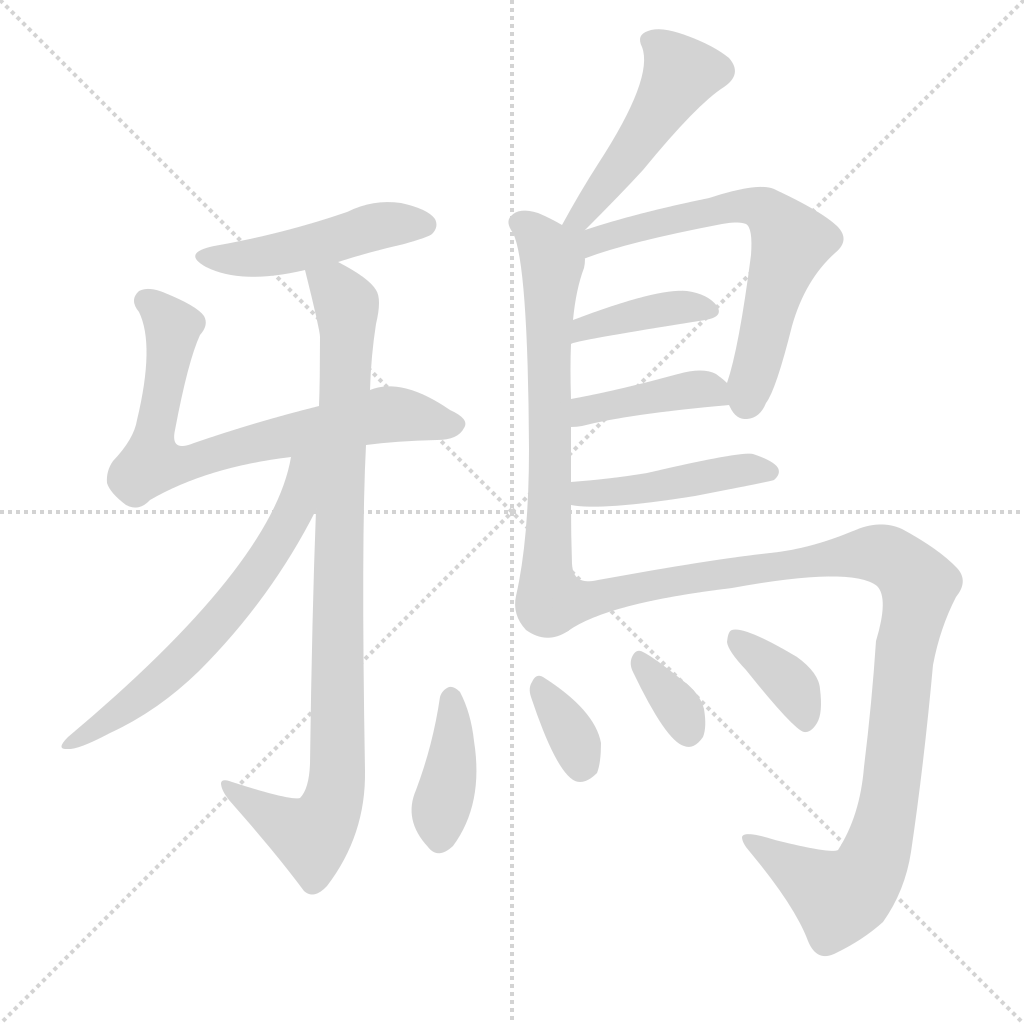
鸦
Kangxi Strokes: 15
Page 1484, Entry 12
Guangyun, Jiyun, and Zhengyun (compendia of rhymes) state the pronunciation is ya. Yunhui states the pronunciation is ya.
Guangyun: Another name for the crow.
Erya: Explaining Birds: The bird known as yue si bei gu. Commentary: This is the crow.
Guangya: A bird that is pure black and practices filial piety by feeding its parents is called a crow. A bird that is smaller, has a white belly, and does not feed its parents is called a ya wu.
In ancient times, there was the Classic of Crows (Ya jing) used for divination. People in the south favored magpies and disliked crows, while those in the north held the opposite view. Shi Kuang considered the white-necked crow to be an omen of misfortune. Also written in a variant form (ya).
Also, Guangyun: Pronounced ya (falling tone); Jiyun and Zhengyun: Pronounced ya (falling tone). Originally written as ya.
Yunhui: According to the Analytical Dictionary of Characters (Shuowen jiezi), ya was originally read in the level tone. It is now commonly written as ya. The term ya is read in the rising tone, as found in the Greater Odes (Daya) and Lesser Odes (Xiaoya) sections of the Book of Odes (Shijing).