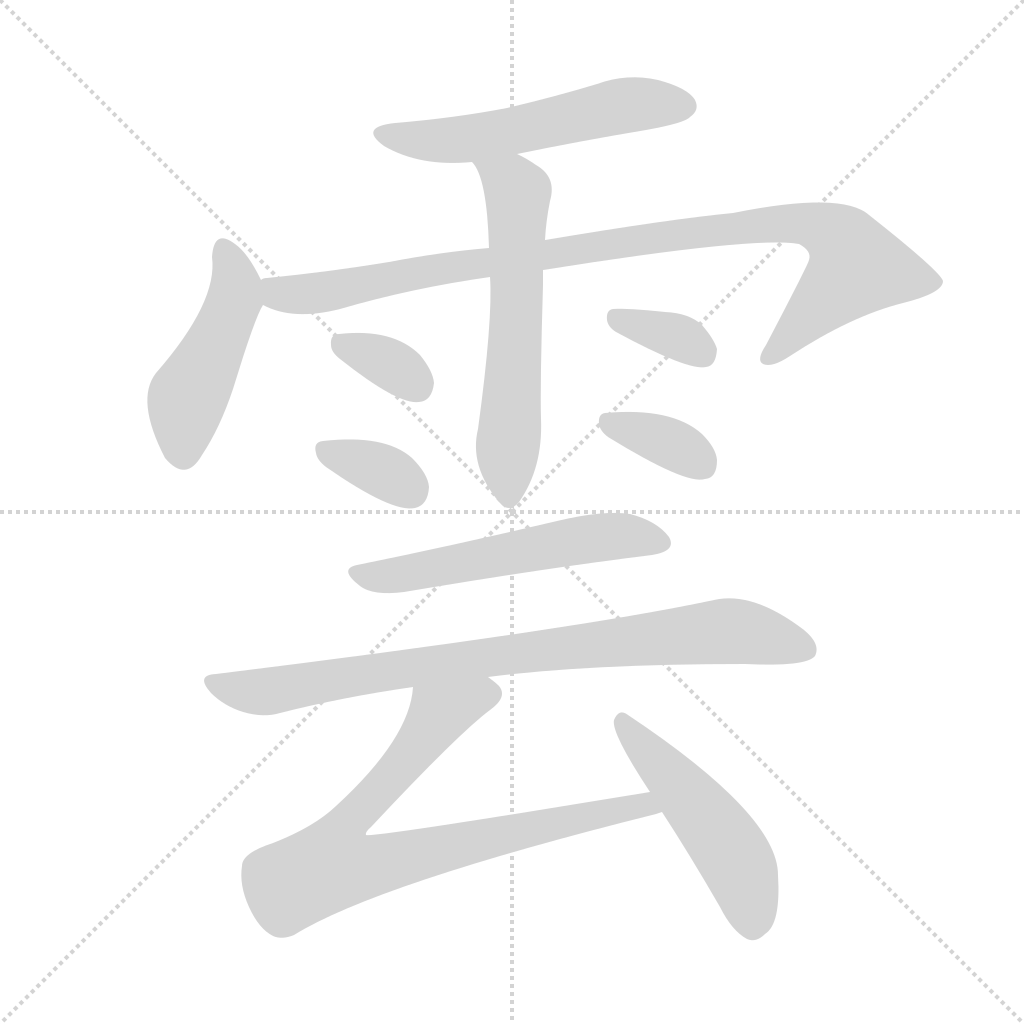
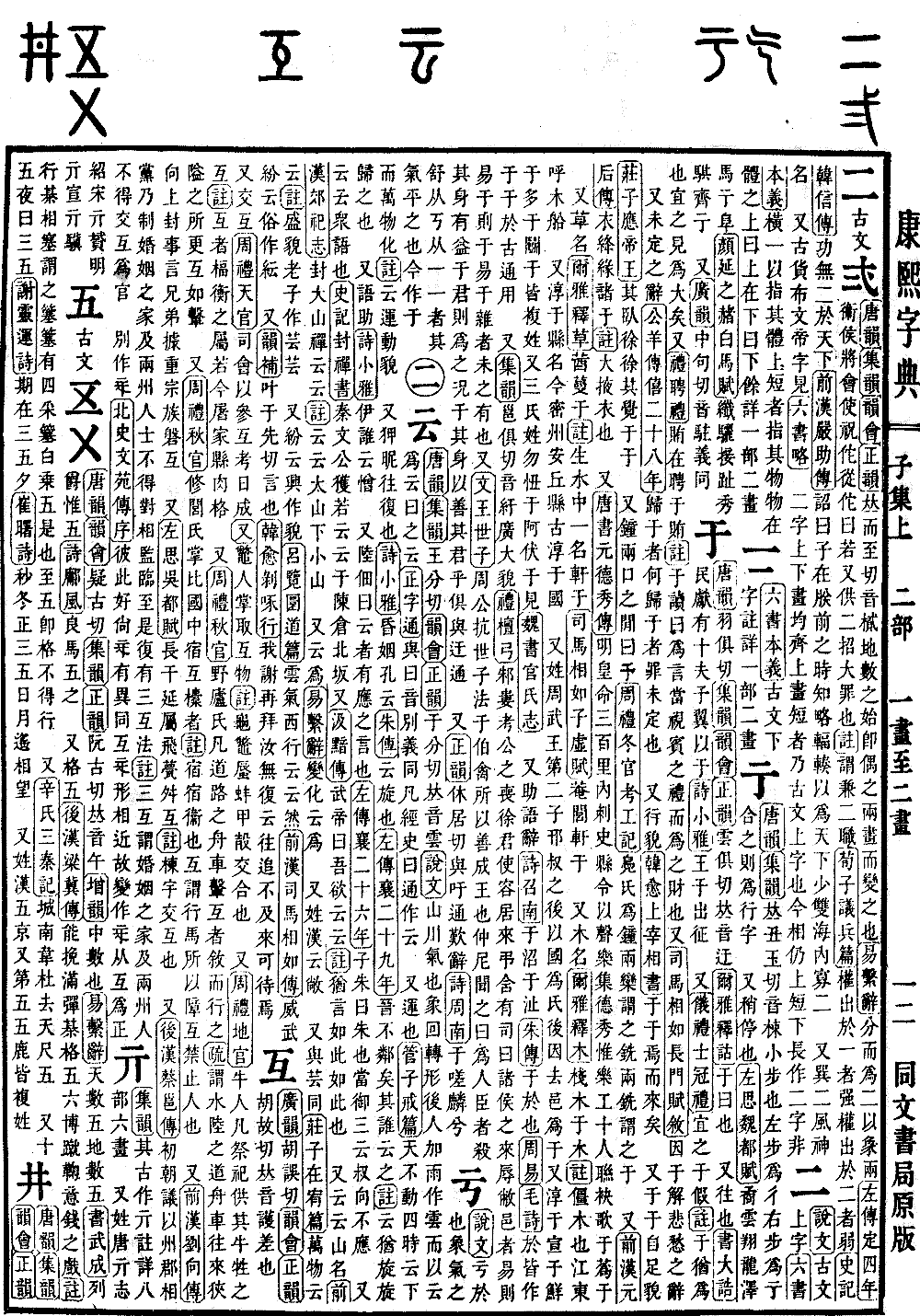
Xu Collection, Middle Volume
Radical: Rain (yǔ)
Kangxi Strokes: 12
Page 86, Entry 01
Pronounced yun.
According to the Explaining Graphs and Analyzing Characters (Shuowen Jiezi), it is the vapors of mountains and rivers. Formed from the radical for rain and the character for clouds, representing the swirling motion of clouds.
According to the Broad Rhymes (Guangyun), the Diagram of the River (Hetu) states: Clouds are the foundation of heaven and earth. The Record of the Origin of the Mandate (Yuanmingbao) states: When yin and yang congregate, they become clouds.
Book of Changes (Yijing), Qian Hexagram: Clouds move and rain is dispensed.
Book of Odes (Shijing), Great Odes (Daya): Vast is that Milky Way. Commentary: The cloud-Han is the celestial river.
Er Ya, Explaining Kinship: The son of a remote descendant is called a cloud-descendant. Note: This refers to being as light and distant as floating clouds.
Rites of Zhou (Zhouli), Spring Officials: The dance of the Cloud Gate and Great Volumes. Note: Of the music of the six dynasties preserved by the Zhou, the one from the Yellow Emperor is called Cloud Gate and Great Volumes.
Records of the Grand Historian (Shiji), Annals of the Yellow Emperor: Official titles were all named after clouds, known as cloud-masters.
Name of a marsh. Book of Documents (Shangshu), Tribute of Yu (Yugong): The lands of Yun and Meng were reclaimed.
Zuo Tradition (Zuo Zhuan), Fourth Year of Duke Ding: The Viscount of Chu crossed the Sui and Ji rivers, entering Yunzhong.
Er Ya, Explaining Geography: Chu has the Yunmeng marsh. Commentary: This marsh spans the north and south of the Yangtze River; it can also be referred to simply as Yun or simply as Meng.
Sima Xiangru, Rhapsody on Sir Vacuous (Zixu Fu): The Yunmeng marsh is nine hundred li square.
Supplement to the Records (Shiyiji): Mount Penglai is also named Yunlai.
Name of a commandery and county. Former Han History (Hanshu), Treatise on Geography: Langye Commandery had a Yun County. Also, Yunzhong Commandery.
A surname. Zhengzitong: Descendants of the Jinyun clan. Tang Dynasty: Yun Hongsi. Ming Dynasty: Yun Qu, Yun Xiu.
Also rhymes with yuan.
Lu Ji, Rhapsody on the Agate Bridle (Manaole Fu): If injured at first, do not act; wait for the auspicious clouds. When a superior person experiences poverty or success, it is also a matter of timing.
The Explaining Graphs and Analyzing Characters (Shuowen Jiezi) notes that it is also written as a variant form (yun).