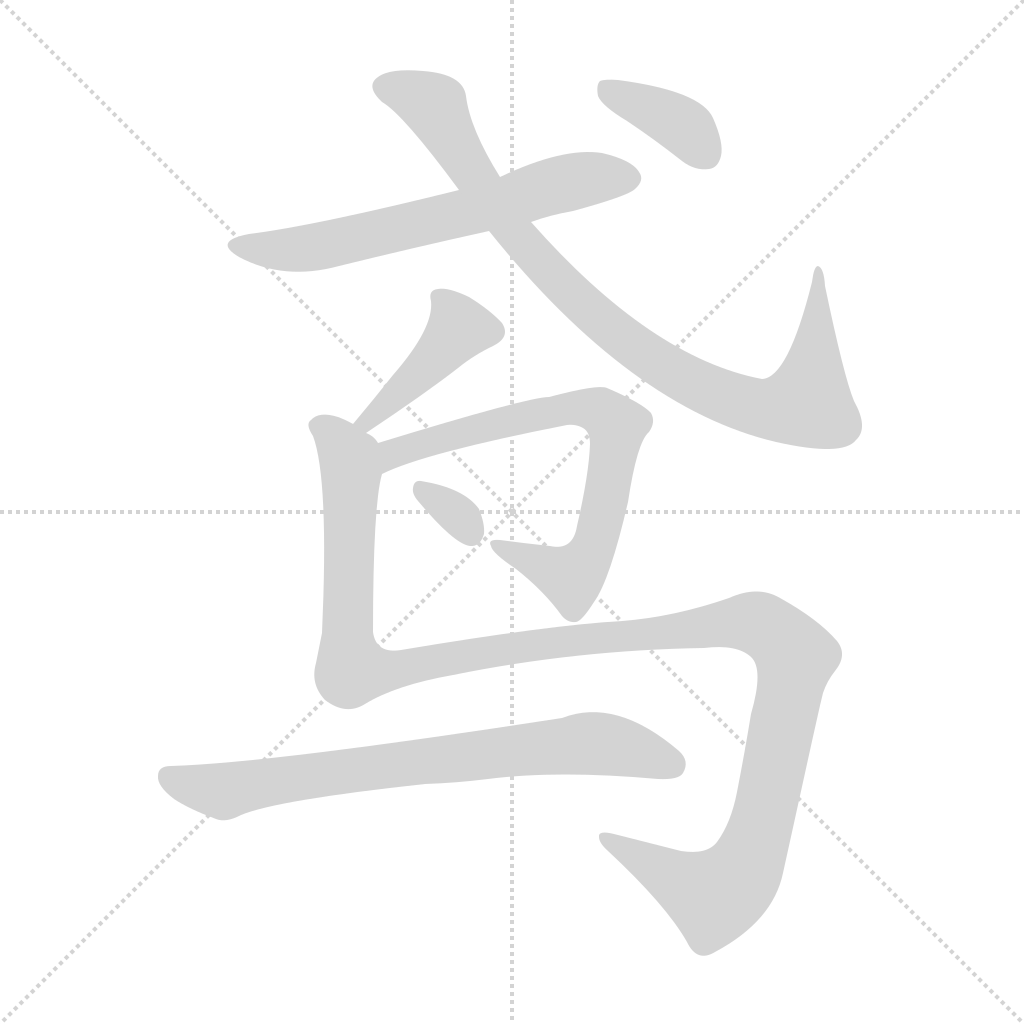
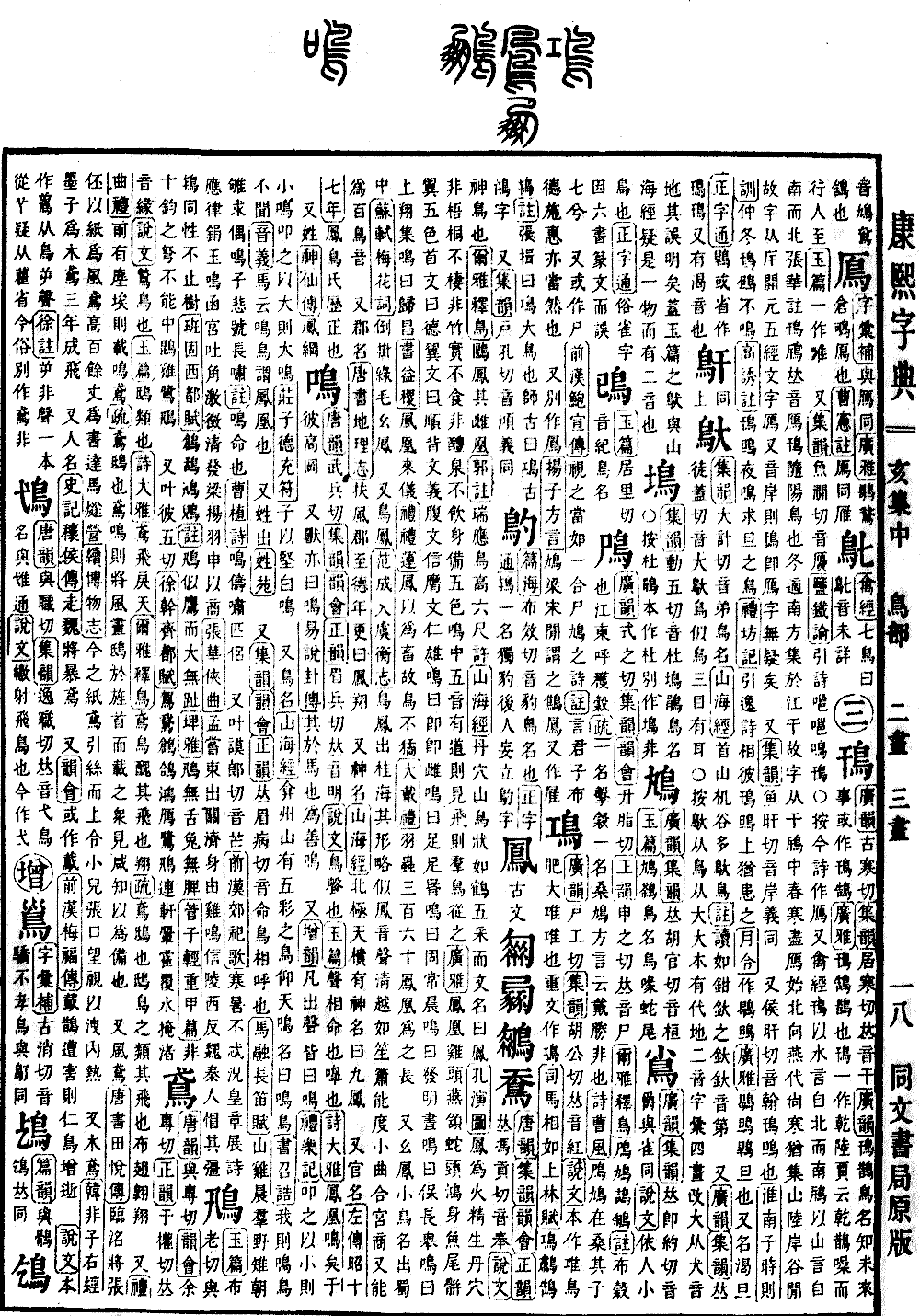
Hai Collection, Middle Volume. Radical: Bird (niǎo). Yuan. Kangxi strokes: 14. Page 1482, Entry 14.
Pronounced yuan (rising tone). According to the Shuowen Jiezi (Explaining Graphs and Analyzing Characters), it is a bird of prey. According to the Yupian (Jade Chapter), it is a type of owl (chi). According to the Book of Odes (Shijing), the yuan flies up to the heavens. According to the Erya (Approaching Elegance), the yuan is a bird of the owl family, and when it flies, it soars. The commentary states that the yuan is a type of owl; when this bird flies, it spreads its wings and glides.
Also, according to the Book of Rites (Liji), if there is dust ahead, one should display a sounding yuan on the carriage banner. The commentary notes that the yuan is an owl; when the owl cries, it indicates wind. A picture of an owl is drawn on the top of the banner, and when people see it, they know to prepare.
Also, the wind kite. According to the Old Book of Tang (Jiu Tangshu), when the general Zhang Pi was at Linming, he made a paper wind kite that flew one hundred fathoms high to deliver letters to the camp of Ma Sui. According to the Xu Bowuzhi (Continued Records of Wide Inquiry), the current paper kite is flown by pulling a string, and children look up at it with their mouths open, which is said to release internal heat.
Also, a wooden kite. According to the Han Feizi, Mozi constructed a wooden kite that took three years to complete.
Also, used in personal names. According to the Records of the Grand Historian (Shiji), Bao Yuan was a general of the state of Wei.
According to the Yunhui (Collection of Rhymes), it is sometimes written in a variant form. According to the Book of Han (Hanshu), when magpies meet with harm, the benevolent bird flies away. The Shuowen Jiezi states that it was originally written in a variant form, composed of the radical for bird with a phonetic component. The Xu commentary notes that this phonetic component is incorrect, and one edition suggests it is derived from an abbreviated form of the character for heron. The current common practice of writing it as yuan is considered incorrect.